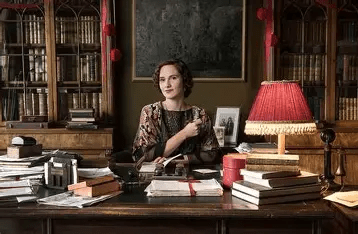
Agatha and the Truth of Murder is a television movie which speculates how Agatha Christie herself would solve a murder. It takes place during the time of her eleven-day disappearance in 1926 and revolves around the murder of Florence Nightingale’s goddaughter which actually did take place in 1920.
Ruth Bradley leads the cast as the Queen of Crime herself. Other cast members include Pippa Haywood, Bebe Cave, Blake Harrison, and Ralph Ineson.
Tom Dalton penned the script with Terry Loane calling the shots as director.
In 1926, Agatha is facing the dissolution of her first marriage as well as frustrations of her mystery novels being found to be too predictable. A long-time nurse has come to Agatha to ask for her assistance in solving the murder of her friend, who happens to be the goddaughter of Florence Nightingale. The woman was beaten to death while riding a train. Her own private investigations do happen to lead to a small group of suspects. Agatha disappears for a time and goes undercover as a legal representative to look into some of these people who knew the young nurse.
Another murder occurs at the estate, and Agatha finds herself working alongside a detective who is short-handed due to the authorities frantically trying to locate the already renowned author herself.
This was actually a pretty fun movie, and Ruth Bradley seems to be a pretty solid casting choice. It’s still a somewhat predictable British murder mystery with all of the usual tropes, but it was still entertaining.
The disguise Agatha adopts is pretty simple but still rather effective. It works because this version of the writer is still recognizable in spite of the change in hair style and glasses.
I do not know much about Ruth Bradley, but she is a compelling actress. I was kind of aware of her because she had performed in the Big Finish Doctor Who audio dramas a few years ago.
I also found Ralph Ineson to be a great addition to the cast as Detective Inspector Dicks. There is a kind of a sweet moment when Agatha and the inspector bond over their failed marriages.
The plot is a little too much like one of Agatha’s novels at times and could have benefited from something a little original than the expected comparison.
Anyway, it was a bit more enjoyable than I expected. I think most Agatha Christie devotees would get a kick out if it.
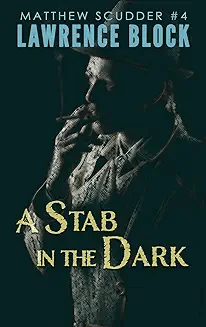
A Stab in the Dark is a pretty engaging mystery from one of the considered masters of the genre, Lawrence Block. It features the unofficial private eye, Matthew Scudder and was first published in 1981.
Nine years previously, a serial killer with an icepick terrorized New York City and then disappeared. The police have made an arrest, but the father of one of the victims believes that he did not commit the brutal murder of his daughter. Charles London comes to Matthew Scudder to take another look into his daughter’s death to see if the truth is something more her falling victim to a maniac. Scudder is an ex-cop who sometimes works for a fee or a favor. He dusts off his investigative skills and starts examining facts that are almost a decade old. Of course, Scudder unearths some uncomfortable secrets from the neighborhood where Barbara Ettinger met her tragic end. One killer is in custody, however someone even more cunning may be waiting in the shadows to savagely protect their secrets from Scudder’s prying eyes.
It’s a pretty straight-forward, tightly written novel that is not very long. Scudder is a bit of a train wreck with his alcoholism and cynicism, but he is still a capable and interesting investigator. He does have scruples and is a little more civilized at times then Mickey Spillane’s Mike Hammer, but he can handle himself in a fight if needed.
Block also creates a dubious set of suspects who are pretty compelling. The red herrings and clues are pretty well planned out as well.
I haven’t read a whole lot of Block’s works, so I am not sure where I would place this one in the rankings, but I did find that I enjoyed this one well enough to keep returning to the world of Matthew Scudder.
Block is a talented writer who keeps the story moving pretty well. Scudder gets a lot done between working his case along with some personal encounters in something that comes in under two hundred pages.
For those who like the old-fashioned, hard-boiled private eye novel where the protagonist is about as messy as those he meets, this one is a pretty good addition to the bookshelves.
I think more poor decisions and ultimately murder is called for when I return to the works of John Sandford. Deadline is the lucky winner for my next literary diversion.
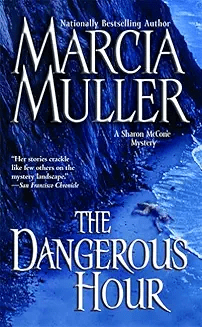
The Dangerous Hour is an entertaining enough mystery by long-time author Marcia Muller and features private investigator Sharon McCone.
McCone has been building her private investigation agency into quite a sizable operation in San Francisco. When one of her operatives gets arrested at her office for credit card fraud, Sharon wastes no time trying to determine the truth of this matter which could seriously damage her reputation. McCone has made a lot of enemies over the years, and her friend has a troubling past of her own. She has a loyal and capable team to help, but the matter becomes more complicated when murder comes into play.
Yet again, this is another occasion where I started reading something that is not the first in the series. I have been aware of this series for many years, but this is the first time I gave it a try.
The mystery was pretty good. McCone is standard female protagonist with a troubled family history and a fear of commitment. I was struck by how bland she appeared to be as a character. There was little that stood out about her among the pantheon of female private eyes in this genre.
The novel is not a terrible read or anything, but there was not much that stood out.
It is written in first person from McCone’s perspective, which is a fine way to go.
There is no real reason to avoid this author or this series, however I found no real reason to be in a hurry to get back to it.
I will be returning to the works of Lawrence Block with A Stab in the Dark.
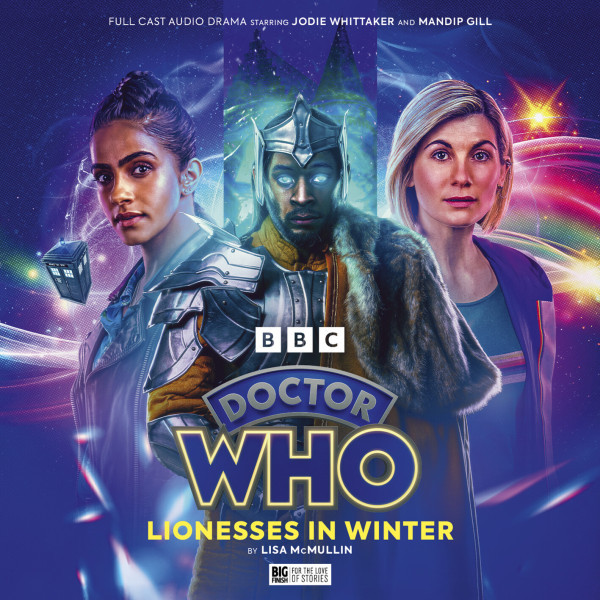
Doctor Who: Lionesses in Winter by Lisa McMullin is an audio drama from Big Finish Productions and is a decent if unremarkable adventure. Jodie Whittaker returns as the Thirteenth Doctor alongside Mandip Gill as Yasmin Khan.
The guest cast is comprised of Debra Baker, Ammar Dufus, Kevin Mathurin, and Dolly Webb.
The Doctor and Yaz arrive in England of 1183 during the reign of Henry II, who seems to have dealt with several uprisings instigated by his own family members. During the Christmas season, the exiled queen is allowed to return to celebrate it with her family. There is also a peculiar imposter, and memories of a child who is not supposed to exist. The Doctor finds that something from another dimension has been in the mirror for a long time and is bringing devastation into the family drama.
The director, Steven Kavuma, makes good use of the small, talented cast.
Whittaker and Gill do have a compelling chemistry and enthusiasm that is kind of infectious. The Thirteenth Doctor is not really my favorite incarnation of the Time Lord, but the stories from Big Finish are better than the audience got on television on the whole. Whittaker’s portrayal has been growing on me a little thanks to better writing in the audio format.
The plot was pretty interesting and delves into the complicated relationship of the royal family in the late twelfth century. McMullin has turned out to be a pretty solid addition to the stable of writers at Big Finish.
Is this the best Doctor Who entry to come out? Not really, but it gets the job done as far as being entertaining and also providing a glimpse, if a fanciful one, into British history.
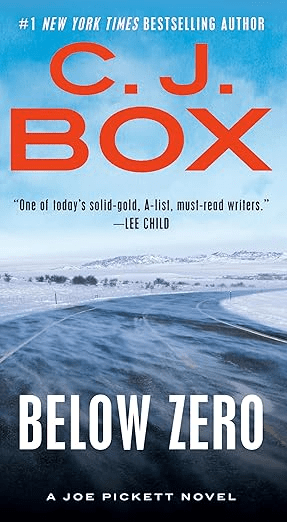
Below Zero i another effective entry into the Jope Pickett series written by C.J. Box. Even if the plot is not the best idea, Joe Pickett and his family are too charming and interesting for me to mind that very much.
Joe Pickett is on temporary assignment as game warden some distance away from his beloved family. His daughter, Sheridan, starts receiving text messages from her former foster sister, April. The problem is that April was murdered six years ago and thought dead. Joe and Sheridan find enough information to begin their pursuit of whoever is sending these text messages. Another problem is that there seems to be connection to some deadly environmental crimes. A father and son who are traveling with a young teen-age girl are at the heart of all these questions. Joe is not sure if he is headed to a joyous and unexpected reunion or a heartbreak that will shatter his family.
I thought the plot was a sort of mediocre idea with a couple of villains I didn’t find all that interesting. The title refers to a debt that a former mobster believes he owes to his radical son who monitors carbon footprints and the like to justify his crimes committed in the name of protecting the planet.
Although I was anxious to determine if April’s supposed resurrection was the real deal, I was not that enthralled with the duo who may be in her company.
The chemistry within the Pickett family remains as engaging as ever, so the basic plot being a little lacking wasn’t too distracting.
Sheridan gets to accompany her father on an investigation, and there was something about that I found to be endearing. The children are growing up within Box’s world. The family banter was well-written as well.
Anyway, it’s an enjoyable, if flawed, enough of a novel. The suspense of what happened with April did keep me engaged.
As another novel comes to an end, a new one is on the verge of being explored. This time, my attention will turn to Marcia Muller’s The Dangerous Hour.
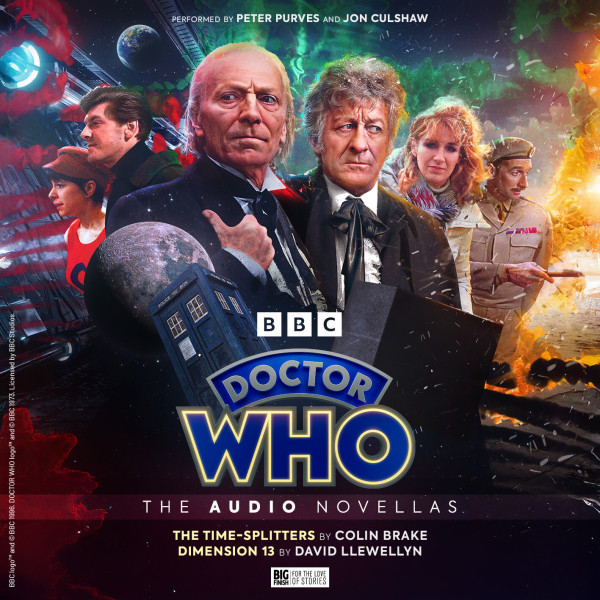
Doctor Who: The Time Splitters and Dimension 13 is a set of two audio novellas released from Big Finish Productions, and both are worthy beginnings to a new range.
Colin Brake starts off with The Time Splitters, which features the First Doctor and his companions, Steven and Dodo. Peter Purves returns to narrate this story with his usual reliably enjoyable delivery.
The Doctor and his companions arrive at Lunar University, which is based on the moon. Steven disappears soon after and finds himself eight years into the future. The university is abandoned by then, but that doesn’t mean that Steven is alone. There is another presence, and the Doctor and Dodo are having their own challenges as they try to rejoin him.
This is a pretty good story, and Peter Purves, who had portrayed Steven many decades ago on television, continues to deliver a riveting narration. Purves can still capture the spirit of the late William Hartnell’s performance as the Doctor even if he cannot really imitate his voice. This story is a little more complicated than what was usually transmitted in the original era, but it still works.
The sound design is also compelling.
I don’t know if this story can really be considered one of the best in the franchise, but it’s a solid enough contribution.
A couple of regenerations later, the Third Doctor finds another temporal catastrophe in David Llewellyn’s Dimension 13, which is narrated by the always compelling Jon Culshaw.
The Doctor, Brigadier Lethbridge-Stewart, and Liz Shaw travel to Antarctica to investigate strange disappearances and time anomalies at a Shackleton Base. Another dimension has been accessed, and the Doctor finds himself in the position of having to save more than just the planet yet again.
Culshaw has become one of my favorite narrators and guest actors employed by Big Finish Productions and continues to justify my fondness with his delivery here.
Llewellyn is also another solid writer as well. He does a great job of capturing the characters familiar to fans and placing them in a new situation. An isolated base in Antarctica is a somewhat familiar trope of a setting, but it works yet again. Llewellyn knows how to ratchet up the suspense,
Unlike Peter Purves, Jon Culshaw is actually a gifted impressionist and can deliver a pretty convincing Third Doctor and Brigadier. He also does a fine job of straight narration as well.
Anyway, the release is a great addition to the massive catalogue of Doctor Who presented by Big Finish Productions.
Hard Boiled is a Chinese action film that was released in 1992 and directed by John Woo. It’s a ridiculous piece of cinema, but it isn’t bereft of merit. The screenplay was written by Gordon Chan and Barry Wong.
Chow Yun-Fat leads the cast which includes Tony Leung Chiu-Wai, Teresa Mo, Philip Chan, Anthony Wong, and Philip Kwok.
Gun smuggling in Hong Kong is at the center of the chaos in this film. Chow Yun-Fat portrays a jazz-loving, hard drinking inspector for the Royal Hong Kong Police. He comes across an undercover cop while in pursuit of a major gun smuggler named Johnny Wong. Inspector Yeun has some scores to settle with Wong but does not want to jeopardize this newly discovered colleague. Tony Leung plays the undercover detective named Alan and is also pretty good. Of course, what follows is a plethora of acrobatic fights and shoot-outs that culminate in some gruesome deaths for both cops and killers.
The movie attempts to have a somewhat nuanced plot, but the crazy amount of violence makes it hard to keep it all straight. At times, I was losing track of for whom I was supposed to cheer other than Chow Yun-Fat.
Chow Yun-Fat is rather fun to watch. I remember this guy from a few decades ago, and I understand the appeal. He’s not a bad actor in spite of some dubious dialogue at times. He does not have the hardened look of someone who can be quite so lethal, but he sells it quite effectively regardless. He was a great choice as the lead for this one.
The fight scenes were pretty well staged as well even if they required a massive amount of suspense of disbelief. The action sequences did seem drag on quite a bit, particularly the final confrontation at a hospital. Woo was definitely out to test his audience’s tolerance for all the insane amount of gunfire and assorted bangs and flashes depicted here.
There were some attempts at some interesting character moments between Inspector Yeun and Tony Leung’s undercover cop character. Although there were some moments of cringey dialogue, not all of it was worthy of derision. It’s also likely some of my reservations with this film may have to do with my lack of viewing of Chinese cinema. I’ve seen the occasional snippet of this genre, but my experience here is pretty sparse.
A family member describes it as the greatest action movie of all time. I would not go that far, but the overall experience was amusing and enlightening. Although I have some objection to the politics and governing practices of China, it was still worthwhile to get a taste of their culture with this style of cinema.
Also, I initially described this film as being ridiculous, this time I meant that with some affection. If there is a good chance this film isn’t going to induce some kind of seizure or panic attack, I would recommend seeing it. You may want to bring some ear plugs to muffle the noise, however.
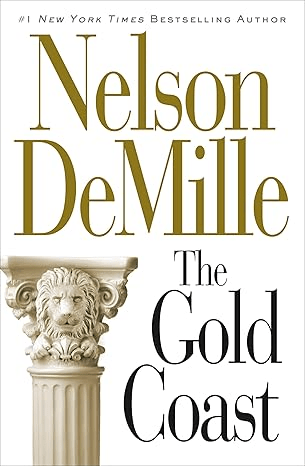
The Gold Coast is a novel that is a little hard to categorize in the recognized genres. Nelson DeMille is primarily known as a suspense or thriller writer, but this one has a bit more meat to it.
John Sutter is a married Wall Street lawyer who lives on a prestigious stretch of shore on Long Island. He and his wife have an unusual and rather strangely kinky marriage. Anyway, their lives take an unexpected turn when a reputed Mafia don moves in next door. Frank Bellarosa certainly knows how to make an impression. A peculiar friendship develops between the two men, and Sutter gets a glimpse into a world darker than he can imagine. His life and marriage were already complicated enough before Bellarosa’s arrival, and these new developments are about to take him into deeper waters in which he may never be able to escape.
DeMille is known to give his protagonists a certain bit of wry sarcasm that is kind of distinctive and common. The novel is written in first person from Sutter’s point of view, and he tuns out to be an interesting guy even if his profession sounds a bit stuffy.
In this edition, DeMille has penned an introduction in which he considers this novel one of his best works, and he is probably right. I have not read many of his works, but I have been exposed enough to them to determine that he does have talent. Many of his characters do sort of run together because it seems most of them have a similar sardonic manner. Fortunately, DeMille is actually rather funny in his prose, so it’s not that annoying or distracting.
The story does have a slow burn at the beginning. There is a lot of exposition describing the layout of the Gold Coast and the particulars of Sutter’s marriage. There is a sense of authenticity in that Sutter’s situation is rather complicated, which is more often true in real life, particularly when it comes to those with wealth and large assets. This means that DeMille does a great job of making totally fictional characters at least plausible.
Although I could probably have lived without the gratuitous sexual shenanigans between Sutter and his wife, this novel was a good start to the reading journey of 2026. I did enjoy it very much even though it took me a little longer than I prefer to get through it.
I should also mention that this novel was published in 1990, so it was kind of nice to get a reminder of what the country was like back then and in an environment and lifestyle that I will likely never be able to touch. DeMille does a great job of sparking the imagination and nostalgia which is one of the many great joys of being an avid fiction reader.
Now, I will be turning into some more familiar territory on my next reading selection. It has been a few months since I checked in with game warden Joe Pickett and his family. This will have a somewhat ironic title since my neighbors and I have just endured quite a blast of frigid weather. C.J. Box is about to continue the exploits of Joe Pickett with Below Zero.
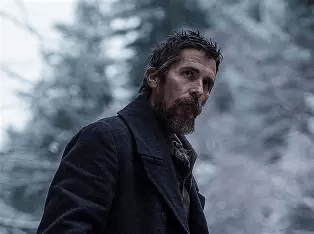
The Pale Blue Eye is an intriguing period gothic thriller written and directed by Scott Cooper. It was based on a novel written by Louis Bayard. Christian Bale stars as a retired detective who is asked to look into the mysterious hanging of a military cadet in 1830. Another cadet with the familiar name of Edgar Allen Poe, played by Harry Melling, is on hand to assist in the investigation. Other cast members include Gillian Anderson, of X-Files fame, Toby Jones, Timothy Spall, and Lucy Boynton.
As mentioned before, it is 1930, and a West Point cadet has been hanged. The detective is a retired alcoholic named Augustis Landor and is asked to start an investigation. A young but shrewd Edgar Allen Poe is enlisted to assist in this investigation. Also, a cow and a sheep turn up butchered.as well. Then, a second cadet is found hanged and mutilated. There seems to be some involvement of black magic, and Landor and Poe find their investigation taking them into the darkest of paths where there is little that is as it seems.
This turned out to have some interesting ideas, although I am not sure it was necessary to include Poe in this otherwise piece of fiction. The cast was well chosen so that certainly helps. The twist is a little too unexpected but not that bad. Some of the annoying plot holes are somewhat diminished by the talent of the cast. Bale is almost always quite compelling to watch and helps me forgive a lot of poor movie making decisions.
The set design and atmosphere were pretty well constructed. It has a great look and seems to fit the genre well.
The film is a bit on the gruesome side, but that doesn’t particularly bother me unless it fails to serve a purpose or just feels like it’s just there to test my stomach exclusively.
The film failed to keep me enthralled throughout, but it was not devoid of some worthy aspects to keep me at least mildly interested.
I suspect, unsurprisingly, that I would enjoy the book better if I happened to come across it. The movie didn’t really motivate me to seek it out.
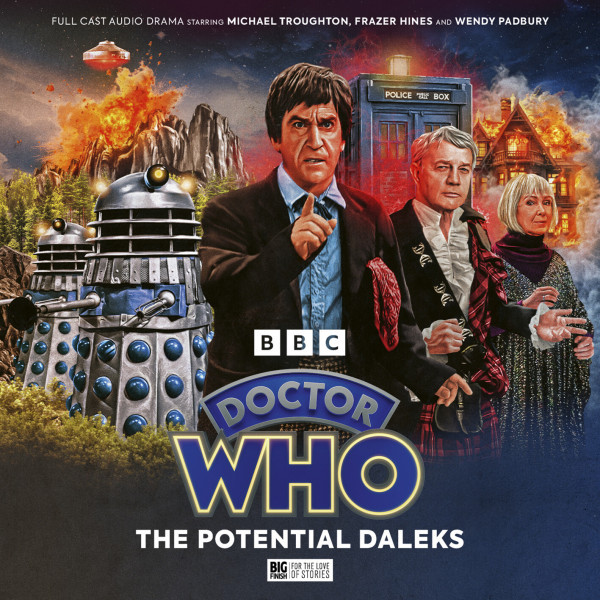
Doctor Who: The Second Doctor Adventures: The Potential Daleks is another pretty interesting audio collection from Big Finish Production which was directed by Nicholas Briggs. Michael Troughton returns to the recording booth as the Second Doctor, originally portrayed by his father Patrick. Frazer Hines and Wendy Padbury reprise their longtime roles of Jamie and Zoe. Emma Noakes continues her time aboard the TARDIS as Raven, the Doctor’s fellow Time Lord, who is thought to be working on behalf of the High Council of the Time Lords to handle the renegade.
Briggs and Mark Wright split writing duties on the three interconnected episodes in this particular set which also feature the Daleks, who is also voiced by the versatile Mr. Briggs.
The guest cast is also comprised of Clare Corbett, Jacqueline King, Lara Lemon, Callum Pardoe, and Gary Turner.
Nicholas Briggs’ script, Humpty Dumpty kicks off the collection. The old nursery rhyme seems to be the catalyst for a temporal disaster. The planet Skaro is about to be resurrected a million times over. This is the planet where the Daleks originated. The Doctor and his companions will be split between two time zones as they begin a final battle.
This isn’t the first time a common verse is a significant clue to a nightmarish plot in a Big Finish story, but the device is compelling yet again due to the reliable talents of Briggs. The performances are as usual just as compelling. Troughton continues his efforts to breathe new life into his father’s Doctor Who legacy and does an admirable job. Troughton’s impression of his father still sounds a little off at times, but he generally gets the job done.
Padbury and Hines are portraying older versions of their characters, so they don’t have to bother with trying to sound several decades than their actual ages. They still sound great in spite of their understandable vocal variances.
Mark Wright, who is also producer of this release, follow up with Secret of the Daleks. The TARDIS has followed a space/time corridor created by the Daleks to a peaceful tropical world. The inhabitants seem peaceful enough, but there is a menace lurking underneath the paradise. A confrontation with the new Dalek Emperor is imminent, and one member of the Doctor’s party has a secret of their own.
Wright cranks up the action in this script quite effectively. As usual, some of the action moments are a little hard to determine just on audio, but it’s still enjoyable. Noakes gets to show off her versatility as an actress in this one when she gets to do her own take on the Doctor as well. It turns into a bit of a jumble of a plot, but in all the right ways.
Troughton may not always sound like vocally identical to his late father, but he brings a similar enough energy in his performance where it isn’t too distracting. I can still recognize and imagine the Second Doctor in the midst of this chaos seemingly on the edge of panic but holding on to that heroic determination to defeat the monsters. The humor of that era is also quite intact.
Finally, it takes the combined writing talents of Nicholas Briggs and Mark Wright to bring this collection to a conclusion with War of the Morai. The Doctor and his friends are back in a region known as the Vanishing Point where they try to help some old allies known as the Morai to avoid the ruthless intentions of the Daleks. A friend who was thought to be lost has returned, and the mysterious Raven must make a choice.
This story refers back to a previous boxset in which I shall have to listen to again to remember the significance of the Morai.
It was still a fine conclusion, and there were some interesting character moments. Noakes also was a delight as a recurring character. She was basically an original companion created by Big Finish and seems to be an amusing and interesting foil to the Second Doctor. There were also times when Raven and Zoe were forced to collaborate, and an interesting dynamic was forged there as well. Raven had a typical haughtiness displayed most of the Time Ladies the audience have met over the years, but Noakes brings in something more than that as well. Really, the writers gave her a depth for Noakes to play in, and she uses that quite nicely.
As a reminder, this range takes place after the Second Doctor’s trial just after he was sentenced to be exiled to Earth with a new appearance but before that sentence was actually carried out. Jamie and Zoe had been sent back with most of their memories of the Doctor erased but have returned to fight alongside him after they had lived their lives in their respective time zones. I am not a fan who was all that interested in what has become known as season 6b, but Big Finish has won me over in this one. Although it seems that something in this range has concluded, there is a new series in the works and there are certainly more adventures and troubles awaiting this version of the Doctor.
 Reviews, Musings, and Other Things...