Book Review: Inspector Vera Stanhope Sets A Trap

The Crow Trap by Ann Cleeves was first published in 1999 and was quite a solid introduction of Detective Inspector Vera Stanhope to the extensive gallery of fictional detectives. There has been a very successful British television series based on the series created by Cleeves. Obviously, Cleeves has enjoyed great success and recognition for her contribution to the mystery genre. Now that I have completed my first read of a Cleeves novel, time for me to weigh in.

Vera Stanhope is brought in to investigate the death of woman who was part of a group environmental study. There had already been a suicide, but the death of Grace Fulwell was certainly murder. Vera is having to dig through years of secrets to arrive at the truth quickly because another death soon occurs.

This novel has a few unusual features such as Vera really is not introduced to the reader or the other characters properly until about two hundred pages in. There are a couple of glimpses in the earlier scenes, but Cleeves spent an inordinate time really setting up the supporting characters. She also does a third person narrative but focused on a certain character through portions of the book. I was sort of excited when I got to Vera’s take which occurred in the last few chapters of the novel. Also, this novel turned out to contain 535 pages, so it’s a big one.

Cleeves is a little overly fond of exposition, especially in the early chapters, which at times slows the plot down a bit. She does have a distinctive enough prose style where I appreciated the care she puts in descriptions of the environment and the characters. Cleeves also divides the novel into portions where the main supporting characters receive a chance to shine a bit before Vera has her section which garners the reader’s attention. This method reminded me a little of George R.R. Martin’s style of storytelling in the Song of Ice and Fire series, and Cleeves does it quite well.

A curmudgeonly middle-aged female detective isn’t exactly as fresh one would think, but Vera Stanhope is still an interesting enough protagonist. I ended up anxiously looking forward to the moment when Vera gets more involved in the story, and I was not disappointed when that finally happened.

I also noticed that there is a certain eloquence in Cleeves’ prose that is hard to describe. It reminded me somewhat of the stylings of the mid-twentieth century authors such as Agatha Christie or Dorothy L. Sayers.

Overall, I can see why Cleeves has the following that she does, and I do plan to revisit her works in the not-so-distant future. From what I have noticed, she has quite a catalog that will take some time to get through. Either way, this is my first trip into her literary universe, but it is not to be my last.

The seasons are getting warmer, but it’s still a few days before Spring officially arrives. Therefore, it still seems fitting to dive into The Chill by Scott Carson.

Film Review: Bob Marley Wails His Way Around The World

Bob Marley: One Love is not a terrible biographical film about the legendary reggae artist, but it is rather underwhelming overall. It has a few bright moments and could have been something special if some different production choices were made.

Reinaldo Marcus Green directed the film which he co-wrote with Terence Winter, Frank E. Flowers, and Zach Baylin. Kingsley Ben-Adir stars in the lead alongside Lashana Lynch, James Norton, Tosin Cole, and several other talented enough actors. One of those actors was none other than Michael Gandolfini, son of the late James Gandolfini.

Ben-Adir is a charismatic enough performer and likely captured the essence of Bob Marley pretty well. As near as I could tell, he did his homework when it came to breathing life into the role. The cast did appear to be well-chosen. Lynch was quite compelling as Rita Marley, Bob’s wife. I have no real issue with how the film was cast.

The film largely focused on a three-year period not too long before Marley’ s death in 1981. There is some political upheaval going on during this time, and Marley has decided to appoint himself as some kind of peacemaker through his music. Near the beginning of the film. he and his wife are shot but only wounded. His fame grows across the globe as he sends his wife and children to stay with his mother in Delaware. The film is leading up to a famous event called the One Love Peace Concert which occurred in 1978.

Critics of the film raise have some valid points, however. Because of the Jamaican dialect, much of the dialogue was hard to make out, which was quite distracting. When characters got excited and were a little irate with each other, it was particularly difficult to follow what was going on in those moments. The progression of the story was a little disjointed at times. I was not sure what was behind the unrest in Jamaica at the time. I know I could look that up and figure that out, but the film could have done its part and explained it. I just knew that Jamaica was on a powder keg at the time, and there was quite a bit of violence and crime erupting all over the place. The writers could have been a bit more generous with the background information without bogging the film down.

The music that was chosen was pretty good. There were a couple of scenes with Marley kind of jamming with his band during house parties or rehearsals that were quite engaging. The concert scenes were captivating as well. I did enjoy the music even though reggae isn’t really something I have gone out of my way to listen to.

Anyway, I left the theater a little disappointed that Bob Marley didn’t have a better cinematic depiction. This was produced by his son and members of his family, so it seems that some more complicated or unflattering aspects of Marley’s background were glossed over. That’s kind of understandable, I suppose, but there are not enough merits here to let that slide without comment.

I have obviously seen worse films, but I was hoping that this one would stir me a little more than it did. I did appreciate some more exposure to Marley’s music, and I do concur with the general impression of his musical talent. I may need to add him to my Pandora playlist, but I wish the latest film about Bob Marley left a more favorable impression as well.

Film Review: Build The Mission, The Means Will Come

Cabrini is probably one of the best biographical films I have seen in some way even if there were some artistic liberties taken. I am not sure what those liberties may have entailed, but I don’t trust any studio to remain that faithful to the true events and people depicted.

Cabrini is directed by Alejandro Monteverde with Rod Barr providing the screenplay. This is the latest offering from Angel Studios, which have been actually producing some higher quality faith-based films. Christiana Dell’Anna is playing the lead role of Mother Francesca Cabrini, an Italian immigrant who was canonized as a saint, for founding a missionary that helped immigrants to the United States, many of whom were orphaned children. David Morse, John Lithgow, and Giancarlo Giannini are included the cast alongside with a slew of Italian actors.

The story begins in 1899 when Mother Cabrini goes to the Vatican to receive permission to start a new missionary order in the East. The Pope finally allows her to plant a mission but in New York instead. Mother Cabrini takes six other nuns with her across the ocean and sets up in Five Points, which is the slums of New York. It turns out that Italian immigrants are one of those groups facing the most discrimination from the more established Americans. Cabrini is also having to face some troubling health issues as she navigates her way through crime infested streets and hostile city leaders to fulfill her mission. It’s a heartbreaking yet inspiring journey to watch this.

First of all, the casting is very well considered. Dell’Anna is a new talent to me, but she seems to have been the perfect one for the role of Mother Cabrini. David Morse and John Lithgow are talented and fascinating actors, and this film did nothing to diminish that impression. I also enjoyed that the Italian roles were played by actual Italians. Much of the movie was spoken in Italian with the assistance of subtitles, which really bolstered the authenticity of the story.

The set designs were just gorgeous. Early twentieth century New York was really brought to life. Even the slums were well realized. Cabrini is all over the city in this film, and care was shown in all of the sets. The exterior shots were amazing. I could almost smell the horses clopping down the streets during some of those brief scenes.

There is very little that goes wrong with this film, but it sometimes drags a little. It’s a pretty long movie, and I sometimes could feel that. Also, the timeline really wasn’t all that clear. It felt like that the beginning of the film and the conclusion would have taken a few years, but that was not really mapped out or explained very well.

Another notable character was the former prostitute, who becomes a close ally to Cabrini and the other nuns. Romana Maggiora Vergano plays Vittoria and is quite good as well.

I sort of enjoyed the surprise of a mostly unknown cast to American audiences working alongside with more recognized performers such as Lithgow and Morse. It does appear that many of the Italians are actually well-known in Italy. Dell’Anna herself seems to be one of those actors, but this film may help her gain a bit more name recognition which would be well-deserved. It was a bit of a thrill to be impressed with performances by people who are not as well-known as those in Hollywood, but who likely have more raw talent than many of those with the absurd amount of fame.

This is an important story that should have been told long ago. It touches on prejudices that were rampant in a particular era, which today’s audiences may find surprising. It seems like Mother Cabrini is someone with whom I would have enjoyed interacting. Since that is not possible in this world, this film is a pretty good way to be introduced to her and be inspired by the mission she started.

Book Review: Someone Has Been Skinning Something More Than Big Game

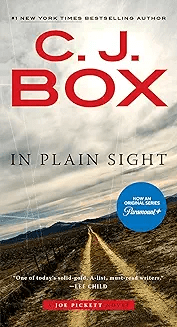
Trophy Hunt by C.J. Box is the fourth thriller to feature game warden Joe Pickett and turns out to be pretty good but not groundbreaking. The novel was first published in 2004.

Joe Pickett finds the mutilated corpse of a moose and learns of some ranchers having similar discoveries among their cattle. Two men are killed and inflicted with similar gruesome wounds which prompts the local law enforcement in Wyoming to form a task force. Pickett is a somewhat controversial inclusion in this, but his instincts and experience with unexpected murder investigations manage to help them land on the proper solution.

I like Joe Pickett because he’s not a disheveled alcoholic or a social misfit. I don’t mind characters like that, but the trope gets a little overused by many crime writers. Pickett is a bit of an odd one out in today’s detective fiction for being quite conventional. He is a loving husband and father, and his wife, Marybeth, supports him and worries about him when he’s the midst of a misadventure. He has two daughters who are depicted quite charmingly as well. Pickett is a character who is easy to root for because he remains steadfast in the midst of often tragic challenges. His family has already endured a pretty serious tragedy so early in the series.

Anyway, there are some pretty decent twists in the story. The other thing I appreciate about Pickett is that he sometimes makes mistakes during an investigation, and Box is not afraid to show that his protagonist is not an experienced detective. Indeed, Pickett seems to be a reluctant detective at times. Some of these elements does make Pickett a bit more endearing and relatable.

Box is not really an extraordinary writer, but he is competent. I am still reading the earlier entries in this series, so I look forward to seeing how the characters and plots evolve. Basically, Box is good enough to keep me interested enough to try out some more Pickett novels.

I have watched some of the television series, but it’s now time to meet the print version of Detective Inspector Vera Stanhope in the first novel, The Crow Trap, by Ann Cleeves.

Doctor Who Audio Review: The Doctor Joins Another Revolution

Revolution in Space, the latest Doctor Who audio drama to feature the Third Doctor and Sarah Jane Smith, is quite entertaining even though it does seem to drag on a little too long sometimes.

Big Finish Productions continues its efforts to bring new adventures for the Third Doctor, who is continued to be performed by Tim Treloar. Sadie Miller takes on the role of Sarah Jane Smith, who was originally portrayed by her mother, Elisabeth Sladen. Prolific Doctor Who contributor Jonathan Morris brings another solid script to the range with Nicholas Briggs returning to the director’s chair. The guest cast includes Juliet Aubrey, Richard James, Barry Aird, and Charlie Norfolk.

The story takes place on a colonized asteroid in the furthest reaches of Earth’s solar system. While the asteroid is being mined for vital minerals, a prisoner with growing and terrifying psychic powers is planning her escape. The denizens are also plotting a revolution to break the control that the Earth government exerts on them. The Doctor and Sarah Jane Smith arrive just in time to get swept up into the maelstrom of fear and discontent. The psychic abilities that some of the people, including Sarah, comes at a fatal price, and the Doctor has his hands full in his efforts to stop an unhinged prisoner from wreaking havoc and saving Sarah’s life.

There is a lot to appreciate about this release. Tim Treloar’s impression of Jon Pertwee as the Third Doctor continues to improve. Sadie Miller is able to emulate her mother as well, while showing her own acting abilities. Juliet Aubrey is perfect casting as the villain, Zyla Kalstein. The sound effects are, as usual, quite effective. The effort to emulate the Third Doctor’s is quite successful.

Big Finish Productions usually are quite successful with the quality of writing, and Morris is certainly one of their more reliable contributors. Revolution In Space is a solid addition to the range, and many elements work nicely, but it is not really a unique adventure. In some ways, I rather wish Big Finish would not necessarily stay devoted to the somewhat cheesy, grating musical score of the Third Doctor era.

This story has six episodes and does feel a little strained at times, which was often a problem noted in the television series. Still, there is a good chance I will appreciate it more when I listen to it again. Once again, the performances and some of the dialogue really helps with forgiving the downfalls here. Doctor Who does require some forgiveness and grace in order to properly enjoy it, but Revolution in Space, in spite of its flaws, is still one of the better adventures. Jonathan Morris still proves himself to be an interesting and capable writer, and I hope he still has plenty of time to bring many more ideas to the table of Big Finish.

Book Review: An Avalanche Of Murder

Ruth Ware’s thriller, One By One, does have a bit of an overused setting and mystery plot device, however it still ends up being an effectively hair-raising literary roller-coaster ride.

A group from a popular app company decide to get away for a ski trip on the French Alps and rent a chalet nestled in the mountains. They meet the two employees, a chef and a housekeeper, who turns out to have complicated past. An unexpected avalanche traps them within the luxurious cottage, however one of the guests has gone already gone missing, and others soon start dying as buried secrets come to the surface.

Ruth Ware has been called today’s Agatha Christie, which may be a little too generous, however she is a talented and engaging enough writer for me to not be too critical of the comparison. The novel is told from a first-person perspective with two characters alternating chapters on relating the story. The housekeeper, Erin, turns out to be a bit more than one would usually expect from a housekeeper is one of the narrators. Liz, a former employee and current shareholder in the company known as Snoop, is the other narrator. Liz is awkward and shy, easily able to fade into the background. I am not usually a fan of this idea of having more than one first-person narrator, but Ware makes it work pretty well once the story takes off, and corpses are discovered.

There are some coincidental and unlikely occurrences that are somewhat distracting, but the plot and setting are strong enough for me to be forgiving of those minor lapses. To be fair, I am like most mystery fans and cannot turn away from a good, claustrophobic thriller where the characters are isolated and cannot get any outside assistance as they contend with a murdered in their midst. As I mentioned before, it’s a pretty common set-up, but that’s because it can work so well. The characters are unique and interesting enough for me to want to see it through to the last word of the last page.

I actually doubt that Ruth Ware herself would consider herself to be the new Agatha Christie, however her rising popularity does appear to be well-deserved if this novel is anything to go by.

Next up, I will be checking in on game warden, Joe Pickett and his family, with Trophy Hunt written by the prolific and reliable C.J. Box.

Film Review: Sharon Takes Charge

Ordinary Angels is a drama film directed by Jon Gunn, that is somewhat predictable and often implausible, but it still manages to hit the heartstrings just right.

The screenplay was written by Meg Tilly and Kelly Fremon Craig. Oscar winner Hilary Swank is paired with Alan Ritchson as the leads. Nancy Travis and Tamala Jones are included in the cast with Amy Acker, who is onscreen too briefly as the deceased wife and mother. Two young daughters of Ritchson’s character are played by Skywalker Hughes and Emily Mitchell and are very well cast.

The storyline concerns a widowed father of a young girl in dire need of a liver transplant. The bills are crushing his spirit and his ability to better provide for his family. Swank plays an alcoholic hairdresser named Sharon Stevens who is moved by the family’s plight and takes it upon herself to shake the community into helping in the most extraordinary ways. Sharon comes across as bombastic and stubborn, but she is carrying a secret heartache of her own. The motivations behind this sudden altruism bear a bit of scrutiny, however there is no denying that she knows how to get results.

The plot is pretty simple, and films like this are not in short supply. Once again, the performances really make it work. Swank, in particular, had a role that could too easily become a caricature, but she manages to show enough restraint to not go too far over the top. Ritchson, who has recently found further fame as the stoic, indomitable Jack Reacher, also demonstrates a somewhat unexpected range in a captivating performance as the hapless, prideful father who feels a bit out of his depth when dealing with the bossy, but well-meaning hairdresser who has barged in his family’s tragedy.

Everyone in the cast delivers a solid, heartfelt performance. The two girls playing the daughters were quite believable and charming. There were times where it was easy to believe that Ed Schmitt, played by Ritchson, could have a moment where he could put his worries aside and just love his children in spite of the apparent oncoming heartbreak that is hovering over them.

There is so much to appreciate about this film, but it is not without some drawbacks. Some of the circumstances surrounding the girl’s illness and the coincidences depicted that ended up helping to resolve the crisis seems a little too implausible at times.

I have yet to read the comparison between the film and what actually happened in the real world, but it was too easy to get distracted by the apparent artistic liberties at times.

The Schmitt family and their unexpected friendship with Sharon is really a true story, but some elements in the film still felt a little exaggerated, which is a par for the course for anything coming out of Hollywood.’

I do wish that the writers were able to make more use of Amy Acker. I understand that she has the character who dies at the beginning, but there could have been some flashback moments or something. Acker seems to have enough of a filmography and more than enough talent that should require more than two minutes of screen time, and I just think there could have been more of an effort to have her audience spend a little more time with her.

The overall experience is a bit of an emotional rollercoaster, and although it’s not always a fun ride, it’s memorable and ultimately enjoyable.

I was also pleased that God was acknowledged in a way that felt genuine and reverent without going into some cartoonish depiction that Hollywood usually goes with when presenting Christian values.

The film has a few flaws, but the merits here outnumber those considerably.

Film Review: A New Web Is Spun

Madame Web is the latest offering in the Marvel movie collection and has been the recipient of an avalanche of negative reviews, which it richly deserves. I should have known better than to waste my time with this cinematic disaster, but I allowed my curiosity to get the better of me.

The culprit in the director’s seat is S.J. Clarkson, who also shares screenwriting credit with Matt Sazama, Burk Sharpless, and Claire Parker. Karem Sanga must also share the blame for the story credit. Dakota Johnson is in the lead as Cassie Webb, a dedicated paramedic with mother issues, who suddenly develops ability to see future events. Tahar Rahim plays the not so menacing villain in the shape of Ezekial Sims, who sees his future death at the hands of three young women in superhero tights and becomes obsessed with finding them. Sydney Sweeney, who seems to be the current Hollywood It Girl, plays one of the trio alongside Celeste O’Conner and Isabela Marced. Emma Roberts, Adam Scott, and Mike Epps are also included in this cast.

The film starts off in 1973, which is a pretty good year since that is when I came into this world so I can torture myself with this garbage and complain about it to whoever happens to stumble across this endeavor at some sort of creative writing. Apparently, what also happened in 1973, is that a research team led by Constance Webb, who is quite pregnant with our supposed heroine, is on the hunt for a rare spider in the jungles of Peru. She is betrayed and injured by her partner. A legendary tribe with some rather familiar spider-like abilities attempts to save her life but her only able to save the child. The child grows up to be Cassie Webb, paramedic extraordinaire, who starts having jarring visions that predict the future, however she realizes that if she acts quickly enough, she can indeed change the outcome of these events. She encounters the three young women who are unknowingly being hunted by the former expedition partner of her mother’s because he is really rich, powerful, and ridiculously evil and is compelled to protect them from forces that she can’t understand with abilities that she has yet to master.

The script throws in some loose ties to the Spider-Man canon because Cassie’s paramedic partner is none other Ben Parker, the uncle to who would become Spider-Man. Uncle Ben, played by Adam Scott, and his wife will end up raising their nephew, Peter Parker, who gets bitten by the radioactive spider and develops the powers which everyone knows. Madame Web has nowhere the name recognition in the comic book canon. This background already feels like it was just thrown in a too obvious attempt to give this addition some kind of credibility. I am not sure that Ben Parker’s profession was actually ever mentioned in the original canon since it was his death that was part of Spider-Man’s origin story.

Anyway, almost nothing about this latest entry into the MCU works. The special effects are fine, but Madame Web’s powers are not conveyed all that interestingly. Johnson barely seems interested in the role, and I have heard that her enthusiasm is not all that evident on the talk show circuit. It’s hard to blame her if that is actually true. I wasn’t all that intrigued by the motivations or behavior of the supervillain. Tahir Rahim is a handsome guy and probably has some talent, but this film does little to showcase that.

There were times where the chemistry between the three girls was almost entertaining, but the dialogue was just too absurd for them to have any consistent success at being charming or amusing. Although there are moments where I could see glimmerings of acting talent in much of the cast, it was not enough to pierce the pile of cinematic muck that was presented on the screen.

The reviews and box office numbers are horrendous, and occasionally I like films better than the reputation suggests. Sadly, this is not one of those occasions, and this film ultimately earns the almost legendary amount of bad press that is being heaped upon it. I won’t necessarily blame the cast for their performances, but I question the judgment of their agents for thinking this project would enhance their careers all that much.

Marvel movies have been taking some critical hits lately, and this latest effort may actually be the stake through the heart.

Film Review: The Joke Goes Too Far

American Fiction is a film that takes on racial stereotypes in a very interesting way with Jeffrey Wright giving probably his most compelling performance as a black author who wrote a satirical piece targeting how African-Americans are depicted in modern literature that was taken far more seriously than he intended.

The source material is a novel entitled by Erasure by Percival Everett. Cord Jefferson wrote and directed the adaptation with the aforementioned Jeffrey Wright in the lead. The talented cast includes Tracee Ellis Ross, Issa Rae, Sterling K. Brown, Erika Alexander, and Adam Brody. 

Wright portrays a black writer and university professor named Thelonious “Monk” Ellison who has published compelling fiction, but he is far from being a bestseller. He is forced to take some leave after losing his patience with students when discussing racial issues. He returns to how hometown to Boston to reconnect with his dysfunctional yet affluent family as he attends a literary seminar. He encounters another author, played by Issa Rae, who has written a more popular, which in Monk’s estimation, promotes the worst of black stereotypes. Although Monk’s family has defied many of those stereotypes, it has more than its share of problems. Monk is alarmed to see signs that his mother is showing some significant cognitive decline. His sister dies suddenly, and his estranged brother returns bringing his troubles along with him. Monk then writes a novel of his own and creates a more thuggish persona as a pseudonym, thinking he is creating satire and making a grand point about the false stereotypes of black American culture. The problem is that the audience and critics miss the point he was attempting to make about how shallow and insipid this work should be deemed and give it far more credence than he expected.

The story displays an impressive mixture of dark comedy and genuine tragedy as more of Monk’s family background comes to light for the audience, and more predicaments arise. Everyone in the cast does well, but Wright in particular just seems to have been the perfect fit for his part.

There are some moments in the film that seem to drag, but that’s not terribly surprising for something in this genre. There are some complex characters, and the plot itself takes a bit more reflection and concentration than much of Hollywood’s output these days. The ending is a bit confusing and a little unsatisfying, but I will avoid spoilers here. The idea may be to reflect how life really can get. Many chapters in a person’s life are confusing and unsatisfying, and I may be missing a point by grumbling about that aspect of the film.

It’s a film that is likely to stir up some interesting discussion and debate for those that look for something more meaningful in the cinematic arts. I don’t find it be a flawless film, but it is certainly much better than many of the recent onslaught of mediocrity coming out of Tinseltown.   

Film Review: Will The Real Agent Argylle Please Stand Up?

Argylle is an action comedy that manages to be some somewhat entertaining in spite of an over reliance on slapstick and a pretty peculiar plotline. Matthew Vaughn directed this film with Jason Fuchs credited as the screenwriter. Henry Cavill is om the title role, but the main protagonist, Elly Conway, is played by Bryce Dallas Howard. Sam Rockwell, Samel L. Jackson, Bryan Cranston, John Cena, Catherine O’Hara, and Dua Lipa are included in the admittedly impressive cast.

Elly Conway is a spy novelist who has been living quite nicely thanks to the creation of her character, Agent Argylle. She is inexplicably ambushed while on a train trip, and she is then unexpectedly rescued by an actual spy, portrayed by the reliably entertaining Sam Rockwell. It seems that Elly has stumbled onto some authentic espionage while researching for her novel. Elly also is forced question everything and everyone she has known in her life because she is no longer sure where the fiction ends and the reality begins.

The cast really makes this pretty watchable. Sam Rockwell probably has the better role here. Of course, he usually knows how to make his mark in a film. The action wavered from being compelling to getting a little too ridiculous. I guess I wasn’t expecting the comic book style of violence. Howard is pretty convincing as the hapless writer who gets swept up in this peculiar caper

The film is pretty uneven when it comes to the level of enjoyment. It’s a promising story idea, and I applaud the attempt to do something pretty original, which has been lacking in Hollywood’s recent offerings. The overall talent of the cast makes this film watchable, maybe even a little better than that, however some of the action sequences were too long and a little too silly for my taste. The film serves the purpose of enticing me to the theatre without too much regret, but it still doesn’t offer much incentive for me to recommend it wholeheartedly.