Doctor Who Audio Review: Even The Doctor’s Memory Could Use Some Repair

Broken Memories is the title of the latest Doctor Who audio collection from the Classic Doctors New Monsters range, and Big Finish Productions once again releases an intriguing and enjoyable collection of tales featuring numerous incarnations of Time Lord.

The premise of this series, which is directed by Barnaby Edwards, is to have Doctors from the classic era face monsters and adversaries that were introduced in the current run that started in 2005. It’s an ambitious idea that almost always pays off. I tend to enjoy the series, and there are four in this particular set to briefly examine.

Tom Baker is up first as the Fourth Doctor in Invasion of the Body Stealers by Jonathan Morris. He is joined by Sadie Miller, who has taken the role of Sarah Jane Smith. Miller’s mother, Elisabeth Sladen, originated the performance, so Sadie is able to breathe new life into one of the most popular companions to enter the TARDIS. The Doctor and Sarah arrive in time to offer aid to crashed spaceship and encounter the body-swapping criminal organization known as Harmony Shoal. I am not that fond of the title, but the story is actually pretty good. Baker still sounds great, and Sadie Miller does a pretty job emulating her mother. There is a truly chilling moment when one of the supporting characters is about to have his brain ripped out of his skull, and the sound effects and score actually freaked me out a little. Anyway, it’s a promising start to this collection.

The Queen of Clocks by Jacqueline Rayner features Colin Baker as the Sixth Doctor, and he is accompanied by the always welcome Bonnie Langford as Mel. The Clockwork Droids are invading a kingdom with a peculiar obsession with time. The Doctor and Mel are about to learn of a tragedy that had started well before their intervention. In spite of the absurdity of the plot, there is a clever yet heartbreaking twist on the horizon. Baker and Langford, as usual, perform this one beautifully. There were some moments that were a little picture to pull into imaginary focus, but that’s always a risk when listening to Doctor Who in this manner. Rayner has contributed to the franchise in some form or another for many years, and this contribution affirms that she has earned the repeated invites to write something new. It has one of those revelations that I wasn’t expecting but felt that I should have been. Anyway, Rayner’s offering here is quite engaging, but there is little reason to expect anything less.

David K. Barnes has a two-part story featuring the race known as the Silence. Once someone turns away from a member of this race, they cannot retain the memory of that encounter. The Eighth Doctor arrives in the city of Sunset during the events of The Silent Priest and to find some solace from the Time War. Paul McGann delivers another masterful performance here. Two rival criminal gangs are at war, and a mysterious priest who no one can remember meeting holds the key to bringing peace. Nicholas Briggs voices the Silence with the correct amount of creepy, sibilant whispers and hisses. This was pretty good, and the Silent featured here was much more interesting than I remember from those in the television series. The overdone Eastern American accents were a little off, and that distracted me a bit. Overall, it was an interesting story and sets up the concluding story quite well.

Sylvester McCoy returns as the Seventh Doctor as he arrives sometime after his future self. The Silent City finds the Doctor looking into an unusually successful casino which has come into being after crime has apparently disappeared. The Doctor is facing the outcome of an adventure he has yet to experience. McCoy is back in all of his Scottish glory, and he also delivers his usual enthusiastic, r-rolling vocal talents. It’s great to see him, and this story ties matters up quite effectively.

I liked all of the stories, although the first one stands out a bit more in spite of its questionable title. All of the Doctors featured showed their formidable talents in spite of their advancing years. This is a collection that is worth the time.

Book Review: A Strange Professor With A Strange Mind

The House of Love and Death is the third intriguing novel by Andrew Klavan to feature Cameron Winter, a college professor with a dangerous path and something he calls “a strange habit of mind”. Winter has the sort of imagination where he can place himself in a horrific crime scene and mentally dissect it with more detail than most people could fathom. Winter currently works as an English professor at a university; however, he was once a government operative who manipulated others into their own demise.

Klavan has an interesting set-up in these Winter novels. The good professor has been seeing a therapist. The book is usually divided into four parts. The beginning of each section reveals a first-person narrative as Winter discusses some aspect of his troubling past with this therapist. The subsequent chapter will then chronicle the therapist’s reaction to what she has just heard and how she guides Winter into some personal epiphany.

Winter also has the peculiar tendency to insert himself into cases that intrigue him uniquely. This time, a family just outside of Chicago had been shot, and their house was set on fire. Some details of the matter bother Winter enough to motivate him to a closer look at the situation where he finds supposedly well-respected people engaging in some pretty shady and lascivious behaviors. Although there are some dangerous people coming to light by Winter’s investigation, they have little idea that Winter himself could very well be more dangerous than they imagine.

This is the third and most recent novel in this series. Klavan has set a pretty predictable pattern on how his plots unfold. There is quite a bit of imagination when it comes to this story. I am getting to know Cameron Winter a little better, and he is an interesting and likeable character, although it’s a little far-fetched. Winter is described as basically being ethereally handsome, which makes him a little hard to picture in the mind’s eye. The relationship between Winter and his much older therapist sometimes seems just a little odd and distracting. There is nothing really inappropriate going on there, but there are some thoughts being revealed which are not quite as professional as expected at times. Still, the therapist seems to have some pretty sharp insights herself which does make her interesting to this reader.

I think I am starting to understand this “strange habit of mind” concept a little better. Klavan isn’t really trying to convey that Winter has some sort of supernatural ability, but that this gift is more of a strange sort of deduction and imagination. Klavan isn’t likely going to be considered to be some master of the mystery genre, but he manages to tell a pretty compelling tale. Also, I am already looking forward to following Cameron Winter’s next caper.

I think it’s time to revisit 221 B Baker Street with the help of author Frank Thomas, who has tried his hand at continuing the exploits of Sherlock Holmes. In 1980, Thomas managed to get Sherlock Holmes and the Sacred Sword on the shelves, and a copy has recently found its way to my hands..

Film Review: The Ghostbusters Break The Ice

Ghostbusters: Frozen Empire is a decent continuation of one of the most popular cinematic franchises in recent decades, but as expected, it doesn’t quite measure up to the original 1984 film.

Gil Kenan directed this film as well as cowriting it alongside Jason Reitman. Original Ghostbuster stars, Bill Murray, Ernie Hudson, Dan Aykroyd, and Annie Potts return to the firehouse alongside the cast portraying the descendants of Egon Spengler. Paul Rudd, Carrie Coons, McKenna Grace, and Finn Wolfhard reprise their roles from the most recent predecessor, Ghostbusters: Afterlife. Kumail Nanjiani and Patton Oswalt also get in on the mayhem for this installment. William Atherton returns as another familiar face from the original film, the officious, snobbish Walter Peck, who somehow is the elected mayor of New York City. Even though there a lot of familiar elements from the original film, I was relieved that we actually got a brand spectral adversary as the main villain.

Callie Spengler has returned to New York with her two children and apparent boyfriend, Gary Grooberson, and has revived the Ghostbusting business with the help of Winston Zeddenore, who has become some uber-rich business mogul who has helped upgrade the Ghostbusters equipment. The new superpowered specter is some dark god who unleashes a deadly chill when he is feeding on people’s fear. He can also control the minds of other ghosts and wants to recruit the spirits being held in the Ghostbusters’ containment unit. This thing can be defeated by a group of sorcerers known as Fire Masters, and the Ghostbusters encounter a hapless, somewhat shallow descendant of one of the Fire Masters, who may be the key to defeat this latest phantasmal being.

The film has some pretty good moments, but nothing really stands out as being terrifically mind-blowing. The return of the surviving members of the main cast of the original film provides a decent helping of the warm fuzzies, and I actually have come to like Paul Rudd and Carrie Coon in the leads of the newer Ghostbusters. McKenna Grace is a bit of a scene stealer at times, but she has such a distinctive and eccentric role as Phoebe Spengler, that it seems easy to predict that would be the case. Still, Grace’s performance is actually pretty compelling even though she is only about 16 years old when this was filmed. I really have little to criticize about the performances, and I enjoyed revisiting most of these characters from both the original film and Afterlife.

The special effects were pretty good, but that doesn’t appear that hard to accomplish with the technology available for movie magic these days.

Overall, this film serves the purpose as an adequate fun distraction, but it’s not going to be much more than that. The expectation that the sequel almost never touches the joy of the first time out continues to hold true this time.

Book Review: When The Dam Breaks, The Dead Will Rise

The Chill is a supernatural thriller published in 2020 by Scott Carson and is one of the better reads for me in 2024. A village known as Galesburg, New York was drowned many decades ago, yet the souls of that lost town live on within the Chilewaukee Reservoir, and the town of Torrance is about the face them.

There is a dam that is about to break due to the onslaught of a relentless rainstorm, and it may release the spirits of the drowned Galesburg. A ghost is already influencing the engineer evaluating the integrity of the dam. A young man, who was recently discharged from the US Coast Guard Academy believes he had killed someone accidentally, however the apparent victim turned up alive. The spirits are still working under the reservoir to complete a work that was to be done while they still lived. The living and the dead meet when the dam breaks as prophesied.

I wish I had the gift of eloquence such as this author, Scott Carson, but I really enjoyed this novel. I dip into the horror genre occasionally, but I am often frustrated with resolutions in many tales in this form. This one really works. The characters are people I could like and stay interested in following. There are plenty of truly suspenseful scenes throughout. The twists were not that predictable. Carson is noted to be the pseudonym of an already well-known author. That does make sense in that this does appear to be written by someone with experience.

The Chill refers to the waters in the reservoir, but there were some chilling scenes that were quite effective. This particular novel is certainly a candidate for one of the better ones I am to read for 2024.

Next up, I was given the key to The House of Love and Death by author Andrew Klavan, so I will see what secrets await me.

Doctor Who Audio Review: The Doctor Finds The Union

Big Finish Productions has recently released the conclusion a Doctor Who audio saga entitled Once and Future. Paul McGann and Tom Baker are featured the most as the Eighth and Fourth Doctors, respectively. The conclusion does more to strum the heartstrings of nostalgia than actually aim for any real coherence in the story, but it’s still a pretty fun indulgence for the Whovians.

Ken Bentley returns to the director’s chair to coordinate the realization of the script written by Matt Fitton. Carole Ann Ford reprises her role of Susan, the Doctor’s granddaughter and the first companion he really wanted to impress. Alex Kingston also returns as the time travelling archeologist and the supposed wife of the Doctor’s. Maureen O’Brien, who would normally be playing the role of one of the Doctor’s early companions, Vicki, takes on the role of an adversary known as the Union. The Union turns out to be someone else who is quite familiar to the Doctor. Other Doctors also appear sporadically during this adventure since this was a release that celebrated the show’s fiftieth anniversary last year.

I have skipped out on reviewing the earlier episodes in this range, so I will offer a brief recap. The Doctor has been the victim of a weapon that destabilizes his regeneration cycle. As he has been trying to reconstruct what has happened to him, he has been suffering from something known as degeneration. He has been erratically returning to his past and sometimes his future incarnations as he has been chasing the cause of his condition through time and space.

Paul McGann and Tom Baker take on the bulk of this particular adventure. The Fourth Doctor rather amusedly referred to it as co-piloting. It was kind of touching and amusing to see Susan interact with other versions of her grandfather. Big Finish has already had the Eighth Doctor and Susan reunite in earlier episodes; however, it was pretty cool to get a taste of what she would make of the Fourth Doctor and his absurdly long scarf.

I have never been a real fan of multi-Doctor adventures like this because the story often takes a back seat to a quality plot. But I am still a fan and some of those scenes where the Doctor drags his other iterations is pretty funny most of the time.

There were times where I struggled to imagine what was going on based on the sound effects. It wasn’t always that clear as to what I should be conjuring up in my mind’s eye.

As usual, the actual performances were really good. McGann and Baker still portray their respective Doctors very effectively. It was still pretty fun to hear a bit of the other Doctors as well during the climax of the adventure even if the plot is a bit of the mess.

This is another sprawling, nonsensical episode that still manages to be entertaining just because the heartstrings of nostalgia are strummed with enough of the right notes. Multi-Doctor storylines do make less sense than a regular episode, but they are usually pretty fun, especially if Big Finish is on the job.

Doctor Who Audio Review: Elves, Daleks, Old Friends, And The Doctor

Big Finish Productions has continued their range of Doctor Who audio dramas with the Seventh Doctor in a reasonably entertaining release entitled Sullivan and Cross-AWOL. The Doctor is reunited with former companions, Harry Sullivan and Naomi Cross in two new episodes directed by Bethany Weimers.

Christopher Naylor returns to the role of Harry Sullivan, who was originally played by the late Ian Marter in the television series alongside Tom Baker’s Fourth Doctor. Eleanor Crooks plays a new Big Finish created companion named Naomi Cross. Nicholas Briggs is back behind the voice modulated mic voicing the Daleks in the second story. Sam Stafford, Saffron Coomber, Carly Day, and Hywel Morgan are included in the guest cast.

Long-time Big Finish contributor, John Dorney, provides the script to the first story entitled London Orbital. The story starts off with a young Harry Sullivan discovering a peculiar massacre at a house, which influenced his decision to join UNIT many decades ago. Harry and his colleague, Naomi Cross, have been misplaced in time several years in the future. Strange elves are appearing, and a killer is stalking the streets and recognizes Harry from a previous encounter. The Doctor has returned as well, but in a different form from which Naomi and Harry are familiar. They find a different London the shadows of the familiar one. Another dimension has crossed into ours, and the Doctor and his friends find themselves trying to head off an unearthly war.

Dorney has delivered a pretty reliable story here. I enjoyed the new dynamic between the Seventh Doctor and his two companions. Sylvester McCoy still sounds great as his iteration of the Time Lord. Familiar companions with a different Doctor never fails to intrigue a fan such as yours truly. It’s a fun story, but I didn’t find it to be all that memorable. Naylor does fine with his version of Harry Sullivan. Naomi Cross is supposed to be another fearless, no-nonsense, woman traveling with the Doctor. She’s fine too, but not much feels terribly unique or interesting about her character. There are some expected amusing moments with the companions, and Naylor and Crooks have pretty good chemistry. Dorney has some interesting ideas and threw in some decent lines, but I don’t consider this to be one of his better contributions.

Scream of the Daleks by Lisa McMullin is actually the better entry here even though the Daleks are a bit overused, in my opinion. The Doctor, Harry, and Naomi arrive during a Halloween festival in 1969 and find that nightmares are coming to life. The Doctor and Naomi trace the cause over centuries and find that the Daleks are trapped in some kind of dimensional portal and are trying to manipulate the Time Lord into lending a reluctant hand.

The second story is better, but it’s not really a standout among all of Big Finish’s output. It’s another reasonably enjoyable episode with a few clever quips that did actually make me laugh out loud. I like the plot for the most part. The performances are quite good, as usual. Of course, the sound effects are convincing. Nicholas Briggs does his usual compelling job voicing the Daleks.

On the whole, the set is enjoyable and has some interesting ideas and characters, but I doubt there is much I will remember in the next couple of days. As with all of my Doctor Who collection, I will likely listen to it again in the not-so-distant future.

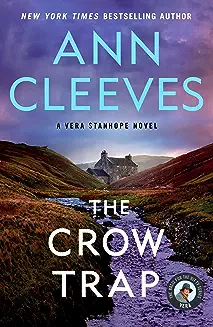
Book Review: Inspector Vera Stanhope Sets A Trap

The Crow Trap by Ann Cleeves was first published in 1999 and was quite a solid introduction of Detective Inspector Vera Stanhope to the extensive gallery of fictional detectives. There has been a very successful British television series based on the series created by Cleeves. Obviously, Cleeves has enjoyed great success and recognition for her contribution to the mystery genre. Now that I have completed my first read of a Cleeves novel, time for me to weigh in.

Vera Stanhope is brought in to investigate the death of woman who was part of a group environmental study. There had already been a suicide, but the death of Grace Fulwell was certainly murder. Vera is having to dig through years of secrets to arrive at the truth quickly because another death soon occurs.

This novel has a few unusual features such as Vera really is not introduced to the reader or the other characters properly until about two hundred pages in. There are a couple of glimpses in the earlier scenes, but Cleeves spent an inordinate time really setting up the supporting characters. She also does a third person narrative but focused on a certain character through portions of the book. I was sort of excited when I got to Vera’s take which occurred in the last few chapters of the novel. Also, this novel turned out to contain 535 pages, so it’s a big one.

Cleeves is a little overly fond of exposition, especially in the early chapters, which at times slows the plot down a bit. She does have a distinctive enough prose style where I appreciated the care she puts in descriptions of the environment and the characters. Cleeves also divides the novel into portions where the main supporting characters receive a chance to shine a bit before Vera has her section which garners the reader’s attention. This method reminded me a little of George R.R. Martin’s style of storytelling in the Song of Ice and Fire series, and Cleeves does it quite well.

A curmudgeonly middle-aged female detective isn’t exactly as fresh one would think, but Vera Stanhope is still an interesting enough protagonist. I ended up anxiously looking forward to the moment when Vera gets more involved in the story, and I was not disappointed when that finally happened.

I also noticed that there is a certain eloquence in Cleeves’ prose that is hard to describe. It reminded me somewhat of the stylings of the mid-twentieth century authors such as Agatha Christie or Dorothy L. Sayers.

Overall, I can see why Cleeves has the following that she does, and I do plan to revisit her works in the not-so-distant future. From what I have noticed, she has quite a catalog that will take some time to get through. Either way, this is my first trip into her literary universe, but it is not to be my last.

The seasons are getting warmer, but it’s still a few days before Spring officially arrives. Therefore, it still seems fitting to dive into The Chill by Scott Carson.

Film Review: Bob Marley Wails His Way Around The World

Bob Marley: One Love is not a terrible biographical film about the legendary reggae artist, but it is rather underwhelming overall. It has a few bright moments and could have been something special if some different production choices were made.

Reinaldo Marcus Green directed the film which he co-wrote with Terence Winter, Frank E. Flowers, and Zach Baylin. Kingsley Ben-Adir stars in the lead alongside Lashana Lynch, James Norton, Tosin Cole, and several other talented enough actors. One of those actors was none other than Michael Gandolfini, son of the late James Gandolfini.

Ben-Adir is a charismatic enough performer and likely captured the essence of Bob Marley pretty well. As near as I could tell, he did his homework when it came to breathing life into the role. The cast did appear to be well-chosen. Lynch was quite compelling as Rita Marley, Bob’s wife. I have no real issue with how the film was cast.

The film largely focused on a three-year period not too long before Marley’ s death in 1981. There is some political upheaval going on during this time, and Marley has decided to appoint himself as some kind of peacemaker through his music. Near the beginning of the film. he and his wife are shot but only wounded. His fame grows across the globe as he sends his wife and children to stay with his mother in Delaware. The film is leading up to a famous event called the One Love Peace Concert which occurred in 1978.

Critics of the film raise have some valid points, however. Because of the Jamaican dialect, much of the dialogue was hard to make out, which was quite distracting. When characters got excited and were a little irate with each other, it was particularly difficult to follow what was going on in those moments. The progression of the story was a little disjointed at times. I was not sure what was behind the unrest in Jamaica at the time. I know I could look that up and figure that out, but the film could have done its part and explained it. I just knew that Jamaica was on a powder keg at the time, and there was quite a bit of violence and crime erupting all over the place. The writers could have been a bit more generous with the background information without bogging the film down.

The music that was chosen was pretty good. There were a couple of scenes with Marley kind of jamming with his band during house parties or rehearsals that were quite engaging. The concert scenes were captivating as well. I did enjoy the music even though reggae isn’t really something I have gone out of my way to listen to.

Anyway, I left the theater a little disappointed that Bob Marley didn’t have a better cinematic depiction. This was produced by his son and members of his family, so it seems that some more complicated or unflattering aspects of Marley’s background were glossed over. That’s kind of understandable, I suppose, but there are not enough merits here to let that slide without comment.

I have obviously seen worse films, but I was hoping that this one would stir me a little more than it did. I did appreciate some more exposure to Marley’s music, and I do concur with the general impression of his musical talent. I may need to add him to my Pandora playlist, but I wish the latest film about Bob Marley left a more favorable impression as well.

Film Review: Build The Mission, The Means Will Come

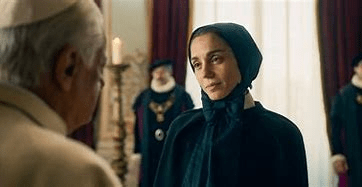
Cabrini is probably one of the best biographical films I have seen in some way even if there were some artistic liberties taken. I am not sure what those liberties may have entailed, but I don’t trust any studio to remain that faithful to the true events and people depicted.

Cabrini is directed by Alejandro Monteverde with Rod Barr providing the screenplay. This is the latest offering from Angel Studios, which have been actually producing some higher quality faith-based films. Christiana Dell’Anna is playing the lead role of Mother Francesca Cabrini, an Italian immigrant who was canonized as a saint, for founding a missionary that helped immigrants to the United States, many of whom were orphaned children. David Morse, John Lithgow, and Giancarlo Giannini are included the cast alongside with a slew of Italian actors.

The story begins in 1899 when Mother Cabrini goes to the Vatican to receive permission to start a new missionary order in the East. The Pope finally allows her to plant a mission but in New York instead. Mother Cabrini takes six other nuns with her across the ocean and sets up in Five Points, which is the slums of New York. It turns out that Italian immigrants are one of those groups facing the most discrimination from the more established Americans. Cabrini is also having to face some troubling health issues as she navigates her way through crime infested streets and hostile city leaders to fulfill her mission. It’s a heartbreaking yet inspiring journey to watch this.

First of all, the casting is very well considered. Dell’Anna is a new talent to me, but she seems to have been the perfect one for the role of Mother Cabrini. David Morse and John Lithgow are talented and fascinating actors, and this film did nothing to diminish that impression. I also enjoyed that the Italian roles were played by actual Italians. Much of the movie was spoken in Italian with the assistance of subtitles, which really bolstered the authenticity of the story.

The set designs were just gorgeous. Early twentieth century New York was really brought to life. Even the slums were well realized. Cabrini is all over the city in this film, and care was shown in all of the sets. The exterior shots were amazing. I could almost smell the horses clopping down the streets during some of those brief scenes.

There is very little that goes wrong with this film, but it sometimes drags a little. It’s a pretty long movie, and I sometimes could feel that. Also, the timeline really wasn’t all that clear. It felt like that the beginning of the film and the conclusion would have taken a few years, but that was not really mapped out or explained very well.

Another notable character was the former prostitute, who becomes a close ally to Cabrini and the other nuns. Romana Maggiora Vergano plays Vittoria and is quite good as well.

I sort of enjoyed the surprise of a mostly unknown cast to American audiences working alongside with more recognized performers such as Lithgow and Morse. It does appear that many of the Italians are actually well-known in Italy. Dell’Anna herself seems to be one of those actors, but this film may help her gain a bit more name recognition which would be well-deserved. It was a bit of a thrill to be impressed with performances by people who are not as well-known as those in Hollywood, but who likely have more raw talent than many of those with the absurd amount of fame.

This is an important story that should have been told long ago. It touches on prejudices that were rampant in a particular era, which today’s audiences may find surprising. It seems like Mother Cabrini is someone with whom I would have enjoyed interacting. Since that is not possible in this world, this film is a pretty good way to be introduced to her and be inspired by the mission she started.

Book Review: Someone Has Been Skinning Something More Than Big Game

Trophy Hunt by C.J. Box is the fourth thriller to feature game warden Joe Pickett and turns out to be pretty good but not groundbreaking. The novel was first published in 2004.

Joe Pickett finds the mutilated corpse of a moose and learns of some ranchers having similar discoveries among their cattle. Two men are killed and inflicted with similar gruesome wounds which prompts the local law enforcement in Wyoming to form a task force. Pickett is a somewhat controversial inclusion in this, but his instincts and experience with unexpected murder investigations manage to help them land on the proper solution.

I like Joe Pickett because he’s not a disheveled alcoholic or a social misfit. I don’t mind characters like that, but the trope gets a little overused by many crime writers. Pickett is a bit of an odd one out in today’s detective fiction for being quite conventional. He is a loving husband and father, and his wife, Marybeth, supports him and worries about him when he’s the midst of a misadventure. He has two daughters who are depicted quite charmingly as well. Pickett is a character who is easy to root for because he remains steadfast in the midst of often tragic challenges. His family has already endured a pretty serious tragedy so early in the series.

Anyway, there are some pretty decent twists in the story. The other thing I appreciate about Pickett is that he sometimes makes mistakes during an investigation, and Box is not afraid to show that his protagonist is not an experienced detective. Indeed, Pickett seems to be a reluctant detective at times. Some of these elements does make Pickett a bit more endearing and relatable.

Box is not really an extraordinary writer, but he is competent. I am still reading the earlier entries in this series, so I look forward to seeing how the characters and plots evolve. Basically, Box is good enough to keep me interested enough to try out some more Pickett novels.

I have watched some of the television series, but it’s now time to meet the print version of Detective Inspector Vera Stanhope in the first novel, The Crow Trap, by Ann Cleeves.