Book Review: An Old Murder With New Clues

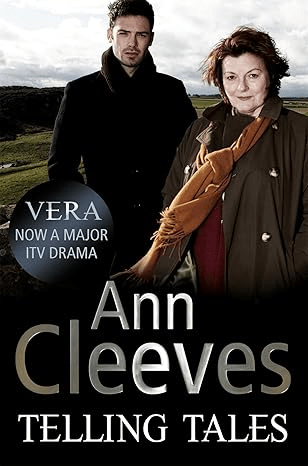
Telling Tales is the second novel by Ann Cleeves to feature the disheveled but shrewd Detective Inspector Vera Stanhope in which she looks into a murder that occurred a decade before.

A teenager in a remote English village was murdered, and there was a conviction soon after, but it seems that new evidence does indeed exonerate the unfortunate Jeanie Long after she takes her own life after denial of her parole.

Vera knows that a murderer is still at large, especially when a new crime occurs. She and her sergeant, Joe Ashworth, are compelled to reopen old wounds and unearth secrets that the other residents would rather keep buried.

There is not much action here, and it story seems to drag a bit; however, the mystery itself was pretty good. Vera is an interesting enough heroine. Cleeves does spend quite a bit of time laying out the side characters before the inspector is drawn in properly.

This is the second novel I have read in this series, and I am interested enough to keep going with it. I have also been watching the occasional episode of the television series in which this has been adapted. Cleeves does take her time establishing the relationships between the characters upfront, which is a tried-and-true way of laying out these kinds of mysteries.

Cleeves does have an easy-going prose style without feeling too elementary or bland. She is certainly a reliable and prolific writer, and I can understand why she has such a following. I am not likely to be an overly enthusiastic follower, but I can be a reliable one. I am certainly interested enough to wish her well and hope she has plenty more books to produce for some years to come.

The next reading selection brings me back to the States with another long-running crime fiction author who is also a relatively recent addition to my literary queue. I am about to be introduced to Stone Barrington, who is the is the creation of the late Stuart Woods. Let’s dig up some Dirt.
Book Review: Inspector Vera Stanhope Sets A Trap

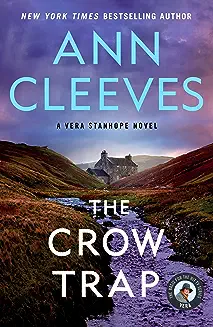
The Crow Trap by Ann Cleeves was first published in 1999 and was quite a solid introduction of Detective Inspector Vera Stanhope to the extensive gallery of fictional detectives. There has been a very successful British television series based on the series created by Cleeves. Obviously, Cleeves has enjoyed great success and recognition for her contribution to the mystery genre. Now that I have completed my first read of a Cleeves novel, time for me to weigh in.

Vera Stanhope is brought in to investigate the death of woman who was part of a group environmental study. There had already been a suicide, but the death of Grace Fulwell was certainly murder. Vera is having to dig through years of secrets to arrive at the truth quickly because another death soon occurs.

This novel has a few unusual features such as Vera really is not introduced to the reader or the other characters properly until about two hundred pages in. There are a couple of glimpses in the earlier scenes, but Cleeves spent an inordinate time really setting up the supporting characters. She also does a third person narrative but focused on a certain character through portions of the book. I was sort of excited when I got to Vera’s take which occurred in the last few chapters of the novel. Also, this novel turned out to contain 535 pages, so it’s a big one.

Cleeves is a little overly fond of exposition, especially in the early chapters, which at times slows the plot down a bit. She does have a distinctive enough prose style where I appreciated the care she puts in descriptions of the environment and the characters. Cleeves also divides the novel into portions where the main supporting characters receive a chance to shine a bit before Vera has her section which garners the reader’s attention. This method reminded me a little of George R.R. Martin’s style of storytelling in the Song of Ice and Fire series, and Cleeves does it quite well.

A curmudgeonly middle-aged female detective isn’t exactly as fresh one would think, but Vera Stanhope is still an interesting enough protagonist. I ended up anxiously looking forward to the moment when Vera gets more involved in the story, and I was not disappointed when that finally happened.

I also noticed that there is a certain eloquence in Cleeves’ prose that is hard to describe. It reminded me somewhat of the stylings of the mid-twentieth century authors such as Agatha Christie or Dorothy L. Sayers.

Overall, I can see why Cleeves has the following that she does, and I do plan to revisit her works in the not-so-distant future. From what I have noticed, she has quite a catalog that will take some time to get through. Either way, this is my first trip into her literary universe, but it is not to be my last.

The seasons are getting warmer, but it’s still a few days before Spring officially arrives. Therefore, it still seems fitting to dive into The Chill by Scott Carson.