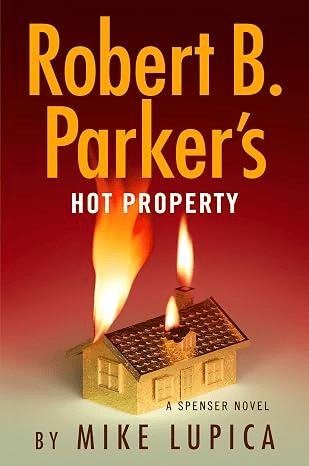
Hot Property is the latest novel by Mike Lupica, which continues the Spenser series originally created by the late Robert B. Parker.
Spenser is hunkered down during a Boston snowstorm when he receives news that his friend, Rita Fiore, has been shot. Rita is a relentless flirt and one of Boston’s toughest attorneys. Her wound is not fatal, but Spenser is determined to find the assailant and bring him out of the shadows. Spenser learns of a pretty intense relationship with a politician that was ended abruptly when he inexplicably drowned. Rita believed her beau to be unimpeachable, but Spenser has some reason to be skeptical when a dodgy land deal seems to be at the heart of the matter. Unfortunately, another shooting happens, and this one is fatal. Someone is tying up some loose ends, and Spenser is very aware that Rita is likely still in danger.
It seems like almost everyone in Spenser’s circle has been shot throughout the series, including the private himself. The plot is actually pretty imaginative. Lupica does throw in some surprising twists. Some of the wisecracks seem a little recycled, but I often felt like that when reading Parker’s novels.
Lupica manages to emulate Parker’s style well enough to keep me engaged. It’s a standard caper for this series, but I wonder if Rita will make some changes in her rather reckless lifestyle in subsequent novels.
This is a pretty good contribution to the series, and Parker would likely approve this one. Lupica was a solid choice to continue the series, and I look forward to getting my hands on the next one.
Until then, my own literary indulgence continues with kind of a modern classic. I decided to read the beginning of what would become a major cinematic franchise by a highly regarded writer who is no longer with us. I am going to explore the wonder of Michael Crichton’s Jurassic Park.
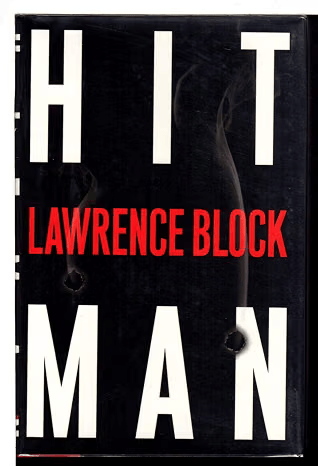
Hit Man is a rather slow-paced but interesting novel by Lawrence Block which introduces his professional killer known as Keller.
Keller is a cool, efficient professional killer who seems to be going through something of a mid-life crisis. A young woman who is initially hired take care of his dogs as he travels to various locales for his rather unusual and lethal occupation. He seems to find himself on a path that almost leads him to a more normal life, however he has to contend with an employer and benefactor who seems to be making reckless decisions that leads to Keller making a tragic mistake during one of his contract jobs.
The novel is well-written, but it seems a little disjointed at times. I looked into the origins of this character and learned that this book was a re-working of several short stories that was combined into one volume. Apparently, Keller was first published in the pages of Playboy several years ago. That helped me make more sense of what I was reading.
I did find this novel pretty good even if the idea humanizing a hitman is a somewhat overdone story idea.
Block has been in the game for some time, and his status of a highly regarded crime writer is well-earned. Even if the structure of this story struck me as a little unusual, I did enjoy the ride once I learned how Keller was first debuted.
Block does put in quite a bit of exposition, which understandable since Keller is not exactly a chatty sort. The prose is still pretty tight and flows quite easily. The actual murders are depicted quite crisply and can be easily missed at times.
Anyway, this novel is worth a look by any aficionado of crime fiction. Lawrence Block has quite a gallery of memorable protagonists, and it was a treat to be introduced to Keller in all of his deadliness.
Well, the great Robert B. Parker may be gone, but Boston PI Spenser is still on the streets with the help of Mike Lupica which brings up my next read. A close friend of Spenser’s is shot, and that’s just not going to fly with Boston’s venerable private eye in Hot Property.
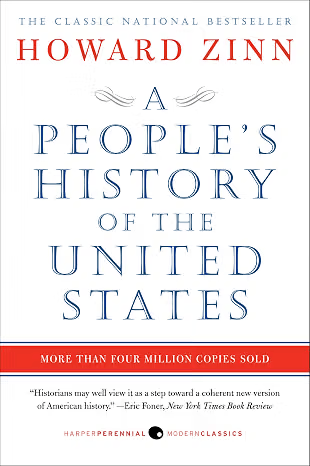
A People’s History of the United States by Howard Zinn doesn’t come across as an unbiased view of the illustrious existence of the likely most influential nation on this planet. To be fair, no one can likely achieve the state of complete objectivity, so I don’t hold anything against Zinn, although I would likely disagree with many of his conclusions and opinions if we had ever been able to meet.
Zinn’s objective is to highlight the policies and decisions that the federal government enacted over the relatively few centuries it existed that impacted the common citizen the most. He hits the highlights and lowlights of this country pretty thoroughly and does come off as quite critical of his own country. That is his right, and I applaud him for presenting a book that I found to be pretty well-written. I do not normally read history books on my own, so I do not have much of a comparison to make to other works of this kind at this time.’
I do applaud Zinn for acknowledging his biases in the afterword, so I can respect him as a writer even though I suspect that there are perspectives that may have been overlooked in this particular work. There again, one can likely make a credible case for that in just about every book of this genre.
This is a well-known presentation of the country’s history and was referenced in at least one popular movie that I know of.
Anyway, Zinn seems to have been quite diligent in his research and throws quite a bit at the reader. It’s a tough read for someone just indulging their curiosity, but I still enjoyed making the effort. I am not sure how much I will be able to retain, however it still seems worth the time,
This book comes with a reputation, and it seems to be derided by many of those on the conservative side of the political spectrum. Those criticisms likely have some validity, but I would still recommend adding this to the reading queue.
I am returning to a more familiar genre in my next read with Last Voyage by British mystery writer, Anna Clarke.
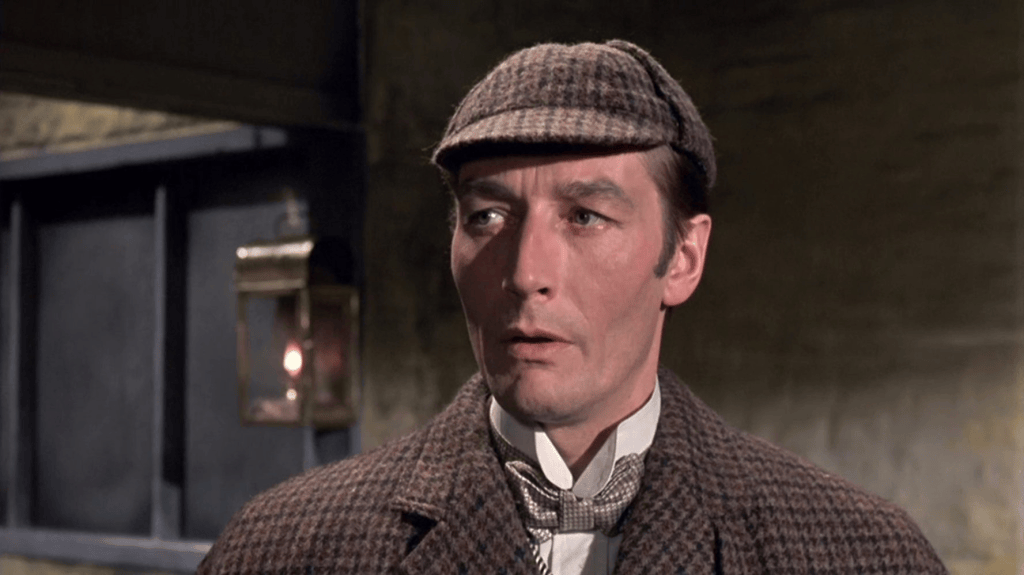
A Study in Terror is a 1966 thriller that features Sherlock Holmes taking on the disturbing murders committed by Jack the Ripper. James Hill directed this mediocre film that was written by Derek and Donald Ford alongside Henry Craog, who is apparently uncredited for some reason.
John Neville takes on the iconic role of Sherlock Holmes with Donald Houston as Dr. John Watson. Other members of the cast include Anthony Quayle, Frank Finlay, Adrienne Corri, and a very young Judi Dench.
An unexpected parcel draws the Baker Street duo into the chase for Jack the Ripper. Holmes figures out a connection to British royalty and begins his investigation in Whitechapel to try to identify the most elusive killer the London police as ever faced.
I can usually enjoy an old Sherlock Holmes film, but this one required a bit more of an effort than most. Neville was pretty reasonable casting as Holmes, but Houston’s version of Watson was rather bland. Watson came off as a bit denser than I imagine from Arthur Conan Doyle’s writings and other screen depictions.
There was also an attempt from the writers to cram every Doyle quote into this thing at any given opportunity, which just ended up coming off as forced and ham-fisted.
Also, the number of efforts to pit Homes against the Ripper have been too numerous to mention over the years. I was hoping this would be a better jab at it, but it was as disappointing as I should have expected.
I will say the set design was pretty remarkable. The visuals of the film are quite stunning at times, but the spectacle is let down by the writing.
I also think the fight scenes were pretty well crafted. There was a kind of a raw brutality that was surprising to see in a Sherlock Holmes film.
Although the film had a few bright spots, the writers kind of dropped the ball a few too many times for me to enjoy it as much as I had hoped.
Doctor Who: The Haunted Windmill is an audio boxset from Big Finish Productions which has the Second Doctor, played by Michael Troughton, escape into an alternative reality where his various interventions in Earth’s troubles never happened. There are three episodes all written by Alan Barnes and directed by Nicholas Briggs.
Troughton continues his efforts to channel the spirit of his late father, Patrick Troughton, and bring a fairly impressive vocal performance that at times almost matches the elder’s. Anyway, I really like the Second Doctor, and Barnes is a reliable writer who once again delivers a solid contribution to the lore.
Fraser Hines returns to the mic as Jamie McCrimmon and a descendent of his, who is revealed. Wendy Padbury is also on deck, returning as Zoe Herriot. Other familiar characters from the Doctor’s past also gather around him in spite of the unfamiliar circumstances.
Also, this TARDIS team has picked up another companion in the form of the Time Lady, known as Raven, who is portrayed by Emma Noakes. Raven has been a presence for a little while in the Second Doctor Adventures, and she has been growing on me.
To be clear, this is a period after the Doctor was sentenced to exile in The War Games but before that sentence was actually carried out. He has yet to regenerate into his third incarnation. He has been reunited with Jamie and Zoe who are now older in this range.
Anyway, Alan Barnes usually comes through with some entertaining and pulls it off yet again.
The Haunted Windmill starts off with the Doctor, Jamie, Zoe, and Raven don’t want to be dragged back to Gallifrey, so they make their escape into a parallel universe and arrive on Earth in 1963, which is not entirely identical to what the Doctor remembers. After Jamie and Zoe suddenly vanish, the Doctor and Raven find an abandoned windmill where they must set up shop to repair the TARDIS. Detective Inspector Lethbridge-Steward, played by Jon Culshaw, is investigating a series of strange thefts. A ghost has been sighted on the marsh. A pair of youngsters are drawn into the Doctor’s presence. This reality may not be what the Doctor remembers, but dangerous adversaries are starting to find their way to him.
It’s not a bad start because the chemistry between the Doctor and Raven is really starting to develop with Jamie and Zoe sidelined. Although Padbury and Hines are still around as a part of their lineages, and it works well. In effect, the Doctor gains two new companions in the shape of Bertie and Lucius, played by Olivia Woolhouse and Ilan Galkoff, respectively.
Besides, who can fail to be intrigued by a haunted windmill?
The Crystal Ship is the second story and probably isn’t going to count as a favorite, but it’s a fine addition. Daisy Ashford makes an appearance as Liz Shaw, a role originally brought to life by her mother, Caroline John. The Doctor finds that an experimental rocket plane has been taken over by some familiar adversaries, but they have not encou8ntered him before in this altered reality.
There are some fun performances here. Roger Ringrose seems to really get into his role as the obnoxious Professor Quigley. I thought bringing Liz Shaw in was a bold decision, but it does work pretty well.
Michael Troughton continues to improve in his performance. He says that he is not trying to a carbon copy of his father’s performance in interviews and believes that his father would approve of his efforts to leave something of himself on the performance. He is probably right, so I try not to be too critical of his participation. What is more important is that Michael doesn’t manage to wreck the nostalgia and still keep his version of this Doctor familiar. He is accomplishing that much.
Anyway, I am not sure this is Barnes’ best effort, but it gets the job done and manages to keep me pretty close to the right amount of suspense.
Finally, this set comes to an end with The Hungry Glass in which the Doctor and Raven come across a peculiar mirror which contains something more than reflections. Another old friend is trapped behind the glass, and very familiar old enemies are also lurking. The Doctor’s past is converging on him even more, and his future becomes even more in doubt.
Overall, I did enjoy this set and the efforts to scramble the canon just enough to keep things interesting without tossing the whole history into the trash can.
Alan Banes was a great choice to continue this range. I am not one of those fans intrigued too much by the mythical season 6b, but Barnes does a good job playing with some of those concepts. Of course, I am willing to give a lot of leeway which it comes to the Second Doctor.
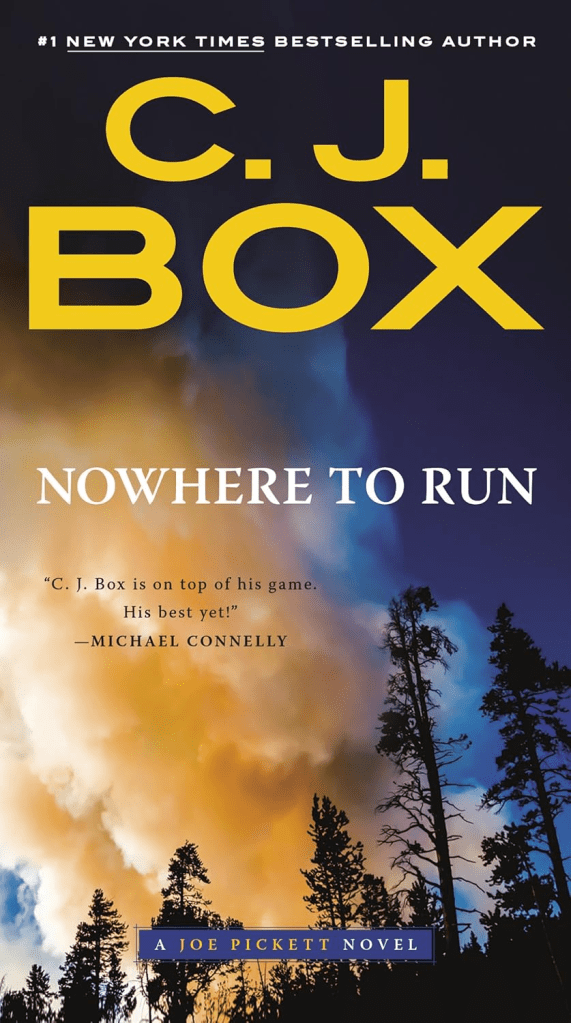
Nowhere to Run by C.J. Box is another solid installment in a pretty compelling series featuring game warden Joe Pickett.
Joe Pickett is wrapping up a temporary assignment in Baggs, Wyoming before returning home to his wife and daughters. He gets reports of some harassment of campers and an elk that was illegally butchered. Pickett looks into the matter and encounters a pair known as the Grim Brothers. When an attempted arrest goes very wrong, Pickett barely escapes with his life. There also seems to be a peculiar connection to an aspiring Olympic runner who had vanished a couple of years earlier. Pickett’s word comes into question when subsequent investigators can find no evidence of his harrowing ordeal with the Grim Brothers. Pickett has to decide if he needs to return to the mountain for the sake of justice and his peace of mind.
Box kind of flirts with the supernatural here when the legend of Wendigos is mentioned. A wendigo is a legendary evil spirit that can resemble a human that may eat human flesh.
Box does a pretty good job of threading together a pretty diverse set of unusual circumstances. Pickett also deals with the challenges of being a father of growing daughters, including a traumatized and sullen foster daughter. The devotion he has for his wife and daughters is rather moving and inspiring.
Pickett is a flawed yet unquestionably noble protagonist and is too often accused of being stubborn. It is an admirable stubbornness, however.
Box continues to be a competent writer and storyteller. He has a pretty good pace when it comes to letting the story unfold.
This novel does get better as more secretes are revealed. There is nothing too extraordinary about this particular installment in the series, but Box does a good job of keeping the reader’s attention.
I have decided to take a different literary path for the time being. The next read is Howard Zinn’s A People’s History of the United States.
Quinn is a suspense novel written by long-time author Iris Johansen and is the second in a trilogy featuring Eve Duncan’s search for her long-missing daughter.
Joe Quinn has been stabbed critically and is in the hospital with an uncertain chance of survival. He is Eve’s long-time boyfriend who has been roped into the search for Bonnie which has lasted for years. Eve works as some kind of forensic sculptor while Joe is a former Nave SEAL and current federal investigator. The current suspect is Bonnie’s father, John Gallo, who also has some dangerous skills and a possible mental condition. There seems to be a conspiracy afoot as well preventing the truth from coming to full light.
The story reveals how Quinn and Eve first meant, which precipitated a long crusade against a variety of killers and psychopaths.
This turned out to be a bit more gruesome than I expected which I don’t necessarily mind, except the story does involve children victimized in the worst ways.
Johansen is a competent enough writer, which is not surprising because she has been around forever. I had some trouble with staying interested, probably due to me just reading this one at random, jumping right in the middle of a long running series.
A friend of Eve’s named Catherine Ling has caught up to John Gallo, initiating a weird mutual stalking scenario in a forest that lasts for a couple of weeks.
Johansen’s roots as a romance writer are still prevalent here. The banter and sexual tension between Catherine and Gallo don’t really come off as very plausible.
Quinn himself is kind of interesting, but only because he’s a little too perfect as a sensitive yet ruthless manhunter.
Johansen also adds some supernatural flavor to the story with the main characters having visions of Bonnie.
There’s a chance I will return to this trilogy and see how things turn out, but I doubt I will make it a priority. I am definitely not the target audience for this author or this book. Fortunately, Johansen isn’t so bad where I am forced to wonder how she has stayed in business for so long.
This one is another case where the book was not outright terrible, but it’s not all that riveting either.
I believe it’s time to return to more familiar literary territory in which game warden Joe Pickett can find that even the most experienced at survival can find themselves with Nowhere to Run by C.J. Box.
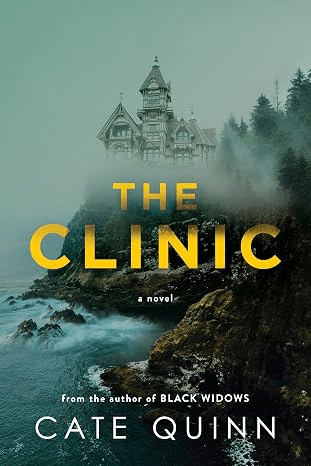
The Clinic is a reasonably engaging thriller by Cate Quinn about a luxury rehab center that is at the center of a puzzling death of a famous singer. The singer’s sister, Meg, goes into the isolated clinic to see how her sister could have died in what should have been one of the safest clinics in the world. The novel is structured as a first-person narrative that is split between two characters’ perspectives.
Meg works at a casino as an undercover card player who is there to expose cheaters and other illegal activities. She also has a drug addiction that actually does need treatment, but she wants to enter the rehab facility to find out what happened to her sister. She has a friend who is an ex-cop who can help her get in, but he is trying to get her to actually take advantage of the treatment options. Meg gets to know the other patients who are mainly celebrities and becomes convinced that her sister was killed by one of them. She starts to get written warnings that are seemingly signed by her sister. Meg’s search for her sister’s killer is of course hampered by her own addiction, but it also seems that her cover is not quite as secure as she hoped.
Cara is the manager of the facility and starts to suspect that there is something more sinister going on than just good-hearted doctors wanting to help the rich and famous fight their various addictions and compulsions. Her own search for the truth concerning the history of the owner, Dr. Lutz, leads her down her own dangerous path that could also lead to life cut abruptly short.
This particular structure of storytelling seems to be getting more trendy among today’s female thriller novelists. It’s not that hard to follow once the reader gets used to shifting perspectives like that.
The plot is kind of standard, although Med admittedly has an interesting job. I am a bit of a sucker for the isolated manors being the scene of some deadly shenanigans. It does usually work, and Quinn does make good use of it here as well.
Some of the twists are a bit outlandish, but that’s a common complaint from me when reading these types of thrillers. Quinn apparently has struggled with addiction herself which does give this tale some authenticity.
It’s a reasonably entertaining and interesting ride, but there weren’t too many characters I liked. Quinn does like to show off a bit when it comes to her familiarity with clinical jargon. I recognized some of the terms and theories regarding addiction and trauma due to previous profession.
Anyway, Quinn is fine as a writer, but there wasn’t much that really stood out. It just felt like a standard thriller in a remote facility with shifty characters. I will likely try another of her novels, but I doubt it will be anytime soon.
The endless literary exploration will continue with a novel by Iris Johansen entitled Quinn,
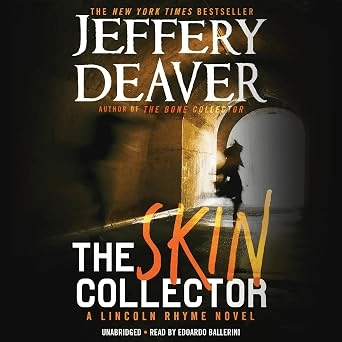
The Skin Collector is a thriller written by the prolific and popular Jeffery Deaver and features the quadriplegic criminalist, Lincoln Rhyme. The audiobook is read by Edoardo Ballerini.
This time, Rhyme and his partner, Amelia Sachs, have a couple of investigations going. While Rhyme is somewhat morose over the death of a very worthy and dangerous adversary, another killer is on the loose. This particular unsub likes to tattoo his victims with a good dose of poison mixed into the ink. There seems to be a connection to another killer known as the Bone Collector, the case that brought Rhyme and Sachs together. As Rhyme and his team dig a little deeper, there seems to be a more complicated motive than just some depraved lunatic getting his kicks. In fact, a more lethal conspiracy seems to be in the making, and Rhyme and Sachs find that this killer may have infiltrated their haven and targeting those clostest to them.
Ballerini does a decent job presenting this story, but it’s not a plot that I found all that memorable. There were too many callbacks to previous cases. I confess that I have not read many books in this series, so I was a little handicapped when it came to recalling or understanding everything that led to this particular novel.
Deaver seems to be a little overly fond of providing somewhat outlandish monikers to his killers. Rhyme starts off this one reflecting over his mental duels with someone known as the Watchmaker, who had recently been reported deceased.
Anyway, Rhyme is just brilliant and curmudgeonly enough to stay interesting overall. Deavber had some pretty good and macabre twists. He is another writer where I can understand why he is such a following, but I doubt that I will be a consistent fan. I may not return to his works in a hurry, but I will likely find my way back to his catalog eventually.
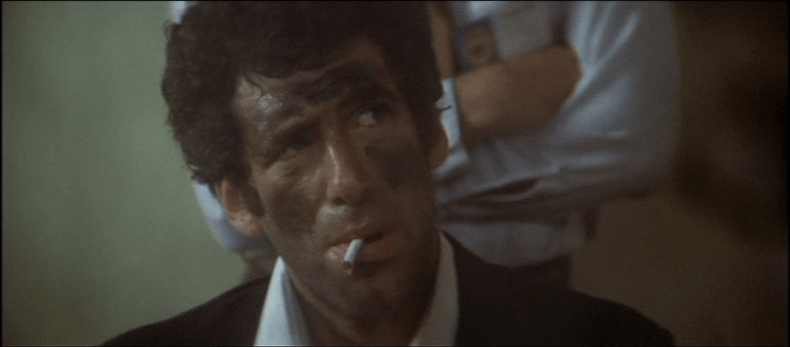
The Long Goodbye is a detective film featuring Raymond Chandler’s Philip Marlowe, and this version was less than impressive. It was released in 1973 under the direction of Robert Altman. Leigh Brackett adapted the screenplay from the original Chandler novel. Elliot Gould stars as the iconic L.A. private eye. Other cast members include Nina van Pallandt, Sterling Hayden, Mark Rydell, David Arkin, and Henry Gibson. There is an unexpected and uncredited appearance by Arnold Schwarzenegger as a henchman.
Marlowe gets a visit from an old friend who he ends up giving a ride to Mexio. Upon his return, he is greeted by police officers who arrest him as a possible accomplice to a murder. The friend who visited him seems to have killed his wife. News is sent that the friend committed suicide. Once Marlowe is released, he is then hired to find a wayward husband who is rather eccentric in the vein of Ernest Hemingway. Marlowe then is also having to contend with some gangsters that the dead friend had apparently swindled. Marlowe finds that little is how it seems.
Gould is a fine actor, but I struggled with his interpretation of Marlowe. He does not come across as tough as I had seen Marlowe presented before. There are a lot of times where characters talk over each other which makes it hard to follow. There is a very long introduction in which Marlowe just goes grocery shopping for his cat. I found this film to be a bit boring, which is disappointing to say about a Philip Marlowe movie.
The ending was pretty good, but it took too long for me to really care about the resolution.
I thought Mark Rydell kind of stood out as the ruthless Augustine. He was one of those charming psychos that could react violently with startling suddenness.
I am not exactly sure how Altman stayed to the source material, but it sure felt like a lot of liberties were taken. I sure didn’t find Gould’s depiction of Philip Marlowe to be all that familiar. Obviously, he is no Humphrey Bogart.
Anyway, the film fell a little below average as a viewing experience. There are worse movies out there, but this particular adaptation is not something where I would call a must-see.