Film Review: The Dead Don’t Stay Still In Centerville

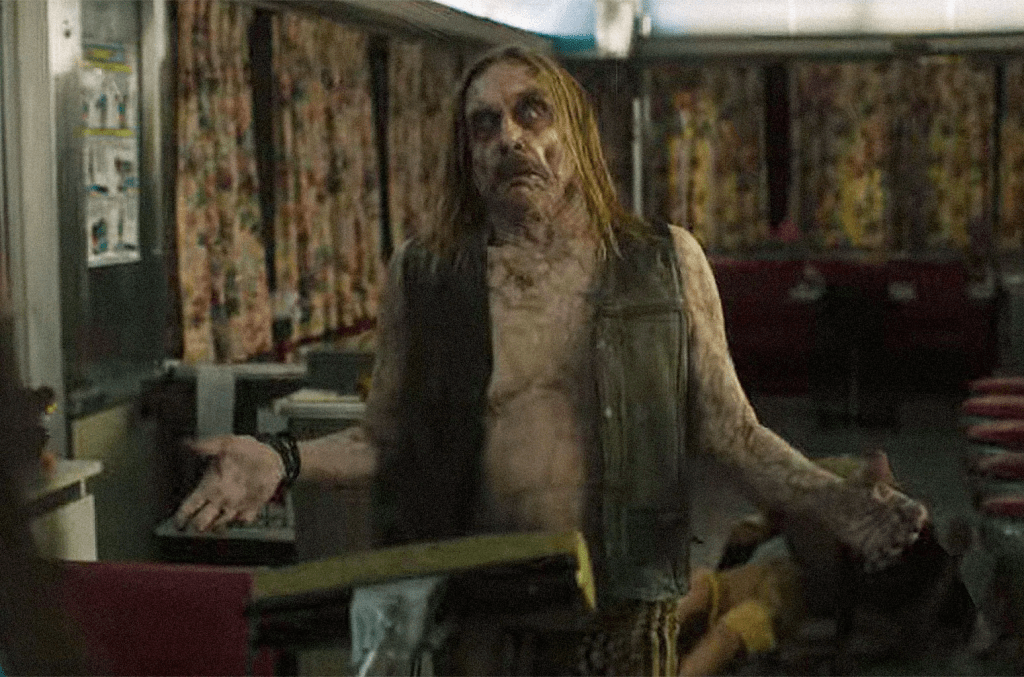
The Dead Don’t Die is a rather gruesome horror-comedy written and directed by Jim Jarmusch, which often seems as dead as the persistent zombies roaming the street s in spite of the star power employed here.

The film stars Bill Murray. Adam Driver, Tilda Swinton, Selena Gomez, Carol Kane, and quite a few others. Even their considerable talents could not keep me fully engaged in this film.

It’s a pretty standard zombie flick in many ways, but Jarmusch injects this deadpan sort of humor that seemingly falls flatter than was intended. In this little town known as Centerville, the dead start walking again due to some strange astronomical event that was nonsensical that I don’t even remember what it was called.

Murray and Driver have a sort of wooden double act as two of the town’s police officers trying to figure out the reason for these mysterious cannibalistic deaths. The town is full of strange characters played by the likes of Steve Buscemi and Danny Glover. It was kind of cool to see Glover.

Also, there were some moments that the fourth wall was breached, which was supposed to enhance the intent of this being a comedy. It didn’t work that well for me. I don’t mind that sort of tactic at times, but a better writer needs to take that on.

I appreciate that Jarmusch was trying to be somewhat innovative in this genre of film, but he just didn’t quite hold it together for me. It could be well that zombie movies are a hard nut to crack when it comes to present a more original vision, but this project didn’t really have the secret to doing that successfully.’

Anyway, it’s a little too bizarre for my taste, and that’s saying something considering my other indulgences when it comes to cinema.

Classic Film Review: When Witnesses Get It Wrong

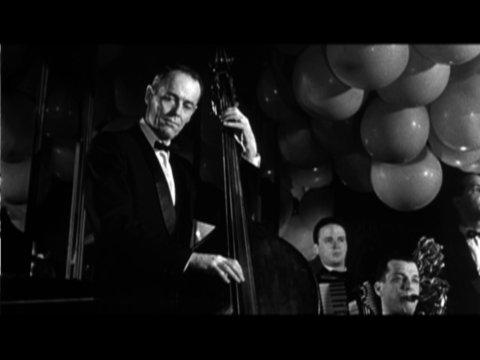
The Wrong Man was a film released in 1956 where one could have high hopes since Alfred Hitchcock is the director, but it was a little too slow and plodding for my taste. Maxwell Anderson and Angus MacPhail are the screenwriters for this film which was apparently a true account of a man’s unjust arrest for a series of armed robberies. It is based on Anderson’s book entitled The True Story of Christopher Emmanuel Balestero.

Henry Fonda is in the lead role as the one they call Manny. Vera Miles plays his wife whose sanity begins to unravel as the story unfolds. Anthony Quayle, Harold J. Stone, and Esther Miniciotti are included in the cast.

Manny is a jazz club musician whose wife is needing some significant dental care. When he goes to borrow some money from his wife’s insurance policy, he is identified by the women working there as a man who had held them up twice before. The police start to question him and find that other various shopkeepers victimized by the thief seem to believe him to be the culprit. The investigation leads to Manny’s arrest and trial. In the meantime, his wife has sunk into an alarming depression that requires her to be committed. Manny has his plate full when he has to cope with his wife’s mental distress on top of his legal troubles.

I found this film to not be one of Hitchcock’s best, but it’s still not deserving of being ignored. Henry Fonda’s performance is quite compelling, and I still managed to find some sympathy for his plight. Miles is also a nice casting decision as well. Her mental collapse is quite convincing without feeling too over the top.

I think Hitchcock spent a little time on the process of Manny’s arrest. I suspect he was trying to ratchet up the tension, but it felt more like padding at times.

This is the only film that is apparently based on a true story, and Hitchcock reportedly did not deviate too much from what actually happened.

The film does have a bit of a Hitchcock feel even if it is quite different from most of his best-known works. I still consider him to be deserving of the reverence he receives in the realm of filmmaking, but this particular work does not quite showcase that talent as well I would like.

The film seems to bring about some mixed reactions from various professional critics and agree with much of the negative feedback, but I would still recommend seeing this one because the performances do make some of the problems less significant. It’s still a Hitchcock film, and this film is still a long way from being a dumopster fire.

Film Review: Nothing Like A Nice Hike At Gunpoint

The Long Walk is a dystopian thriller film that was adapted from an early Stephen King novel. Since I have not read the novel, I am uncertain as to its faithfulness to the source material, but it’s a pretty good movie. The screenplay was written by J.T. Mollner with Francis Lawrence as director.

The film’s cast includes Cooper Hoffman, David Jonsson, Ben Wang, Judy Greer, and Mark Hamill.

This film takes place in some alternate history where the United States has gone through some kind of civil war in the twentieth century. There is now an annual event called “The Long Walk” in which young men from every state gather to participate in a long walk for as long as they can in order to win a large cash prize and any wish granted they desire. It’s a Stephen King story, so there is a rather gruesome catch. The lads are escorted by the military, and if they fall below walking 3 miles per hour, they are executed after three warnings. Along the way, there is a mixture of some competitiveness and camaraderie. Of course, the other catch is that there can only be one left still standing in order to reap the rewards.

It’s a pretty good movie in spite of most of it taking place on a very long stretch of road. It’s a tough movie to watch because of the ruthlessness depicted at times. Complicated and shifting relationships are king of a staple in a Stephen King story.

Those who have read the book may disagree, and I can sympathize since I also usually prefer the written version in most adaptations like this.

The performances were all quite solid, although Hamill does kind of come off as a little cheesy at times as this blustering Major. I will say that he has had worse performances, so he does not really ruin the film.

It’s a somewhat extraordinary plot in some ways. Honestly, it seems like a pointless endeavor concocted by the government, but it does a provide an interesting vehicle for the banter between the characters.

There are some moments that pull on the heartstrings, and I was actually saddened at some of the deaths. There are some pretty compelling twists as well.

This may not be the best of Stephen King adaptation, but it should hold up as at least being interesting and worthy of atj least one viewing.

Film Review: Some Goodbyes Do Not Come Quick Enough

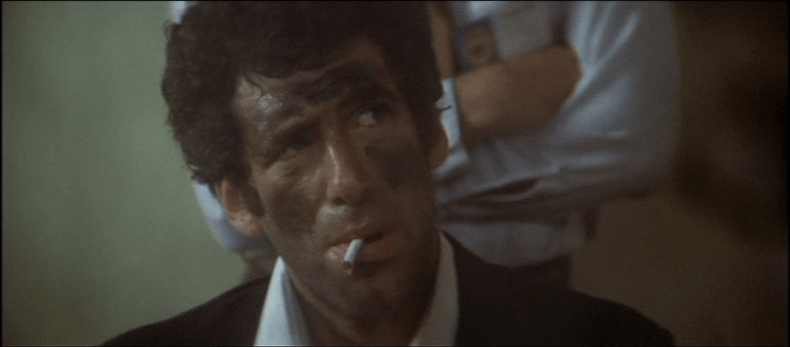
The Long Goodbye is a detective film featuring Raymond Chandler’s Philip Marlowe, and this version was less than impressive. It was released in 1973 under the direction of Robert Altman. Leigh Brackett adapted the screenplay from the original Chandler novel. Elliot Gould stars as the iconic L.A. private eye. Other cast members include Nina van Pallandt, Sterling Hayden, Mark Rydell, David Arkin, and Henry Gibson. There is an unexpected and uncredited appearance by Arnold Schwarzenegger as a henchman.

Marlowe gets a visit from an old friend who he ends up giving a ride to Mexio. Upon his return, he is greeted by police officers who arrest him as a possible accomplice to a murder. The friend who visited him seems to have killed his wife. News is sent that the friend committed suicide. Once Marlowe is released, he is then hired to find a wayward husband who is rather eccentric in the vein of Ernest Hemingway. Marlowe then is also having to contend with some gangsters that the dead friend had apparently swindled. Marlowe finds that little is how it seems.

Gould is a fine actor, but I struggled with his interpretation of Marlowe. He does not come across as tough as I had seen Marlowe presented before. There are a lot of times where characters talk over each other which makes it hard to follow. There is a very long introduction in which Marlowe just goes grocery shopping for his cat. I found this film to be a bit boring, which is disappointing to say about a Philip Marlowe movie.

The ending was pretty good, but it took too long for me to really care about the resolution.

I thought Mark Rydell kind of stood out as the ruthless Augustine. He was one of those charming psychos that could react violently with startling suddenness.

I am not exactly sure how Altman stayed to the source material, but it sure felt like a lot of liberties were taken. I sure didn’t find Gould’s depiction of Philip Marlowe to be all that familiar. Obviously, he is no Humphrey Bogart.

Anyway, the film fell a little below average as a viewing experience. There are worse movies out there, but this particular adaptation is not something where I would call a must-see.

Film Review: Even A Pawn Can Take Down A King

Young Washington is a pretty well-put together film depicting the early failures and successes of the first President of the United States with William Franklyn-Miller in the lead role as George Washington. Jon Erwin sits in the director’s seat of this film which he co-wrote alongside Tom Provost and Diederik Hoogstraten.

Other familiar talents such as Kelsey Grammar, Andy Serkis, Mary-Louise Parker, and Ben Kingsley are part of well-chosen cast.

Much the film delves a bit into Washington’s childhood and reveals that his father died when he was quite young. Washington had an older half-brother who took charge of his education and was apparently an important inspiration to the boy. Of course, older brother Lawrence teaches George the rules governing the game of chess. Washington initially wanted to serve in the British Army but was denied because of his colonial roots. He was given a position in the Virginia Militia where he started making a name for himself. The film then starts to hone on the French and Indian Wars, and Washington’s experiences there, including a rather humbling loss. It takes the love and wisdom of George’s mother to reignite that spark of inspiration that propels him to build on the purpose that will eventually help form a nation from the ground up.

It’s not the greatest historical film I have seen, but it holds up quite nicely and is certainly one of the better projects to hit the screens this year. Franklyn-Miller does a decent job portraying a very young George Washington, although I don’t know there is anything that unique about his performance.

The film seems to not stray too far from historical record, although I am sure there were some flights of fancies utilized.

It was also a pretty straight-forward film in a lot of ways without a lot of strange surprises thrown in for effect. It was a little odd to see Washington portrayed at such a young age during a period of his life that doesn’t seem to have much of lore that most have come to associate with him.

The film is certainly intended to celebrate who would become the United States’ first president, but it also brings out his human frailty and reminds the audience what he had to overcome to be seen as one of the Founding Fathers.

The set design and wardrobe seemed well crafted.

There are times that the film likely exaggerates the accomplishments a bit, but it’s nothing too outrageous. The film does have moments where it could have used a quicker pace, but it’s no worse than many other releases in that regard.

The film still delivers a good time, and I did actually feel like that I learned something new about a period in Washington’s life that is likely overlooked in the schools.

As I write this, I am thinking I should add a more comprehensive biography of the man to the reading queue.

Classic Film Review: Showgirls In Peril

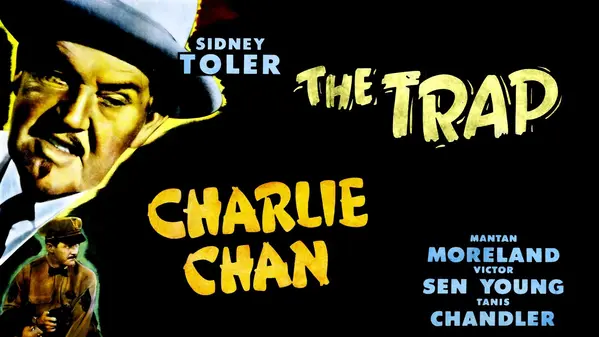
The Trap is not one of the better films to feature Charlie Chan, as played by the late Sidney Toler. Howard Bretherton directed this film which was written by Miriam Kissinger. The character was first created by the late Earl Derr Biggers, who was also given some writing credit. Biggers died in 1933, so he probably didn’t have much to do with this bit of tragic cinema.

Victor Sen Yung, Barbara Jean Wong, Mantan Moreland, and Tanis Chandler are also included in the cast.

It’s kind of a classic murder mystery set-up where a where a theatrical ensemble is staying at a beach house where scandal and blackmail are ruining the camaraderie among the showgirls. When one of the showgirls is murdered, a pair of them fall under suspicion. San Toy happens to know the son of the great detective, Charlie Chan, and reaches out for some help. Jimmy Chan starts his own investigation; however, the big man turns up when he receives some information that Jimmy himself had been murdered. Charlie devises a trap to ensnare a murderer who has claimed a second victim as he discovers the secrets held by the performers.

There isn’t much about this particular film that works. Charlie Chan isn’t all that involved in the story as expected. I did a little research here and learned that Toler had been coping with a severe cancer diagnosis at the time of production. In fact, he died the following year. The story was not that interesting. Well, it did follow the basic tropes of the genre and the other films in the series, but it was not executed all that well. It felt rushed and a bit incoherent. Now that I am aware of Toler’s condition during filming, it does seem the studio was rather ruthlessly trying to make as much money as possible from a star who was terribly sick.

I do think the Charlie Chan movies themselves are worth some viewing time due to the cultural impact at the time of release, but I also believe this particular film deserves a pass. The actors did their best, but the script did little to help.

Film Review: Bart Sees It All

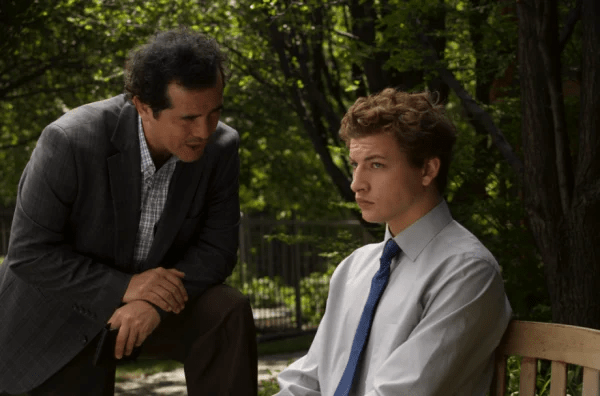
The Night Clerk is an almost painfully mediocre suspense film written and directed by Micchael Cristofer about a motel clerk with Asperger’s Syndrome who sets up cameras in rooms to spy on guests so he can learn how to imitate their mannerisms. He apparently believes this will help him be less socially awkward.

Tye Sheridan is in the lead as Bart Bromley with Ana de Armas, John Leguizamo, Helen Hunt, and Johnathan Schaech included in the pretty small cast.

Bart finds that he is the lead suspect when a pretty lady is found dead in the motel room with him in the vicinity. He is assigned by a sympathetic boss to another location where he meets another pretty lady who flirts with him and reveals that she is in an affair with a married man. The detective, played by Leguizamo, continues to hound the hapless Bart while the real killer is desperate to cover his tracks.

This is a bit of a knock-off of Alfred Hitchcock’s Rear Window, which isn’t a bad source for inspiration even if it has been overcooked over the years. The cast is solid enough with convincing performances; however, it just feels so slow. There are no real surprises. Bart does come off as a bit creepy at times, so I found it hard to maintain any real sympathy for him. An actress of Helen Hunt’s caliber feels wasted in the role as Bart’s protective mother. There are also times where it feels that the killer takes a somewhat more convoluted approach than necessary to keep his secret. I can go on and on, but I have a full plate today.

The bright spots in this film were there but seemed a little muted at times. Overall, I think audiences have seen this kind of setup too many times, and Cristofer really doesn’t offer up much in the way of an interesting or unique twist. I didn’t really care much about the protagonist in spite of him being inflicted with a very challenging condition. Sheridan does do a solid job in his portrayal, but that wasn’t enough for me to muster up any real appreciation for the film as a whole.

Film Review: Dancing With The Devil

Apartment 7A is a mildly interesting horror film which I just read was supposed to be some prequel to the classic film, Rosemary’s Baby. The film is directed by Natalie Erika James, who co-wrote the film alongside Christian White and Skylar James. Julia Garner is in the lead as aspiring stage dancer, Terry Gionoffrio. Other cast members include Dianne Weist, Jim Sturgess, Kevin McNally, and Marli Siu.

Terry Gionoffrio is a dancer who was seriously injured in a fall onstage and is having some difficulty getting booked for other Broadway gigs. She meets an elderly couple who befriend her and offer a rent-free apartment in a lavish old complex. Of course, Terry starts having strange dreams and hallucinations. She does have a seemingly convenient fling with a Broadway producer which could lead to her desired fame on the stage. In the midst of these strange circumstances, Terry learns that she is pregnant, but there is something odd about the developing child. It turns out that Terry has been ensnared by some dedicated Satanists eager to bring forth a manifestation of the one they worship.

The film hits some of the right notes that engage my interest. It takes place in the 1960’s in New York. There is a rather spooky apartment, although we’re not really confined there with Terry. Terry does get to leave and figure out what kind of situation keeps her on the edge of hysteria. I have no real complaint about the cast. Garner is a pretty good actress. Wiest is kind of a legend and is easily able to pull off the part of a strange old woman who can be deadlier than she first appears.

The script is okay. There is nothing really that unique about setup or plot. Geriatric Satanists seems like an interesting idea, but I just ultimately found it to be kind of hammy. Some of the imagery of the devil was kind of clever, but nothing too jarring or unique.

I don’t think I have gotten around to seeing Rosemary’s Baby. Even though I may eventually be curious enough to see it, this film didn’t really kickstart my interest that much.

Apartment 7A is not a bad film on the whole and does have some merit in the horror genre, but there isn’t much that’s unique and will likely be considered another unnecessary prequel that has a tenuous connection to the film that inspired it.

Film Review: Vengeance In Five Points

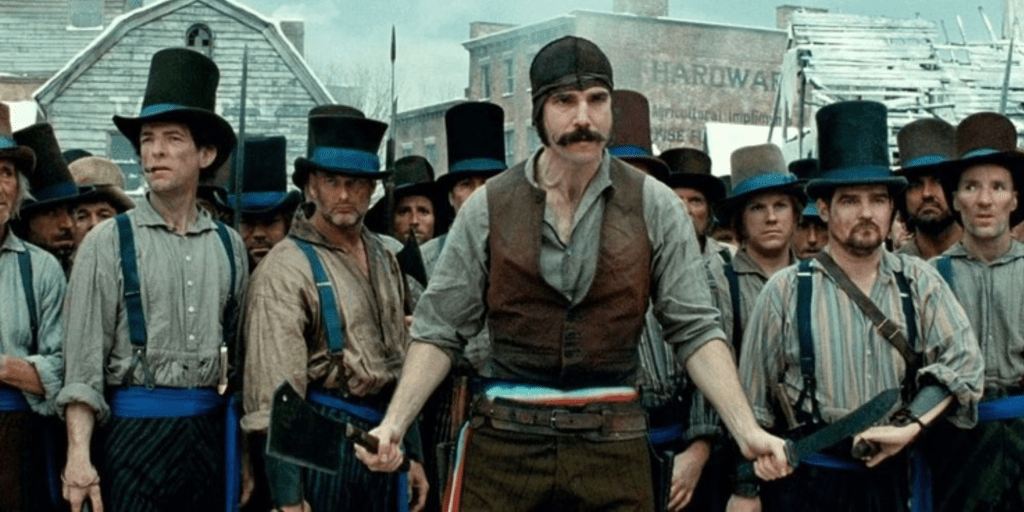
Gangs of New York is a very long film directed by Martin Scorsese that does take some patience to get through in spite of some captivating performances, especially with a certain Daniel Day-Lewis in the cast.

The screenplay is written by Jay Cocks, Steve Zaillian, and Kenneth Lonergan and was adapted from a book published in 1928, what was Herbert Asbury’s The Gangs of New York: An Informal History of the Underworld.

Leonardo Dicaprio, Cameron Diaz, Jim Broadbent, and John C. Reilly are included in this obviously talented cast. Cameron Diaz does seem a little miscast here, but she is not too distracting.

The film starts off in 1846, taking place in a New York slum known as Five Points where a gang fight is about to erupt between Irish immigrants and American natives. The leader of the Irish gang is cur down by the leader known as the Butcher, played by Day-Lewis. Sixteen years later, the son of the slain man has returned to Five Points for vengeance. DiCaprio’s character goes by the moniker “Amsterdam”. In order to get closer to his target, Amsterdam positions himself as the Butcher’s protégé. A brash pickpocket played by Diaz comes to Amsterdam’s attention and complicates his plans to avenge his father. Another war is brewing between the New York gangs, and a major city could be caught in the crossfire.

The set designs are stunning. Daniel Day-Lewis delivers a powerful performance as the brutal gang leader known as Bill “the Butcher” Cutting. DeCaprio also leaves an impression with his talent, but Day-Lewis stands over everyone in the arena of acting.

The film is just too long. It does seem that Amsterdam could have pulled off his objective too many times before the climactic battle sequence taking place. Bill the Butcher is an intimidating fellow, so I am glad that he was not taken out sooner.

It’s still a visually appealing film even though it feels that further editing could have occurred. It’s an exhausting film to watch at times. The fight scenes are gruesome but well-executed.

I had been thinking of finally watching this film for some time, and although I would not label it as a disappointment, it didn’t pack quite the punch I was hoping for.

My complaints about this film may have more to do with my choice of genre and certain expectations than Scorsese’s editing choices. It’s still a decent film and should be watched. Just make sure the day is slow and one has the attention span to stay focused.

Film Review: An Island Getaway No One Wanted

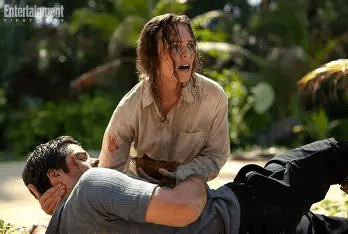
Send Help is an interesting survival horror film with some solid performances in spite of the outlandish twists and turns throughout the experience.

Sam Raimi is the director of this film, which was written by Damian Shannon and Mark Swift. Rachel McAdams and Dylan O’Brien play the corporate colleagues who survive a spectacular plane crash and end up on what appears to be a completely deserted island.

Dennis Haysbert, Xavier Samuel, and Edyll Ismail are included in the small cast. Of course, the focus will be on the chemistry and banter between McAdams and O’Brien.

McAdams plays the shy, eccentric corporate strategist, Linda Liddle, who is passed over for an expected promotion by O’Brien’s typical spoiled new CEO for the company he basically inherited from his recently deceased father. Linda is a Survivor enthusiast and even auditioned for it. O’Brien’s Bradley Preston is shown the audition tape which amuses him and his cohorts greatly. Well, the plane suddenly develops a problem which kills everyone but Linda and Bradley and crashes into the island. After they awake and reunite on the island, their power struggle begins in earnest. Linda is the one with the knowledge of survival skills, and Bradley is just a spoiled jerk who has little respect for his strange subordinate. Linda’s many years of suffering underestimation and unappreciation may have unhinged her in ways that Bradley could never imagine.

On the whole, this is a pretty good film. Some of the twists were a surprise, but there was still more than a tinge of predictability as to what the final outcome would be.

The performances of McAdams and O’Brien were really quite compelling. O’Brien nailed the part of the obnoxious, entitled rich kid who ultimately cannot conceive that he could be in over his head. The evolution of McAdams’ character arc was pretty well written. I am not sure that McAdams is going to be considered one of the great actresses of the silver screen, but she does shine quite effectively here. She usually does more than hold her own alongside her peers in the projects that I have seen her participation.

Some of the gore still seemed a little too egregious at times, and I had some trouble believing that Linda Liddle would know that much about octopus’ toxins, which does involve a rather disturbing, grotesque scene of retribution midway through the film.

There are some moments that seemed a little too ridiculous at times, but I believe that was rather intentional in the writing.

Anyway, the story does seem to bring out some interesting thoughts on potential shifts in dynamics when two people from very different social standings are isolated and sharing a uniquely harrowing experience. Both of the lead characters had some depth when they were trying to outwit the other.

If one can handle some unnecessary gruesomeness and unlikely plot swings, the performances and a pretty interesting script still makes this film something I could recommend seeing.