Film Review: The Star Wars Saga Concludes…For Now

Image result for star wars the rise of skywalker

Star Wars: The Rise Of Skywalker supposedly concludes the Star Wars saga.  J.J Abrams both directs and shares script writing credit with Chris Terrio.  Derek Connnelly and Colin Trevorrow are credited with sharing the story idea.  Old and newer characters return with Daisy Ridley as the main protagonist known as Rey.  We get to find out more about lineage.  John Boyega and Oscar Isaac return to their roles of Finn and Poe Dameron, respectively.  Adam Driver is still raging across the galaxy far, far away as Kylo Ren, aka Ben Solo.  Unused footage of Carrie Fisher helped to bring General Leia to life in this film.  There are plenty of treats for the long-time fans of this franchise.

The plot is a bit of a mess, but the performances were all quite good.  It was also great to see Billy Dee Williams return as Lando Calrissian.  Some of the nostalgic moments seemed a little crammed in there, but I found myself not minding that too much.

Yes, some of the critiques from the professionals have some validity, but I was relieved to find myself still marveling at the imagination in the visual effects and fight choreography.  Basically, I was just relieved that I didn’t hate it.  I had moments where I felt the scenes were cut too short though, which is strange since it does go well over two hours.

The film isn’t a perfect cinematic experience, but I still enjoyed seeing it.  I have a somewhat mixed, confusing appreciation for it, but I absolutely have no regret seeing it.

Doctor Who Audio Review: Nyssa Gets Nasty

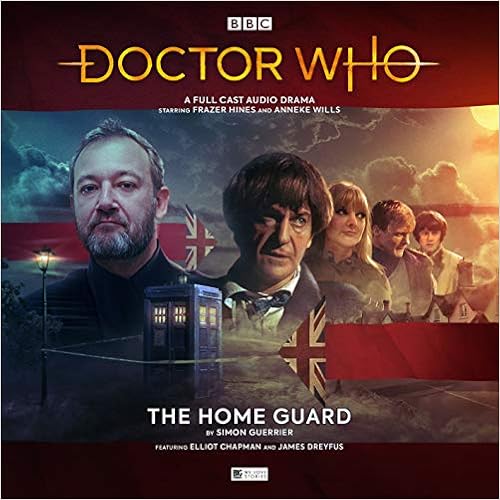
Interstitial/Feast of Fear is a Doctor Who audio double feature from Big Finish Productions.  I believe Big Finish calls these releases double bills, but I think double feature works just as well.  Anyway, this has two stories different stories each with two parts written by two different authors.  George Watkins has joined the TARDIS team comprised of the Fifth Doctor, Tegan, and Nyssa as the former Roman slave named Marc.  Peter Davison, Janet Fielding, and Sarah Sutton are all back behind the mics performing with their usual sparkling chemistry.  I like this release because I am not familiar with the writers, and I usually appreciate Big Finish’s efforts to get new writers into the fold.

Interstitial is written by Carl Rowens and has Anna-Maria Nabirye and Jeremy Ang Jones in the guest cast.  In fact, they are the only two members in the guest cast in this episode.  The Doctor and his companions happen upon an experiment being conducted with time itself, and as usual, this kind endeavor goes quite off the rails.  The setting and idea seems quite familiar, however the results of the experiments kind of have some horrific creativity.  The story has some engaging ideas, but it’s petty heavy on the technobabble, which is a little distracting.  Unfortunately, that sort of jargon is somewhat expected in Doctor Who, so I have no suggestions as to how Rowens could get around it.  It’s enjoyable enough for me to be willing to hear what else the writer has up his sleeves.

Feast of Fear is written by Martyn Waites and has a little larger guest cast which includes Deirdre Mullins, Melissa Dean, Niamh McGrady, Peter Heenan, and Michael Yare.  It has a sinister carnival traveling around Ireland during the period of the Great Famine in the mid-nineteenth century.  Nyssa has been taken over and is acting like a spooky ringmaster.  The Doctor is chained and blindfolded and having to mutter more nonsense than usual to keep an alien presence out of his mind.  Tegan and Marc are trying to figure this whole thing out and save everyone.  I have a deep affection for Ireland, so I am already partial to this story.  It’s a pretty disturbing set-up.  I am not sure, but I had some trouble keeping my imagination locked on to the setting of the circa 1845 Ireland. There was little in the sound design to help remind me that this was going on close to 200 years ago.  It’s not a bad story though.  It does have some aspects that seem a little overly familiar at time, but it’s performed well enough.  Sarah Sutton gets to indulge her darker side as Nyssa has fallen prey to one of these mind parasite type of alien threats, and she seems to have fun with it.  Tegan, played by Janet Felding, ends up being quite instrumental in the resolution of this particular , and that is handled well. Davison gets to act out more desperation from the Doctor in this one and does so quite convincingly. The Fifth Doctor tended to have a more excitable demeanor.  One can hear the almost four decades in Davison’s voice since the time he played the role on television, however the stories are usually good enough for me to welcome his version of the Doctor without hesitation.  I hope Davison has many more audio adventures left in him.

Unfortunately, I am not feeling this latest Big Finish companion in the shape of George Watkins as Marc.  It’s not really Watkins’ fault, but I think there are some missed opportunities with developing the idea of him being a Roman slave from what would be a BC era.  Marc is just sort of feeling like some dude who hitched a ride in the TARDIS.  He’s not really unlikable, but I don’t find his presence all that interesting or necessary. I may just have to see what happens with him in the next release to appreciate him more.

For the most part, this particular release has a couple of good ideas from at least newer writers for Big Finish.  The sound effects and music are quite effective, although Big Finish regularly does well in the technical aspects.  Not much new could be said about the main case since all three of them know their parts so well that they can make some of misfire stories pretty enjoyable.  Tegan is sometimes a tough character to really enjoy all the time, but she was presented quite well here, particularly in the second story by Waites.  My occasional reservations about Tegan are really not because of Janet Fielding’s performance, but sometimes the writers sometimes amp up her more obnoxious tendencies, so no one needs to think I want Janet gone or something like that.  She was a significant part of the program for the Davison era and has definitely earned her place with Big Finish.  Anyway, this is a fine release for the Doctor Who fans of all stripes.

Book Review: Ballard And Bosch Unite

Dark Sacred Night (Renée Ballard Book 2) by [Connelly, Michael]

Dark Sacred Night is the crime novel by Michael Connelly which brings together two impressive literary detectives.  Detective Renee Ballard is much newer creation than the old veteran Harry Bosch.  Ballard is a detective on the midnight shift of the Hollywood Division of LAPD, which is also referred to as the Late Show.  She discovers a stranger rifling through old case files.  Harry Bosch is no stranger to the department though.  He has retired under somewhat strenuous circumstances, but he has plenty of unfinished business, and one such bit of that is the unsolved murder of a fifteen year-old runaway named Daisy.

You know, it seems a little strange to bring these two together so soon after Ballard is introduce, however the novel is still quite intriguing.  One of the aspects of this novel that works is that each of them have their own side projects as well, so Ballard and Bosch are not necessarily joined at the hip.

The alliance between these two seems a little fragile at times, but they end up working well together.  Connelly brings a certain authenticity in spite of the characters being completely fictional.

Connelly came up with some interesting cases for Ballard and Bosch to work together and separately.  It was also, as usual , evident that Connelly continues to do some impressive research with Los Angeles Police Department in order to inject some realism into his story.

It’s a solid introduction to what will apparently be an intriguing partnership.  It looks like Connelly intends to avoid a standard mentoring relationship.  Ballard and Bosch may have different backgrounds and styles, however Bosch knows a kindred spirit when he encounters one.  Hopefully, Connelly fans will get several more years of Bosch as well as getting to know Renee Ballard better.

I think the next literary diversion will remain in the realm of unusual and disturbing  murder with Alex Delaware being drawn into the mystery of The Wedding Guest by Jonathan Kellerman.

Film Review: Get Your Game Face On Again

Jumanji : The Next Level

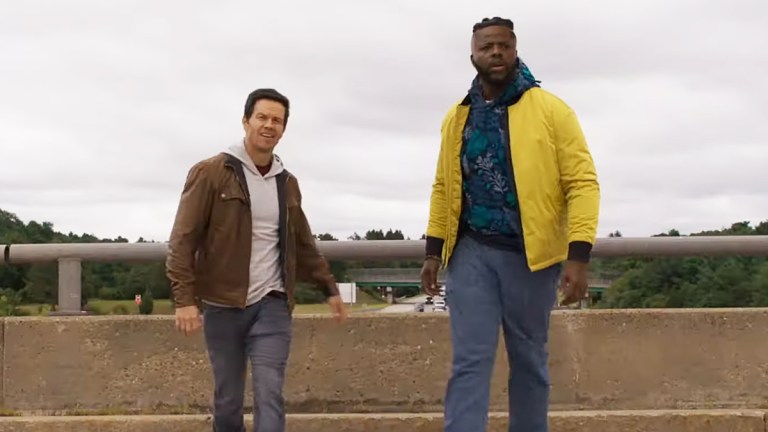
Jumanji: The Next Level is the next installment in the Jumanji franchise.  Jake Kasdan directed this film which he co-wrote with Jeff Pinkner and Scott Rosenberg.  Dewayne Johnson, Karen Gillan, Jack Black, and Kevin Hart suit up as the avatars in the game. Now this next bit gets a little tricky to explain if one is unfamiliar with the latest films.  Johnson gets to act like Danny DeVito while Kevin Hart assumes the persona of the character played by Danny Glover.  A rather welcome addition to the cast is Awkwafina as a new avatar with the amusingly unfortunate name of Ming Fleetfoot.

There is a pretty decent blend of the familiar from the last installment and some new features.  Johnson actually pulls off a fairly good impression of DeVito.  Awkwafina really does add something a little special to the chemistry among the cast.  Black and Hart get to get switch things up themselves since different teenagers from the real world, cinematically speaking of course, are in control of their avatar personas.

It turned out to be a pretty fun movie and stands up well enough when compared to its predecessors.  There were plenty of moments that made me laugh as intended.  The visual effects were pretty well done for the most part.  The fight scenes were over the top, which is fitting for this genre of film.  There is not much about this film that I failed to enjoy.  It has a few spots throughout where the wisecracks fell a little flat, but I still had a good time watching it when it was all said and done.

Film Review: Richard Jewell’s Life Gets Bombed In More Ways Than One

Image result for Richard Jewell film

Richard Jewell is the biographical drama directed by Clint Eastwood who was wrongfully accused of masterminding the bombing at the Centennial Olympic Park in Atlanta, Georgia in 1996.  Billy Ray is the scriptwriter who adapted most of the material from an article by Marie Brenner and a book by Kent Alexander and Kevin Salwen.  The cast includes Sam Rockwell, Jon Hamm, Olivia Wilde, Kathy Bates, and Paul Walter Hauser. Hauser takes on the title role as the well-meaning yet awkward Richard Jewell.  Rockwell plays the well-meaning yet much more intimidating attorney, Watson Bryant, who comes to Jewell’s aid.  There has been some controversy swirling around the depiction of Wilde’s role of recklessly ambitious reporter Kathy Scruggs.  It was rather heavily suggested that Scruggs had used her feminine wiles on a source to get information about who the FBI were considering as the culprit behind the bombing.  Her newspaper, the Atlanta Journal-Constitution, has weighed in their displeasure about how their contribution to the brouhaha at the time was presented.  Scruggs herself is deceased, so she doesn’t have the opportunity to share her thoughts in the matter.  I would imagine she would raise all kinds of hell if she could.

Anyway, Eastwood once again comes up with a very compelling story to relate.  The movie is pretty captivating in spite of the questions of authenticity surrounding it.  It does appear that Rockwell’s character is some kind of composite fictional character since I can’t seem to find a badass attorney named Watson Bryant on Google.  That’s too bad because it’s a great name.  The performances are all really powerful.  Of course, with Rockwell, that’s not surprising.  Bates also deserves some mention here for her presence playing Jewell’s mother.  She’s also reliably compelling in whatever role she takes on, so that’s also not a shocker either.

There were some times I thought Scruggs came off as a bit of a caricature of an overzealous reporter, but that may have more to do with the writing than Wilde putting in a poor performance.  Some of the more egregious acts by the FBI in the film were apparently true.  I did some checking on the how some of the actual moments went down, and the film doesn’t appear to veer too far into the realm of utter fiction.  In spite of the hurt feelings being reported by some of the actual players or entities involved, the film still held my attention.  The film does well with pointing out the hazards of a rush of judgment and that sometimes even the press could use a critical eye when judging the veracity of what is reported.  It is terribly sad that Jewell himself did not live too many years after being essentially vindicated from suspicion.  He likely still would never have gotten the respect he deserved for his heroic contribution in saving some lives on that terrible day in 1996.  He did come out on top when it came to the lawsuits filed against the news agencies that contributed to his difficulties afterward.

Anyway, my recommendation is to check this film out and make your mind up.  Eastwood is closing in on 90 years old and can still put together a decent piece of work, so that’s also worthy of some respect.


Doctor Who Audio Review: Light And Shadow At War

The Dark Planet is a Doctor Who audio drama released by Big Finish Productions and is an episode from the range known as The Lost Stories.  Brian Hayles was the initial writer, however Matt Fitton adapted the story for audio.  William Russell and Maureen O’Brien reprise their roles as Ian and Vicki, respectively, and share in narration duties.  John Banks and Charlie Norfolk are the guest performers pitching in.  Ken Bentley directed this story as well.

So this is a story that was apparently submitted or considered for broadcast during the second season of the series around 1964 or 1965.  It ended up not being made for the television series which had the late William Hartnell in the lead role at the time.

The Doctor, Ian, Barbara, and Vicki arrive on a planet during the early years of the universe and discover that the sun is dying.  It appears abandoned except for crystalline statues peppered on the surface.  They find that it is not that deserted when the find a war has been occurring among the people of Light and Shadow.

This a six part story, and that’s just too many parts for this one.  I don’t mind lengthier stories generally, but I had some trouble staying too interested in this one.  That is not the fault of the performers though.  O’Brien and Russell are both compelling narrators and actors in spite of their rather lengthy life span.  I think this was one of those stories which I found harder to visualize than many.  It may have been too costly to bring it to life on the small screen at the time.  I am not too familiar with the background of this particular story since no cast interviews were included in this release.

I guess I didn’t find anything too unique in this one, but I am glad this was released since my affection for the First Doctor era has increased in recent years.  I am just going to hope I grow to enjoy this story more once I slip it back into the CD player.  It has some interesting ideas, but it felt too long.  Also, this may have been one of the harder ones to realize fully just on audio in spite of the narration.

Film Review: Frank Sheeran Doesn’t Really Paint Houses

Image result for the irishman

The Irishman is the latest mob film directed by Martin Scorsese and tells the story of Frank Sheeran, played by Robert De Niro, who was a hit man for a mobster named Russell Bufalino, who is played by the great Joe Pesci.  Pesci hadn’t acted in several years and apparently has lost none of his instincts.  Al Pacino takes on the role of Union Teamster leader Jimmy Hoffa, who disappeared in 1975 under some notorious circumstances.  Other cast members include Bobby Cannavale, Anna Paquin, and the compelling Harvey Keitel.  A favorite comedian to many, Sebastian Maniscalco, also lends his talents to this project.  The film was written by Steven Zaillian, which was adapted from Charles Brandt’s book, I Hear You Paint Houses.  Apparently, “painting houses” is a mob euphemism for whacking someone.

Anyway, the film explores what may have happened to Mr. Hoffa.  It is told from the perspective of Sheeran and much of it is presented in flashbacks.  The assassination of President Kennedy is in the backdrop as well as Bobby Kennedy’s desire to go after the Mob.

The performances are all quite strong, which is not surprising considering the plethora of talent involved here.  The film is quite good, but it goes on for well over three hours and it doesn’t always avoid feeling like it.  There are some moments where it feels slow and plodding.  Also, I had some trouble shaking the sense of we’ve been there and done that.  Scorsese’s past films exploring the culture of organized crime were Goodfellas and Casino, which employed several of the same actors.  I guess it’s fine to do that, but I didn’t feel as much new ground was broken with this movie,

In spite of that, the critical acclaim is still well deserved.  The film does deserve an audience, but it does require a bit of patience at times.  It has Joe Pesci in front of the camera after many years of absence from the screen, and his presence was appreciated.  He plays a mobster but a rather different sort than the barely contained psychos in his previous roles.  The chemistry between De Niro, Pesci, and Pacino makes much of my criticisms easy to forgive.

It took some effort to stay focused sometimes, but I think Scorsese fans are not likely to be disappointed.  I also think just plain film aficionados such as myself are also in for a largely enjoyable if macabre experience.

Book Review: The Doctor Goes Underground

Molten Heart is a Doctor Who novel written by Una McCormack. It features the current Doctor on television portrayed by Jodie Whittaker.  Graham, Ryan, and Yaz are the companions who have joined her in the TARDIS.  They have arrived on a planet known as Adamantine in which a civilization lives underground.  The citizens are strange lifeforms made out of rock-like substances.  They are also named after rocks such as Quartz and Emerald. Anyway, the Doctor learns that the environment is unstable and leads an expedition to find a lost scientist with the help of his daughter, Ash.  The planet is about to be destroyed, and the Doctor must find a way to the surface to seek the answers as to why and what she can do to help.

I am really not on board with the producer’s decision to change the Doctor’s gender and the reasons behind it, but it is what it is.  The novel wasn’t bad though.  The banter among this TARDIS crew seemed a little more clever and authentic than what is seen onscreen.  McCormack presents the story well enough.  There isn’t much that stands out in her writing style, but it gets the job done.  It’s an enjoyable if unmemorable contribution to the range.

Next up, Michael Connelly pairs up two formidable detectives in Dark Sacred Night.

Film Review: DuPont’s Dirty Water

Dark Waters

Dark Waters is a legal thriller that is based on the true story of attorney Robert Bilott’s efforts to sue the corporation, DuPont, for tainting the waters of a community in West Virginia.  It is based on a 2016 article by Nathaniel Rich published in The New York Times Magazine.  The screenplay was written by Mario Correa and Matthew Michael Carnahan.  Todd Haynes is the director.  Mar Ruffalo plays intrepid and determined corporate attorney, Robert Bilott.  The cast includes Anne Hathaway, Tim Robbins, Bill Camp, and Bill Pullman.

There have been plenty of films in recent years about some crusader going against the irresponsible big company that ends up poisoning some town’s water supply.  Not much new ground is broken here.  It’s still a pretty good film if a little slow at times.  The cast all did well, although some of the Southern accents seemed a little too thick at times.  I found this was a story that may have needed a little more room than what was afforded in a two hour film.  Maybe a limited series would have provided a little better breathing space for the story to unfold.  Anyway, Ruffalo does well enough in the lead role.  The case actually has gone on for years, and apparently Bilott is still a thorn in the side of DuPont to this day.

Even if the story seems a little too familiar at times, the movie was presented well enough for me to not hold a grudge over it.  I think most of the flaws the movie has is more due to the complex nature of these lawsuits than much else.  The ending scene has a very simple yet rousing moment that I appreciated, but I won’t spoil it.

Doctor Who Audio Review: The Brigadier Is Back

“The Third Doctor Adventures Volume Five” is an audio play box set from Big Finish Productions the returns the fans to the era in which the late Jon Pertwee starred in “Doctor Who”.  Katy Manning reprises the role of Jo Grant.  Since Pertwee is still deceased, Tim Treloar provides the vocal performance of the Third Doctor and continues to represent the era quite nicely.  The late Nicholas Courtney was best known as Brigadier Alistair Lethbridge-Stewart and of course is unable to reprise his role, however Jon Culshaw, perhaps Britain’s best known impressionist, is on hand to pitch in with his talents, so the Brigadier lives again.  I love the Third Doctor, but I was never a fan of the decision to have most of his tenure grounded on Earth. Saying that, I was very impressed with the efforts to recreate the dynamic as best as possible with several major performers deceased.  The while thing works quite well.  There are two four-part stories in this set as customary with this range and both are worth the time.

John Dorney kicks off with “Primord” which follows up on the catastrophes of the television serial “Inferno”.  Daisy Ashford takes on the role of the Doctor’s former assistant Liz Shaw, which was originally portrayed by the late Caroline John.  The touching little bit is that Ashford is actually Caroline John’s daughter and was reportedly very pleased with the idea of allowing fans to revisit Liz again.  Liz Shaw was a scientist as well and often was not quite as lost as other companions when the Doctor spewed forth his overly complicated explanations.  It has been a bit since I have watched an episode with Liz, so I am not sure how close Ashford actually is to sounding like her mother, however she is good enough to make me not care that much.  I liked Liz, so it was great to have her presence represented regardless.  I was also pleased that Michael Troughton was part of the guest cast as an overly ambitious general.  He is of course the son of the great Patrick Troughton, who is best known as the Second Doctor.  The story effectively revisits elements of “Inferno” and still offers a new take on the Primords.  Also, Liz sort of ends up not being quite the woman the Doctor remembers and that adds an interesting dimension to her participation.  Finally, the fans get the pleasure of hearing two of the Doctor’s friends who never met onscreen interact finally.  If there are more adventures to represent this era, I certainly would not object to hearing more Liz Shaw, as played by the original actress’s daughter, Daisy Ashford.  I certainly don’t object to John Dorney continuing to contribute his talents as writer as well.

“The Scream of Ghosts” is the second piece brought to us by another long-time Doctor Who contributor, Guy Adams.  This one sees the return of Sergeant Benton, as played by John Levene, who is still very much alive.  Guy Adams also is part of the guest cast alongside Dominic Wood, Rosalyn Landor, and David Dobson.  This story delves into what could have been the early days if experimenting with portable communication, in other words, mobile phones.  This story is set in the 1970’s, so this would have been a revolutionary invention at the time.  The Brigadier and Jo are asked to evaluate the progress of the work being done by a scientist named Coldicott, played by Landor.  Benton comes to the Doctor asking for help when an old friends reports hearing strange voices coming through CB.  All kinds of strange voices and sounds are emerging from the radio waves, and Coldicott seems to have made extraordinary breakthroughs in her efforts to master the problem of instant communication.  The Doctor finds that there’s a dangerous intelligence behind the strange events in the English village, and the danger also ends up being rather familiar as well.  It’s a good story, but I may have to listen to it once or twice more to imagine what was intended to be conveyed.  It’s a little harder to follow than Dorney’s contribution, however I found plenty to enjoy anyway.

The release pretty much stoked my sense of nostalgia for this particular era of the series as a whole.  Even though I may have some disagreement with some of the creative decisions at the time, the Third Doctor and Jo as main protagonists are still quite compelling and charming.  Even though some of the original performers are no longer with us, Big Finish put a lot of thought on how to recreate this particular era and it shows.  Culshaw’s talents are amazing.  I enjoy listening to the cast interviews which are included in the CD releases, and Culshaw seems to enjoy showing off his vocal talents in this set, but I did not mind a bit.  I also loved Katy Manning’s reaction in the interviews when she talks about how her memories of Jon Pertwee and Nicholas Courtney are brought to the forefront.  Her affection for her cast mates and her friends is very evident and makes her all the more charming.  The chemistry among the actors and the characters is recreated very effectively as well as providing new stories for them.  I hope news of the sixth volume of Third Doctor adventures breaks very soon.