The Woman in White is a mystery drama film that was released in 1948 and is actually quite impressive in regard to the look but is a little slow on the plot development. Peter Godfrey is the director of the film while the screenplay was written by Stephen Morehouse Avery. The film was based on a well-known novel by Wilkie Collins, which was written in 1860. That could explain why the film feels a little slow at times.
Included in the cast are Alexis Smith, Eleanor Parker, Sydney Greenstreet, Gig Young, Agnes Moorehead, and John Abbott.
A man hired to tutor a woman on drawing walks from a train station to an estate known as Limmeridge encounters a woman in white in the night. The woman vanishes when a carriage approaches. The man, Walter Hartright, is told of an asylum nearby, and that a woman had just escaped. Hartright makes it to the house and meets the residents. He then meets Laura Fairlie, who bears a striking resemblance to the woman he encountered during his late-night walk. Hartright begins to learn some strange secrets of the house, including a cousin who disappeared some years before. There is a fortune at stake, and Hartright finds that he may have to free a woman wrongly imprisoned within the asylum and figure out which member of the house is capable of murder to protect their secrets.
Okay, this is a pretty strange and convoluted plot. The acting was pretty good though. I also was impressed with the set design considering the time when this film was produced.
It feels a bit of a slog to sit through this thing at times because I had a hard time staying focused on the gist of the story.
It is a film that take some concentration at times.
The costuming and set design were remarkably well done. It’s a very pretty movie to watch in spite of it being in black and white. That alone may be enough reason to give this another viewing.
Anyway, there are some challenges when it comes to understanding the motivations of the characters and some elements of the story, but it’s still a film worthy of some time.
Alixion is a Doctor Who audio play from Big Finish Productions and is the latest addition to The Lost Stories range. The addition has its good points, especially with Sylvester McCoy and Sophie Aldred leading the cast as the Doctor and Ace, respectively, however it’s a bit of a confusing mess as far as the story goes at times.
This story was originally intended to be produced during the television era in the 1980’s, however that is when the series got cancelled. Robin Mukherjee wrote the script and was able to adapt it to the audio format. David O’Mahoney serves as the director. Ali Bastian, Jon Edgley Bond, Matthew McQuinn, Beverly Longhurst, and Shri Patel make up the guest cast. Even O’Mahoney himself lends his own vocal talents to the effort.
Another planned holiday for the Doctor and Ace goes awry when they arrive at a luxury resort that has been compromised by an entity that feeds off memories and regrets. The Time Lord and his young friend have to face their own darkest secrets and fears as well as a malevolent alien who can inflict the most diabolical of mental tortures.
The plot itself sounds pretty intriguing; however, I think this would have worked better on television since there is quite a bit of flashbacks.
McCoy and Aldred are too good themselves to make me regret listening to this, so I may just need to return to this one to get a better grasp of the events that I can only picture in the mind’s eye.
The Seventh Doctor can be considered one of the more complicated incarnations depicted, and this story does play with that, which still keeps things intriguing.
I know I called this episode a confusing mess at the top of this post, but that doesn’t mean that I disliked it overall. Sometimes, the joy of listening the performances of pretty much any of the Doctors and their companions does carry manage to carry me to some significant enjoyment, and this experience was no exception.
I have found that listening to the cast and crew interviews most of these releases now contain does help my comprehension of the story quite a bit.
In spite of my occasional perplexion of some elements of the plot, I still found quite a bit to appreciate about this release and hope that McCoy and Aldred have a lot more gas in the tank to perform new stories to represent their era of the series.
The Thursday Murder Club is a charming mystery film that manages to stay pretty faithful to the novel written by Richard Osman. The screenplay is written by Katy Brand and Suzanne Heathcote. Chris Columbus is the director of this piece which stars Helen Mirren, Pierce Brosnan, Ben Kingsley, and Celia Imrie as a group of retired residents in a village who meet on Thursdays to review cold murder cases. David Tennant, Tom Ellis, Naomis Ackie, and Daniel Mays are also included in the cast.
A small group of residents in a rather swanky retirement village meet once a week to review cold cases. Mirren plays Elizabeth, who once worked for MI6. Brosnan plays a rather brash former union leader named Ron. Kingsley is the empathic psychiatrist, Ben, and Celia Imrie rounds out the group as the recently recruited retired nurse named Joyce.
They are examining a case from 1973 in which a woman was apparently shoved out the window. While the small club is searching for new information, one of the owners of Coopers Chase is murdered nearby. The Thursday Murder Club have their first fresh case; however, they also learn that there are plans to redevelop their village into more luxurious apartments. Not only is there a killer lurking; the club has to find a way to save their new homes.
It’s hard to go wrong with the main cast. I am less familiar with Imrie, but she did great alongside the more familiar names such as Mirren, Brosnan, and Kingsley. Imrie may not have quite the same name recognition as her costars, but she is certainly no slouch when it comes to her charisma and ability. She certainly does have a lengthy filmography herself, so she should have no problem continuing her career.
I had read the book fairly recently, and the movie does follow it fairly closely.
Brosnan and Mirren are as reliably charismatic as ever, while Kingsley still maintains that quiet, yet powerful dignity that also makes him compelling.
In spite of some of this being somewhat of a comedy, there are plenty of somewhat poignant moments that are handled quite well.
Even though I knew the solution to the crime, the film may be worth a rewatch to just admire a group of long-time actors who can still appear to be at the top of their game.
I was just pleased that there were not enough alterations from the source material to evoke real annoyance.
Holland is a psychological thriller that has a few moments of almost being interesting but just couldn’t quite get there. Mimi Cave is the director of this mediocre cinematic effort, which was written by Andrew Sodroski. Nicole Kidman has the lead role and is accompanied by a cast which includes Matthew Macfadyen, Gael Garcia Bernal, Jude Hill, and Rachel Sennott.
Nancy Vandergroot is a teacher in the small town of Holland, Michigan, which is rather proud of its Dutch American roots. She is quite happy with her family until she starts to wonder if her husband, who travels a lot for work, is having an affair. She enlists the help of a friend and colleague to help her confirm her suspicions; however, the truth is something that is far worse.
The film does have some elements that are somewhat interesting, but somehow the end result is still rather hollow. The exploration of Dutch American roots is something not commonly displayed in movies, so I thought that was a decent start. I think that I had a hard time really caring about any of the main characters. Kidman is usually a solid casting choice, and she does fine with this role, but there is nothing all compelling about her character. I had a hard time being all that interested in her plight that starts to unfold.
The plot of a seemingly dutiful husband’s double life is somewhat overdone even if the setting in this film was a little eccentric and unique.
The performances were not terrible, which was helpful, but also nothing was all that memorable. The town did seem to have some charm.
Although it’s hard to have any real criticism of the film’s technical elements, I just found that it was missing something that should have made it more gripping.
Doctor Who: The War Doctor Begins: Comrades-In-Arms is another compelling collection of episodes presented by Big Finish Productions in which Jonathon Carley channels the performance of the late John Hurt as the Time Lords once known as the Doctor. Ajjaz Awad returns as the cyborg known as Case, a new piece on the board as the Time War continues to rage between Gallifrey and the Daleks.
Barnaby Kay serves as director for the three stories that are each worthy of appreciation for a variety of reasons. Most of all the War Doctor, who I sort of had a derision reaction to when he was first introduced in the fiftieth anniversary special The Day of the Doctor, has become more fascinating under the auspice of Big Finish Productions.
Of course, Nicholas Briggs fires up his voice modulator to voice the Daleks. The guest cast for this collection is comprised of Michael Amariah, Tiegan Byrne, Beth Chalmers, Esmonde Cole, Sophie Khan Levy, Georgia Mackenzie, Deeivya Meir, and Lynsey Murrell.
The first episode to discuss is entitled A Mother’s Love by Noga Flaishon. The War Doctor, played by Jonathon Carley, has arrived on a Time Lord field hospital known as Haven. It is operated by an Artificial Intelligence known Medbay Operation Mainframe or MOM. The War Doctor also has another encounter with an old ally known as Case, who was partially converted to a Dalek but was able to override the programming. A new but dangerous friendship is developing between her and the War Doctor, but they may not have time to explore that before MOM and the Daleks interfere.
This first story is pretty good. The idea of Case willing to enter into the Time War on her own terms. Carley’s impression of John Hurt’s voice has done nothing but improve. Also, the difference between this incarnation and the other Doctors is slowly coming to light. The War Doctor desperately wants to show the compassion displayed by his other selves, but he is a warrior now. Also, Case has become a fascinating conundrum herself. If there isn’t enough of a reason to be suspicious of AI, this story just adds fuel to that particular fire.
Berserker by Timothy X. Atack brings the War Doctor and Case to face the most dangerous of Daleks. One that has gone made from the centuries of isolation and not being able to kill anyone or anything. In an underground bunker, the War Doctor and his new companion have to face an insane threat that is a ruthless killer at the best of times and each other as it becomes apparent how the War Doctor can use his companion as a devastating weapon against the Daleks.
Briggs puts in a deliciously terrifying performance here. He is the expert over the years he has portrayed the Daleks, and he achieves a new level of insanity with this piece. The more mercenary tendencies of the War Doctor also become more evident, although the more familiar traits are not entirely gone. The War Doctor does genuinely care for Case and still wants her to make her own choices on how she wants to fight in the Time War. The conflict and suspicion displayed is well written, and Carley knows how to hit those right notes of sorrow and determination that John Hurt could exude so well when he first played the part.
The middle story has plenty of merit here.
Finally, this trilogy comes to a close with Phil Mulryne’s Memnos. The War Doctor and Case have arrived at a secret base where a project known as Memnos has been launched. The idea is to preserve the memory of planets and civilizations devastated by the Daleks. Case also has a chance to find her origins before she was so corrupted by the Daleks. The Dalek Time Strategist also is on their trail and has his own plans for Case.
There are some heart wrenching moments between Case and the War Doctor as she becomes more uncertain as to his loyalty and motives for trying to help her. The Time Strategist also emerges as a most dangerous and despicable foe.
This is another fascinating entry into the range. It also is a strong finish to the set. The lead actors are excellent in all three stories. It is surprising that this is becoming a favorite range for me.
Also, it is slowing becoming clearer as to why the War Doctor made the decision to end the Time War with the destruction of both sides, which haunted him when the new television series was aired in 2005.
In spite of this bold direction in the franchise, it is reassuring that many other elements of the Doctor’s nature shine through at times. There are even some familiar moments of humor even in the midst of such a dark backdrop.
As usual, the sound engineering is stellar. There is little to criticize here. Some of the action sequences are hard to imagine occasionally, but there is plenty to still enjoy and at times marvel as these episodes blare from the speakers.
If one has to be in a Time War, the War Doctor would be the one to have in their corner. Although it is sad that John Hurt is no longer with us, Jonathon Carley is more than capable of honoring him with his participation in this series.
Vampire Weekend kicks off a new range of Doctor Who audio dramas for Big Finish Productions. Jodie Whittaker has joined the stable of Doctors providing new adventures for us fans. She is joined by Mandip Gill reprising her role as Yasmin Khan.
This adventure is penned by Tim Foley and directed by Ken Bentley. Jeremy Ang Jones, Anna Crichlow, Mandi Symonds, and Daniel Walford comprise the guest cast.
Yaz has joined some friends for a weekend away for a wedding party. They have rented a large manor where they plan to enjoy the weekend. The Doctor turns up and is on the trail of an ancient enemy who turns out to be a vampire with more unusual appetites than others of its kind. The vampire is able to disguise itself as anyone in the group, and Yaz finds that she may not know her friends as well as she thinks.
It’s no secret that Jodie Whittaker’s era is not my favorite, but I was hoping that Big Finish would be able to make some improvements on how her version of the Doctor was written and depicted. If those hopes are to ever be realized, this episode didn’t really do it.
Foley is a pretty good writer, and he scored some pretty amusing lines in the dialogue. I had some trouble determining who was speaking during this thing because the women in the cast all kind sounded alike. Whittaker’s Doctor often speaks in rapid fire, so it takes me a bit to catch up.
Also, this vampire’s particular power was a little silly. Doctor Who has a lot of silliness, but I just found the schtick with this creature to not be all that interesting.
It pains me a little to be more critical than usual when it comes to Big Finish output, but this release earned my misgivings.
Now, am I going to give the next episode with the Thirteenth Doctor a chance. Yes, I will. I am likely to even listen to this episode again sometime in the future. This episode was not really terrible, but it just didn’t work for me as well as so much of the other content from Big Finish has.
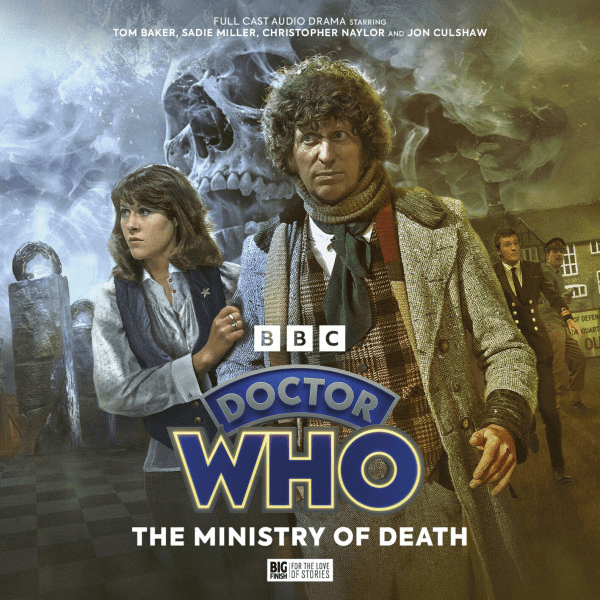
The Ruins of Kaerula is a Doctor Who audio boxset from Big Finish Productions, which has a few promising features, but it’s a bit middle of the road in many ways. Tom Baker is reunited with Louise Jameson as Leela and John Leeson as that well-known robotic dog designated K9. There are three episodes to examine a bit, however two of them are directly linked to each other.
The guest cast includes Robyn Addison, Zora Bishop, Jonathon Carley, Barnaby Kay, and Reece Pantry. Jon Culshaw also returns to portray Brigadier Lethbridge-Stewart, whose role initially belonged to the late Nicholas Courtney. Helen Goldyn, Nicholas Briggs, and Jamie Anderson share the directing credit.
Scriptwriter Phil Mulryne starts it off with The Remains of Kaerula. The TARDIS is forced down to the planet Kaerula where the Doctor, Leela, and K9 encounter containment camp and strange creatures lurking in the nearby caves. There is a rupture in Time, and the Doctor learns that a catastrophe from the planet’s past has invaded the future as well.
Tom Baker still does well in the lead role as the Fourth Doctor. It’s one of my favorite TARDIS teams, so it was still a worthy effort to listen to this one. As usual, the performances were fine. I was just underwhelmed by the story. Multyne captures the main characters well enough. I just didn’t fine the plot to be all that memorable or as interesting as some of the more recent episodes this past year.
The Ruins of Kaerula is also written by Phil Mulryne and serves as a prequel. The Doctor and his companions have been forced back to Kaerula in the past where they meet some different versions of those encountered in the earlier episode. An experiment is about to go very long, which could bring some serious temporal damage to the universe.
I found this to be a little better than the earlier story. It is an interesting idea to have the Doctor deal with both the cause of a catastrophe and the result. There’s a risk of that idea being overused since he is a time traveler.
The third episode, which is written by Tom Foley, is entitled Cry of the Banshee. This one was quite a bit better mostly because Brigadier Alastair Lethbridge-Stewart meets Leela and K9 for the first time. The Brigadier has requested some help during a peace conference when a delegate from Ireland dies mysteriously. The Doctor learns that it is believed a Banshee is lurking around the conference, however he suspects that it is something else.
The Brigadier joins the Doctor and Leela in the TARDIS after the Doctor finds that the source of this phenomenon originates in a space station orbiting Jupiter. The Brigadier ends up adjusting to his strange, new surroundings as everyone knew he would.
The growth of respect between the Brigadier and Leela is pretty fun to hear. They get off to a tough start when they first meet, but circumstances force them to figure out how to work together.
Jon Culshaw’s impression of Nicholas Courtney’s distinctive, authoritative baritone is quite uncanny.
The story seems a little self-indulgent, but it works. The resolution is somewhat surprising in a pleasantly unexpected way.
Anyway, the set as whole is fine, but I don’t think it’s going to be remembered as one of the great ones. Still, more Tom Baker performances are always welcome. In spite of my nonchalance about this release, I am still glad to have listened to it.
The Life of Chuck us in the running to become one of the best movies of 2025, in my humble opinion. Mike Flanagan is the screenwriter and director of this piece, which is adapted from a novella written by a not-so-new writer named Stephen King. Tom Hiddleston is in the lead role alongside the child actors portraying the younger versions of Charles Krantz. Chiwetel Ejiofor, Karen Gillan, Mia Sara, Mark Hamill, and Annalise Basso are part of the formidable cast.
The story unfolds from the end when Ejiofor’s character, Marty Anderson, notices some strange sights in the world around him. There is a serious increase in natural disasters, and the internet has completely collapsed. There are some peculiar advertisements cropping up depicting a picture of a man named Chuck Krantz, a seemingly normal accountant. As Chuck lies near death from a terminal brain tumor, the stars are blinking out, and the universe seems to be just shutting down.
Then, the story moves earlier in the Chuck’s life to a strange but uplifting impromptu dance performance before a street drummer. Then, Chuck’s childhood is laid out. All of this is helped by a narrator, Nick Offerman, who does a fantastic job of guiding the audience on this strange journey.
The novella is part of a collection by Stephen King entitled If It Bleeds. The film probably follows the source material pretty closely. There are some interesting twists and a few surprises throughout the film
The performances were solid and believable. The significant cast members were well-chosen. There was a kind of interesting subtlety to some of the performances during some of the more emotionally charged moments of the movie.
The film does seem to have a bit of a slow start, but it gets more engaging as it unfolds in its unconventional timeline. The three kids who played Chuck’s adolescent years did a great job as well. Flanagan has done quite a few adaptations of King’s works and seems to be pretty reliable. I do not recall being disappointed in some of his other works.
I have not read the novella, but I imagine that it is an example of how King actually demonstrates some variety in his writings.
I will also admit that I did not really recognize Mark Hamill as Chuck’s grandfather until the end credits came up. I thought he was familiar, but I was not sure why. Hamill is not someone who I consider to be a stellar actor, but he did quite well in this one. Maybe, he has actually gotten better in immersing himself in a role over the years, and I just failed to appreciate it.
Anyway, this film does deserve the acclaim it has received. It is certainly better than most of the nonsense coming out of Hollywood these days.
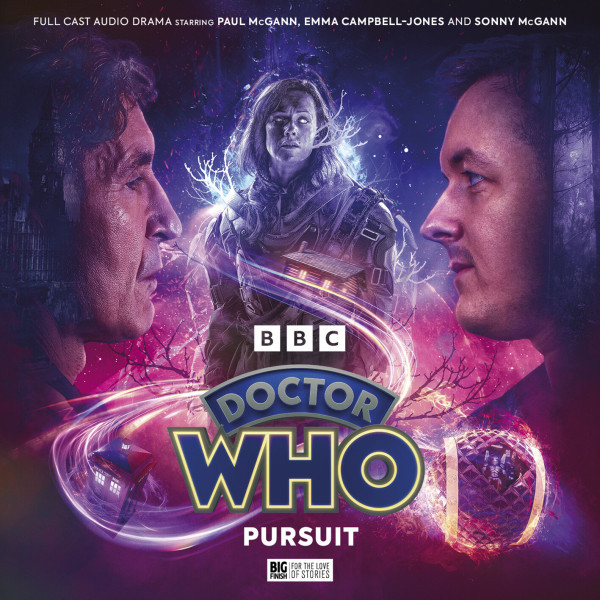
Doctor Who-Hooklight 2 brings a twelve-episode audio saga from Big Finish Productions to a most satisfying close. Tom Foley has done quite well with writing a very lengthy audio drama featuring the Fifth Doctor, played by Peter Davison. Janet Fielding, Matthew Waterhouse, and Sarah Sutton continue to bring formidable performances in their roles as Tegan, Adric, and Nyssa, respectively. Ken Bentley returns to the director’s position with his extensive experience with this company.
We also have Paul McGann in the mix as the Eighth Doctor, who is also using the moniker, the Oracle. Alan Cox, Kieren Bew, Shogo Miyakita, Celia Imrie, and Theo Solomon are included in the guest cast.
The force known as Hooklight is attempting to control Nyssa. The Doctor and his friends have been scattered throughout various planets and times. They have to make their way to something called the Dark Forge where they must face the Oracle. The Oracle knows the Doctor quite well, and their connection is much deeper than the Time Lord can anticipate. The Doctor has to find a way to free his friend from the influence of the Hooklight and reunite with his TARDIS. Of course, forces are aligned against the Time Lord, and it will take all of centuries of experience and cleverness to keep a certain light from being lit.
Foley used the extra time quite effectively to explore the main characters and the significant guest characters. We get to see how Tegan fares in a long-term relationship, which is quite interesting and even moving at times.
The appearance of the Eighth Doctor is also well-handled, and Foley sort of avoids some of the usual tropes whenever a story features more than one incarnation. Paul McGann is still compelling and has a perfect voice for audio performances. He is just an interesting actor all around.
I thought the Fifth Doctor was an interesting choice to create a huge saga around, but it works quite well. I also thought Waterhouse was particularly good at almost sounding as he did when he originally played Adric forty years ago.
Davison’s voice has aged and deepened noticeably, but I think he makes a good choice in not trying too hard to imitate his younger self. I still enjoyed his performance, and there was an interesting and poignant moment between the Doctor and Imrie’s Kessica Myles. The Doctor has figured out that Myles is terminally ill and offers to be there for her if she needed to grieve her situation. It was a moment of sensitivity from the Doctor that would often be absent from the television series. It was beautifully performed because the emotional significance was played with that famous British subtlety.
I: am usually rather leery of this superlong sagas in Doctor Who because there is some drag. Although there are some moments that it strikes me how long this thing is going on, I enjoyed this one very much.
Big Finish chose to release this in two parts. If more of these hefty stories are to be produced, I think I would prefer the whole story to be released at once. I hope that Foley is willing to do another one of that size because he really seems to rise to the challenge.
Hooklight as a whole is likely to be the best release of the year. There is still plenty of releases to be announced, but this one will likely remain in the top tier of my favorites for some time.
Doctor Who: The War Doctor Begins: He Who Fights with Monsters continues the saga of the War Doctor, originally portrayed by John Hurt, and leads to a fascinating confrontation with a mysterious adversary known as the Barber-Surgeon. The set has three parts and was written by Robert Valentine and directed by Louise Jameson.
Since Hurt has been deceased for a little while now, Jonathon Carley has taken on the role which has been known in Doctor Who fandom as the War Doctor. This was a once unknown incarnation of the Doctor who had rejected his name since he had to fight in the Time War and use methods that his other selves would abhor. Carley does an increasingly amazing impression of John Hurt’s distinctive voice and puts forth a powerful performance.
The first part is entitled The Mission where the Time War Council enlists the War Doctor to hunt down and assassinate another Gallifreyan renegade known as the Barber-Surgeon. The Barber-Surgeon has been a thorn in the side of both the Time Lords and the Daleks. The War Doctor doesn’t like the nature of this mission, but this incarnation is the one most capable to complete it
The Abyss has the War Doctor on the Barber-Surgeon’s trail through the devastation of the Time War and his own past. The Daleks have also sent a Dalek Hunter-Killer played by Jason Merrells. The War Doctor and the Daleks have another confrontation in which the maniacal robotic conquerors may finally exterminate their most persistent enemy.
Finally, the War Doctor has to escape the Daleks and confront The Horror. Nicholas Le Prevost plays the rogue element in the Time War known as the Barber-Surgeon. He and Carley play beautifully off each other when the Doctor and the Barber-Surgeon finally meet.
Not that much known is known about the War Doctor other than he was the one who ended the Tine War by obliterating both sides. He was rejected by his subsequent incarnations following that event.
This set reveals how the War Doctor may have been influenced into that horrific, if necessary, decision.
It took me a bit to warm up to the first two episodes, but Carley’s performance kept me engaged, and the finale to this set was worth it.
This is probably one of the best sets in this range. Carley may be able to sound a lot like John Hurt, but he also demonstrates excellent instincts as an actor. He mastered how this version of the Doctor carries such determination and weariness in his voice.
The sound effects are excellently executed. There are times when the action sequences seem a little jumbled, and it was hard to picture what was happening in the imagination. Still, the performances of Carley and the guest cast more than make up for it. Louise Jameson even reprises her role of Leela, which was not unexpected but still pretty fun.
Anyway, I think I have resolved any misgivings I had about the creation of the War Doctor. This set is just great.