Reviews and thoughts about movies, books, pop culture, and Doctor Who
Author: Peter Kanelis
I was born in Portland, Oregon and currently reside in Texas. I am an avid reader and movie watcher. I also am a long-time Doctor Who fan and collect the audio dramas as well as watch the television series. I have been writing reviews of this nature on social media for a few years now and want to expand on that practice.
The Christmas Chronicles 2 has Kurt Russell return to the red coat and flowing beard of Santa Claus with Goldie Hawn joining the fun as Mrs. Claus. Chris Columbus directed this film which he co-wrote with Matt Lieberman. Darby Camp, Judah Lewis, Tyrese Gibson, Kimberly Williams-Paisley, and Julian Dennison are also included in the cast.
Dennison plays the main antagonist, a disgruntled elf who was cursed with being human and wants to take revenge by stealing the Star of Bethlehem and ruining Christmas for everyone. Santa Claus has the help of his wife as well as young Kate Pierce and the son of her mother’s new boyfriend to save the holiday.
This film is incredibly ludicrous but reasonably fun. I can’t help but have some affection for Russell’s take on Santa Claus anyway. It was also amusing to have Hawn have a more active role than her cameo in the previous film. The children did fine in their roles as well.
The film has its amusing moments, but sometimes it felt a little overstuffed with various themes and sentiment. Russell’s enthusiasm as Santa Claus does give it enough charm to make it watchable. It probably won’t go down as some great Christmas comedy classic, but it manages to avoid being a complete disaster.
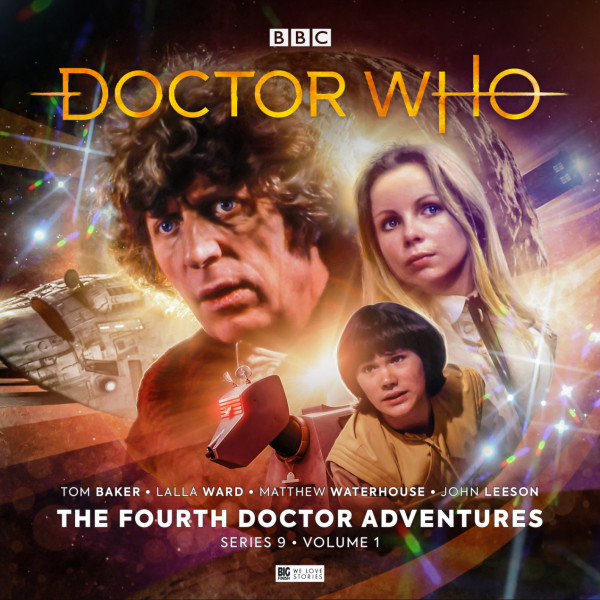
The Fourth Doctor Series 9 Volume 1 is a Doctor Who audio collection from Big Finish Productions. There are two adventures starring Tom Baker, Lalla Ward, and John Leeson. There are now joined by Matthew Waterhouse, reprising his role as Adric. Both episodes are directed by Nicholas Briggs. These two stories take place during the era of the television series in which the TARDIS was trapped in another universe known as E-Space where the Doctor, Romana, and K9 encountered an orphan who stowed away known as Adric. The television series only aired three stories that took place in E-Space, and Big Finish decided to add a few more stops before the Doctor escaped. I am glad they did.
Let’s take a look at the two stories in this set. Both are actually pretty engaging.
Marc Platt is the writer of Purgatory 12. The guest cast is comprised of Nimmy March, George Watkins, Amy Downham, and Liam Fox. The Doctor and his friends find an asteroid that serves as a penal colony, however the more dangerous feature here is the presence at the center of the rock that causes more havoc than the denizens of Purgatory 12. The story works well, but I thought it was more interesting to actually the dynamics of Adric’s sudden appearance of in the TARDIS and the aftermath of his brother’s death in the television story Full Circle. Big Finish does more to explore the relationships between the characters than what was written in the television series, and I actually found Adric to be a bit more tolerable. As usual, some of the imagery evoked by the story is a little hard to focus just by dialogue and sound effects, but I appreciated the episode overall. Tom Baker still sounds like he is having a ball, but he is my favorite Doctor, so I may be somewhat biased.
Chase the Night is written by another longtime Doctor Who contributor, Jonathan Morris. The guest cast for this one features Jane Asher, William Gaminara, Lucy Heath, Christopher Naylor, and Tania Rodrigues. This one has a unique concept of a crashed spacecraft that was converted into a kind of train in order to stay ahead of the dawn since the sunlight on this particular planet destroys everything in its path. But there is more to the planet than just an unusually destructive morning. This story had an interesting concept with a crashed ship being converted to survive an eternal trip around the planet as the surviving crew needs to stay in the night side. It appears to be an ambitious story idea, but Morris sells it quite effectively.
I probably prefer Chase the Night out of the two, but both episodes are quite enjoyable. There were some tales of tension between Waterhouse and Tom Baker many moons ago but that seems to have been healed by the passage of time. Of course, Tom Baker and Lalla Ward were once married, but any awkwardness from that seems to have also dissipated. Anyway, it was a fun set, and there are two more stories to get from this particular era. Waterhouse is considerably older than when he first played Adric. but he still manages to find the right tone in his voice to resurrect the youthfulness of that period in his life. Adric was never my favorite of the Doctor’s companions, but I am somehow glad that Big Finish was able to revisit this particular era. I am glad Waterhouse has been able to make a return to enjoy the nostalgia and still provide an effective performance. The ninth series Fourth Doctor adventures from Big Finish looks to be a fun ride, and I will be getting the second half very soon.
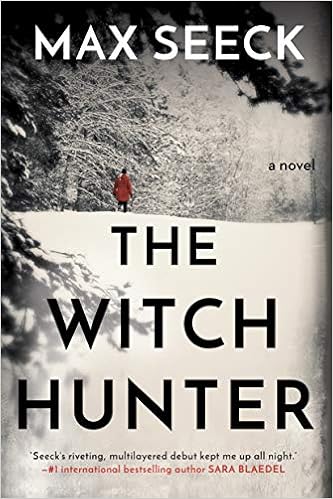
The Witch Hunter is a crime novel from Finnish writer Max Seeck. The Helsinki police have a perplexing murder on their hands. The wife of a very popular novelist is found dead propped up in a chair with a ghastly grin plastered on her face. The husband is on a book tour facing avid fans and one who asks about him being afraid of what he writes. The writer wrote a trilogy of novels known as Witch Hunt. The lead investigator is Jessica Niemi who has some dark secrets of her own. More bodies are found that mirror the descriptions of crimes that take place in the trilogy. A survivor is also discovered who seems oddly afraid of Jessica. A strange figure with horns is lurking around the crime scenes. It seems that Jessica has more than one killer to find. In fact, there may be a coven to unearth.
Overall, I like this novel but it had a leg up in that regard due to the genre. I did enjoy reading about something taking place in Finland, although I had some trouble really getting a sense of what that region was like, other than it is really cold. The chapters also sometimes alternate to flashbacks of an encounter Jessica had in Italy with a classical musician, an encounter that has a profound effect on the detective.
The plot does seem somewhat complicated as it unfolds. It was a pretty busy story to follow. I did like it for the most part, but I am not sure there is much terribly unique about it. Seeck seems to be a competent enough of a writer, but the novel was translated from Finnish. Still, he is a pretty young guy and is likely to improve with age and experience. He seems to have enough talent to stay in the game. The novel isn’t bad by any means, but the setting is the only aspect I am likely to remember for long.
Next up, I will be returning to the streets with Los Angeles with my next read. Even though Harry Bosch is now retired from the LAPD, that doesn’t mean he is out the game of solving crimes. He now has a new ally in his quest in the shape of Detective Renee Ballard, and they both are possessed by Michael Connelly’s The Night Fire.
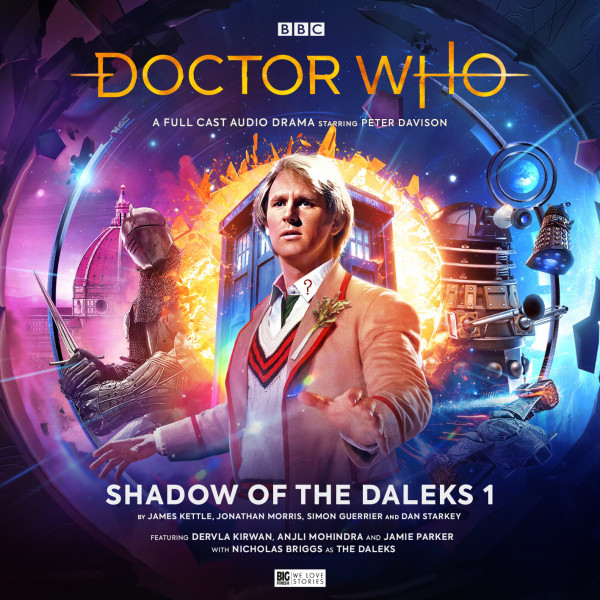
Shadow of the Daleks 1 is a small collection of audio vignettes from Big Finish Productions starring Peter Davison as the Fifth Doctor. Obviously there will be a second volume as a follow up, but I have yet to hear that one. Ken Bentley is the director of these four tales with Jamie Parker, Anjli Mohindra, Dervla Kirwan, Glen McCready, and Nicholas Briggs. Nicholas Briggs is back to voice the dreaded Daleks.
This is kind of an interesting idea with the Doctor being on the fringe of the Time War, which really doesn’t into play very much until his later incarnations. The Daleks’ involvement is rather more subtle than usual with them exerting more of a haunting presence in these stories instead of just barging through corridors with their grating screams of “Exterminate!”. This is actually a set of four individual stories with the Doctor traveling on his own tracing the anomalies in time and space that hint at the presence of his most familiar of enemies. It’s all very mysterious and troubling. I loved it. So, let’s break down the stories and bit and give some credit to the various writers’ creativity.
James Kettle starts off this little odyssey with Aiming for the Body in which the Doctor finds a small group stranded in some kind of desert or something with a rather notorious cricket player. He finds that what the people he has met may be a disguise employed by the Daleks. He is certainly being affected by what could be described as hallucinations of his oldest enemies. It’s a good enough introduction to keep me engaged. The mystery continues into the next story in which the Doctor sees the same group of people but with new identities in the far future.
And that takes to Lightspeed by Jonathan Morris, a much more familiar name of Doctor Who contributors. A hijacking has been planned, and the Doctor of course finds himself caught up in peril. This is a pretty straight forward story, however the presence of the Daleks is still felt. It’s not a bad story but not really that memorable.
I am not sure if it’s just because the setting appeals to me, but Simon Guerrier’s The Bookshop at the End of the World struck more of a chord with me. The Doctor shows up with no memory as to own identity in a storm at a bookshop which also doubles as a pub. I understand that is actually a thing in some countries. It’s actually a much more enigmatic and surreal story in this anthology. Of course, the same group of faces populate this little shop but are in possession of different identities.
And Dan Starkey completes this little set with Interlude in which the Doctor finds himself in a play where he is preforming for an ominous audience. This one was a little tricky to follow at first, but it still managed to keep me enthralled as to what was going to happen next.
I almost always enjoy Big Finish plays, but this one was kind of special. This effort seemed to be highly unusual for this particular Doctor, and I loved the concept. I am not sure why the Doctor is on his own here because there is not much of a way to fit in solo adventures if one was going to stick strictly to the canon of the television series. Fortunately, the stories were all interesting enough for me to not dwell on that too much. Davison puts in a solid performance, but he always does. I liked the mysterious foreshadowing of the Doctor’s future as well. I also appreciated the Daleks being employed a little subtly. The good news is the Doctor’s search is only halfway though. There is another volume to purchase and play, and it won’t be too much longer before I get to see…or rather hear how this all comes to a head.
Monster Hunter is a science fiction/fantasy film written and directed by Paul W.S. Anderson and is based on a video game series from Capcom. Milla Jovovich is in the lead as Army Ranger Captain Natalie Artemis. The cast alongside her includes Tony Jaa, Megan Good, Tip “T.I.” Harris, and Ron Perlman.
An elite United Nations military force is mysteriously transported to another planet where all kinds of horrific monsters stalk the desert. Captain Artemis ends up being the sole survivor of her unit, but she has unexpected help from a native hunter to try to get back home. Then she has a several allies to help her out as she learns to kill the creatures that are apparently protecting some dark tower that may be the key to getting the captain back home.
This film is based on a video game series, so there needs to be a certain level of stupidity to be expected in the plot and dialogue. And if you are expecting that level of stupidity, you won’t be disappointed. The visual effects are pretty well done. The fight scenes are impossibly choreographed but entertaining. All the stunts and effects are compelling enough. Jovovich is still talented and entertaining enough to sell her role. Of course, she carried the Resident Evil film series for several years, so she is an old hat in this genre. She has also stayed in shape and looks great even when she is covered in sand, grime, and monster entrails. The monsters are fine and appropriately startling at times. There isn’t much here as far as new ground being broken, but the film was reasonably entertaining for an evening out.
This is just an unapologetic popcorn movie, and it works just as fine as that as long as the expectations for a coherent plot and clever dialogue is pretty low.
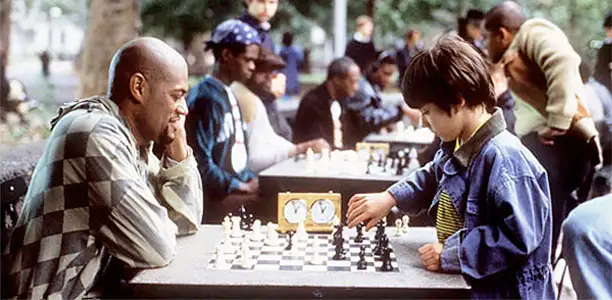
Searching for Bobby Fischer is a drama film written and directed by Steven Zillian released in 1993 about a very young chess prodigy named Josh Waitzkin. The film is based on a book written by Josh’s father, Fred Waitzkin. The film stars Max Pomeranc, Joe Mantegna, Laurence Fishbourne, Joan Allen, and Ben Kingsley.
Apparently, Josh Waitzkin is actually a real chess player who then ventured into martial arts and other sports in real life. Josh started playing competitively around the age of seven and was quite formidable even then. The film take a few liberties with the real story but it apparently is largely faithful to the real events and people.
Bobby Fischer is a well known chess master who had a habit of going into seclusion for years at times. Fischer’s spirit seems to linger in this work. There were some interesting flashbacks to bits of Fischer’s life narrated by Pomeranc, who was around nine years old when he appeared in this film.
It really is a strong cast and a pretty interesting story for the most part, but the film was slow at times. This is a great example of the difficulty in making a movie about chess grip the attention of the viewer. Fishbourne plays kind of a cool part as a kind of speed chess hustler in a park where young Josh would often play. Kingsley has the part of the stricter chess instructor, but Bruce Pandolfini ends up not being that bad of a guy.
It was nice to have a movie about parents actually supporting a child’s unusual gift instead of them blocking it. The pressure of competition does take its toll on Josh, but there is an inspiring victory toward the end. I would normally not make a revelation like this, but I think we all know how these films go.
The movie has some interesting and moving moments, but it’s kind of boring overall. I wish I didn’t have to force myself to pay attention as much as I did, but it happens sometimes.
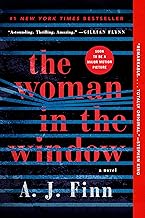
The Woman in the Window is a thriller written by A.J. Finn about a woman suffering from agoraphobia after a major trauma. The story is told from the perspective from a woman named Anna Fox. Anna Fox has the rather troubling habit of viewing her neighbors through a high powered camera lens. She gets to know of new neighbors across a park in a New York neighborhood. Of course, Finn adds to the irony by having his main protagonist a psychologist. Anna Fox spends her days and nights in her house, watching old movies, drinking too much, and mixing the alcohol with her medication. She also tries to help others with her affliction through an online support group. Oh, and she plays chess online as well.
She has an encounter with someone she identifies as Jane Russell, who she believes is the wife in the new family across the street. Then she sees the woman get stabbed some time later. The belligerent husband shows up after the police are called with a wife who Anna doesn’t recognize as the woman with whom she spent an evening. She begins to doubt her sanity further as the ploy moves along. The police don’t believe her. Anna’s grip on reality slips more and more.
There is also a mysterious good-looking tenant in the house who has his own secrets.
Poor Anna has a lot going on for someone too afraid to leave the house.
My impression of this novel was a bit mixed. Fortunately I was quite interested to see how Finn would have this little caper resolved. Unfortunately, Finn relies on a lot of familiar tropes from the films or other books of this genre. The critics apparently hail this as some kind of modern masterpiece, which is I think is overstating things a bit when it comes to this particular novel. Fortunately, the very end of the novel actually does offer a payoff that is worth the time spent in its pages. I could predict some of the answers Anna was going to find, but Finn does offer a couple of curveballs in the story.
I may not entirely agree with the effusiveness others have expressed about this novel, but I would still recommend giving this one a read and perhaps keeping an eye out for whatever A.J. Finn comes up with next.
The next book to go under the reading lamp will be Max Seeck’s The Witch Hunter.
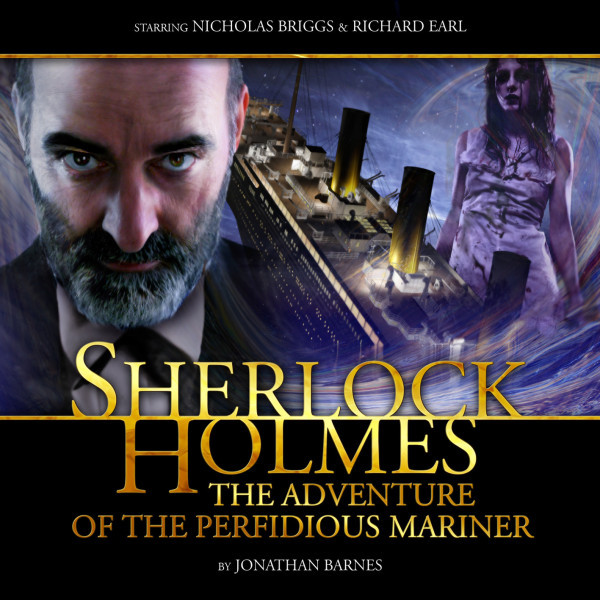
The Adventure of the Perfidious Mariner is a Sherlock Holmes audio drama from Big Finish Productions and is written by Jonathan Barnes. Nicholas Briggs returns to play the now retired consulting detective and shares directing duties with Martin Montague. Richard Earl reprises his role as the universally recognized sidekick and chronicler, Dr. John Watson. The guest cast is small but mighty, being comprised of Michael Maloney, Tracey Childs, and Toby Longworth.
The story takes place in 1912 not long after the sinking of the RMS Titanic, and Dr. Watson decides to look in on his old friend, Sherlock Holmes, who has retired from his criminal investigation practice in London and is now studying bees. That all fits into the canon of Arthur Conan Doyle. The surprising development is that Dr. Watson’s wife was lost aboard the Titanic, and his relationship with Holmes is rather strained. It seems that Holmes retired suddenly from his practice due to some mistake that was never revealed on this episode. Watson is followed by J. Bruce Ismay, who had taken a lot of criticism for surviving the Titanic disaster when he was involved in the construction of the ship as managing director of White Star Line. Ismay is rather panicked after being followed by a ghostly woman and people who have shown any sort of compassion for his plight dying mysteriously. By the way, Ismay was actually a real guy so this is a story which blends the fictional works of Conan Doyle with a profound historical incident.
This is a fairly interesting episode. I am getting more used to Briggs’ interpretation of Holmes, but the scene stealer is Richard Earl as Watson. The dialogue seems well suited for the era this is supposed to represent. Barnes shows some cleverness in leaving a couple of avenues open for Holmes to continue some investigation beyond this case. Briggs and Earl seem to have settled in quite nicely into their roles. It was quite interesting to see Watson not quite enamored with Holmes’ talents as usual. These two men had a serious rift when this whole thing begins. Earl does a great job of presenting the hurt Watson must have felt when he did not hear from Holmes after Mr. Watson’s tragic demise. There is not quite as much narration as there usually is in this series, and I found myself kind of missing that. Earl has such a great voice and manner of performing the narration that I was kind waiting for it. I know many listeners find narration a bit off-putting, but I got rather used to Earl’s style.
I like Nicholas Briggs because he is always so open about his passion for Doctor Who and Sherlock Holmes during the cast interviews contained in these releases. He also isn’t bad as an actor. I would call his version of Holmes more competent and pretty faithful to how Doyle seemed to have described him. Sometimes, the more acerbic moods seem to be a little forced. I don’t know if I would ever consider his interpretation a favorite, but Briggs really doesn’t ruin it for me with his performance, and that will work.
This particular episode doesn’t quite make the standout mark in my mind, but it’s enjoyable enough for me to not regret purchasing it.
The Sixth Doctor and Peri: Volume One is a Doctor Who audio boxset from Big Finish Productions and stars Colin Baker and Nicola Bryant, The title is pretty self-explanatory. This a collection of four new adventures with Doctor in his sixth incarnation and of course, Perpugilliam Brown, known as Peri. The set was directed by Scott Handcock. Guest actors include Hugh Skinner, Rachel Atkins, Sarah Douglas, David Sibley, and all kinds of other performers you can enjoy if you buy this collection. Needless to say, a lot went into this.
And so this set begins with The Headless Ones by James Parsons and Andrew Stirling-Brown in which the TARDIS brings the Doctor and Peri to nineteenth century Africa where a British expedition is searching for a legendary tribe known as the Headless Ones. It turns out to be a pretty good start. Not much new in the Doctor popping in an some expedition, but it turned out to be a fun adventure. It probably isn’t one of the more memorable ones though, which seems to be case in most of episodes with more than one writer. Anyway, it’s a good enough start with Colin Baker and Nicola Bryant finding their banter and chemistry with ease.
Like is the second episode and is written by Jacqueline Raynor, who has a lot of Doctor Who contributions under her belt. The Doctor and Peri comes across an Earth colony world where popularity is essential to continued survival. This episode could be described as rather quirky. It takes on the obsession of wanting to be noticed, and considering the Doctor’s multi-colored wardrobe, he has little problem with catching the eye. It’s a pretty interesting episode with some effective humor mixed into the message. Once again, Colin Baker gets to ham things a bit, but that seems to work with this particular story. It’s one of those episodes where the humor does blend in with the sinister here. Basically, Raynor doesn’t disappoint with her contribution.
Probably my favorite out of this collection is Stuart Manning’s The Vanity Trap. Hollywood film legend Myrna Kendal has a story to tell about an uncompleted picture and her meeting the Doctor and his companion. The desire to avoid the ravages of Time is at the heart of this. It’s kind of a complicated tale in that there is time distortion and characters misplaced in time. It’s not that easy to follow on audio, but somehow I managed to enjoy it a little more than the other stories. It probably just appeals to my taste for the retro. Anyway, I wasn’t completely thrown and I got the gist of it toward the end, but I could probably stand to pay a little closer attention the next time I fire this one up.
Finally, Nev Fountain wraps up this set with Conflict Theory. The Doctor and Peri are apparently not on the same page in their travels these days and need a little help. Dr. Sigmund Freud is no longer alive, but his wisdom lives on in a colony of robots fashioned after him. A little psychoanalysis gets interrupted by another invasion. This may be my second favorite because there is kind of a neat twist, but the story also examines the Doctor’s relationships and motivations when it comes to his companions. Some of the very early companions are referenced here, which I appreciated. It kind of opens up some new avenues of thought for the fans when it comes to reflecting on the Doctor’s pattern of associations. This story went a little deeper than what was done on the television series during the Sixth Doctor’s era, and I almost always appreciate that.
Colin Baker and Nicola Bryant themselves make this whole collection a treat. As much as I enjoy the original companions provided by Big Finish, it’s fun to revisit this Doctor and his relationship with Peri. Big Finish has also done a great job of evolving Peri beyond what was seen onscreen. Although the Doctor and Peri can still bicker with the best of them, there is now more affection displayed in the audio plays. Even if a couple of the stories were not as notable here, I still enjoyed the whole collection and hope that a second volume is to come quite soon.
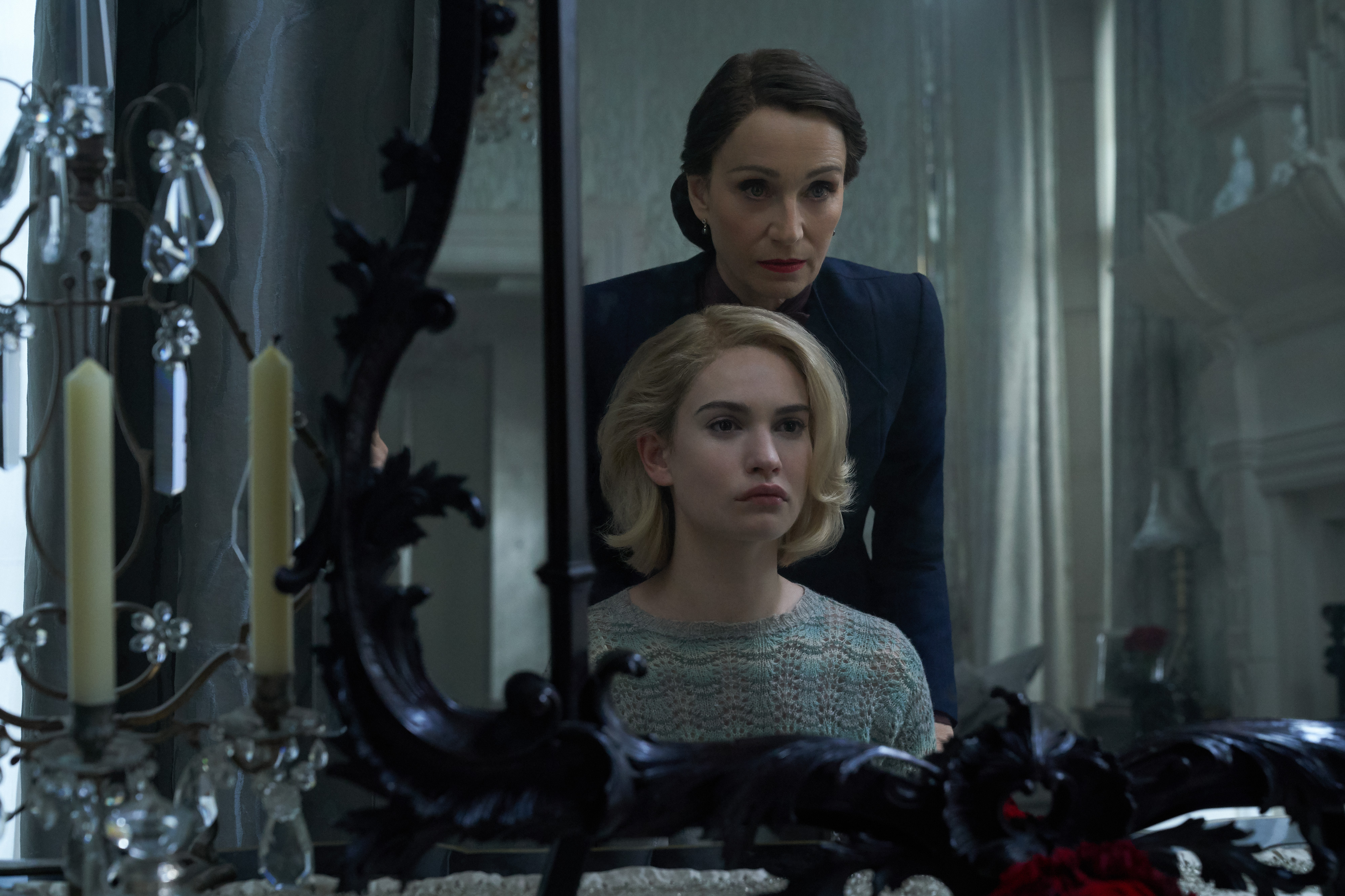
Rebecca is a thriller recently released on Netflix. Ben Wheatley serves with director of this latest adaptation of the novel written by Daphne de Maurier in 1938. The screenplay was written by Jane Goldman, Joe Shrapnel, and Anna Waterhouse. The cast includes Lily James, Armie Hammer, and Kristin Scott Thomas.
It didn’t occur to me at the time, but the name of the second Mrs. de Winter is never revealed. So, a flirtation begins between the paid companion of some rich American woman vacationing in Monte Carlo and a very wealthy British widower with the rather cool name of Maxim de Winter develops into something considerably more. The two lovebirds suddenly get married and the new Mrs. de Winter is brought to a lavish estate known as Manderley. Mrs. de Winter is introduced to the staff of servants and runs into some hostility from the head housekeeper, Mrs. Danvers. The second Mrs. De Winter learns of the tragic demise of her predecessor and senses her presence throughout the estate. Mrs. Danvers certainly seems to have a rather strong preference for the original Mrs. de Winter. Anyway, more secrets are revealed as the story plods along, and it seems that the first Mrs. de Winter left a very unsettling legacy for her successor to figure out.
I have not read the book and have meant to view the 1940 version directed by the great Alfred Hitchcock, so strangely enough, this version was my first full exposure to the story of the de Winter estate. I will just say on the outset that I was rather disappointed. It’s not that this is a terrible movie. but I had hoped it was much better. My major complaint is the slowness of the unveiling of secrets at times. The cast seemed to have been well chosen. I have no real issue with performances. The actual set design and location are amazing. It isn’t like nothing in this movie works, yet it seems to still fall flat for me somehow. I just got that sense that I was not missing much if I had not seem this film. I think the initial courtship between the two main characters did not seem all that realistic and interesting. The story itself was somewhat intriguing, but that just made me interested in the original novel. I guess some purposes of the film were served if it grabbed my attention that much, however this particular adaptation was still seemed to be a pretty average effort overall. It’s not a film that needs to be avoided at all costs, but I certainly would have been more disappointed had I gone to the big screen for this.


 Reviews, Musings, and Other Things...