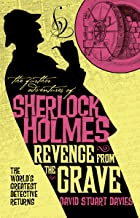
Revenge From the Grave is the latest Sherlock Holmes novel from David Stuart Davies. Sherlock Holmes has not been back in London after his self-imposed exile where the world thought he had died locked in hand to hand combat with Professor James Moriarty at Reichenbach Falls. In 1894, Holmes is troubled to find mysterious notes and corpses turning up at his doorstep. Moriarty seems to be taunting him, prompting the great detective to put on one of his most important disguises to infiltrate a criminal organization that seems to be rising from the ashes after its leader was presumed dead. Holmes and Watson need determine whether they have a new enemy or an old one has done the impossible and survived a fall that would have finished anyone else.
This was nearly impossible to imagine that Arthur Conan Doyle would have written anything like this. Davies seems determined to indulge his fanboy tendencies in this one. He keeps changing perspectives throughout. I felt there was something almost juvenile about the way the plot is presented. The identity of the new leader was not all that clever or surprising. The characters seemed rather flat and uninteresting. Davies just delivers what appears to be a shell of Doyle’s creations.
These pastiche works are always a bit of a gamble, but Davies seems to have missed the mark worse than usual with this effort.
What will I be reading next? Good question! I have decided to return to an author I have just started sampling recently. Brad Thor sends Scot Harvath on another mission in Spymaster.
Second Chances is a Doctor Who audio play from Big Finish Productions. It is an episode from the range known as The Companions Chronicles and is written by John Dorney. Lisa Bowerman sits in the director’s seat once again. Wendy Padbury reprises her role as Zoe Heriot and is joined by guest actress Emily Pithon.
Zoe has few memories of her time traveling with the Doctor and Jamie McCrimmon. She is being held by the Company and gets an opportunity to repair a mistake made during her travels in the TARDIS, but she has to avoid contact with her old friends and her younger self.
Dorney is usually pretty reliable, but I had some trouble getting into this one. It will probably require another listen in order for me to make sense. Everyone hits a sour note from time to time, and this one seems to indicate that it was Dorney’s turn. The actresses were fine as usual. This one did not leave much of an impression other than confusion and a bit of boredom.
There is not much more to say here since this episode turned out to not leave much an impression. Better luck next time, John Dorney.
Stranded 3 is a Doctor Who audio boxset directed by Ken Bentley. Paul McGann plays the Eighth Doctor and is joined by a guest cast that includes Nicola Walker, Hattie Morahan, Rebecca Root, Nicholas Briggs, Anjella Mackintosh, Tom Price, and Robert Whitelock. There are four stories in this set, and the adventures the Doctor and his friends experience during a time when the TARDIS was stuck on Earth. The Doctor had found that a property he owned on Baker Street had been converted into a boarding house, and he is compelled to interact with residents while defending the planet from alien incursions and getting his TARDIS to run properly again. Liv Chenka, played by Walker, has fallen in love with a transgender woman played by Rebecca Root. Torchwood operates on the periphery here, although the Doctor isn’t supposed to know about them yet. The TARDIS has regained much of her abilities, but some of the universal history has been altered, and the Doctor needs to determine how much he has to repair.
Tim Foley starts us off with Patience, which sees the Doctor face the Judoon, the mercenary police force who resembles rhinos. Other than the Judoon, I am not sure I have much to say regarding what I found interesting. I didn;t find it the most memorable of episodes. The acting is reliable enough, but one can safely say that most about most, if not all, Big Finish releases.
I will just move on to Lizzie Hopley’s Twisted Folklore, which brings the Doctor and his friends to a planet in the far future where a society is based on old tales in human history, an the Time Lord has a rebellion to organize. This story is a little better but not really enough to keep me fully engaged or motivate me to return to it anytime soon.
Snow is the traditional sentimental story that is often a part of these sets and is written by James Kettle. The Doctor and his friends return to the house on Baker Street fifteen years after they left. Ron Winters is the only resident still there, mourning the loss of his partner. The more unusual aspect here is that snow is only falling in the garden. David Shaw-Parker give a pretty compelling performance. There’s a bit more of a quiet mystery feel in this story that does provide a bit of a respite from some of the more frantic energy of the previous two episodes.
Finally John Dorney closes out this set with What Just Happened? The Doctor and his friends are on a space station with a unique threat. Dorney decides to basically tell the story backwards. This technique tales a bit more concentration in audio format. Once I got used to it, I can then see that Dorney’s reliable talent has indeed come through again for Big Finish. I don’t know if it ended up being one of the greatest stories he has put out, but I can still appreciate the creative effort he attempts.
Overall, I am about ready for the whole saga to come to an end. It isn’t all terrible, but I am now getting the feeling that they writers are sort of concocting ways to reach some four boxset quota. I am not that interested in this romance between Root’s Tania Bell and Liv Chenka. The final solution in the upcoming set might make all of this worthwhile, and I am enough of a fan to stick it out and give it a chance. McGann is great as usual. The performances are fine, and Big Finish always does well with the post production sound effects and music. It’s still impressive considering that this was performed during the United Kingdom COVID lockdown. This collection doesn’t teeter into the abyss of being an utter waste of time, but it doesn’t quite hit the mark of being anything a momentous example of writing greatnesseven for Doctor Who.
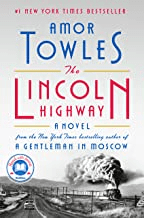
The Lincoln Highway is a novel written by Amor Towles. Towles is apparently one of these guys who lacks an appreciation for things like quotation marks during moments of dialogue. He also varies his narrative perspective between first and third person. In spite of these unconventional writing styles, the story manages to stay pretty engaging. The tale starts off with a young man being returned home after spending over a year at a juvenile work farm after an involuntary manslaughter conviction. Emmett Watson has recently lost his father and is released early since he has a much younger brother to look after. Once Emmett is reunited with his brother Billy, he soon learns that two other inmates from the work farm had surreptitiously hitched a ride with the warden who provided him with a ride. Young Billy is trying to convince his older brother to head out to California to search for their mother who had abandoned them some years before. His two friends, Duchess and Woolly, want to head in the other direction to New York. When they take off in Emmett’s car with his travel money, Emmett has little choice but to follow them to retrieve the money and the car. He and Billy end up on the railways to try to catch up to the two fugitives. Of course, the trip is fraught with obstacles and danger because it would be sort of a boring story otherwise.
This turned out to be a pretty interesting novel. Duchess is a somewhat complicated and charming antagonist. Towles does add some interesting layers to the major characters, Even Pastor John, who is probably one of the more troublesome characters Emmett and Billy encounter, actually is more than just a typical homeless scoundrel. Towles does a decent job of drawing out the notion that the most despicable people do not really see themselves as most would recognize as evil or misguided. Billy appears to be something of a genius, but still has a charming naiveté indicative of his youth. Emmett is a conscientious young man and cares for his brother, but he makes some mistakes along the way that leaves his sibling more vulnerable than necessary.
Sometimes, events are repeated from varying perspectives which I found to sort of slow the pace of the story down a bit. I don’t know if this novel can be considered one of the greatest things ever written, but I think Time is really the better judge of something like that. Once I got past the style of prose, I did find myself getting drawn into the story. The ending has an interesting twist. I don’t know if Towles plans to write a sequel to this, but there seems an opportunity to do so, but I found that the loose ends were fine to to be left to the imagination as to what happens next to the Watson brothers.
Well, I think a return to 221 B Baker Street is about due with Revenge From the Grave by David Stuart Davies.
Chinatown is a murder mystery film directed by Roman Polanski and was written by Robert Towne. Jack Nicholson stars as private detective J.J. “Jake” Gittes. Some of the cast members joining Nicholson in this 1974 film are Faye Dunaway, John Hillerman, Perry Lopez, Burt Young, and John Huston.
Gittes is a pretty successful and respected private detective in 1930’s Los Angeles. He is usually involved in confirming affairs and so on. A woman claiming to be the wife of the chief engineer of the Water and Power Department hires Gittes to confirm that an affair is taking place. Gittes finds much more than that is going on when he learns that this woman is an imposter and the real spouse wants to avail herself of his investigative services. The wayward engineer is later found drowned in a reservoir, and Gittes is up to his neck in political and sexual scandal surrounding this case. Gittes has his nose disfigured for his trouble, so he ends up sporting a heavy bandage through much of the tale.
So this film is considered a classic, but I found it to be a little overrated. I didn’t really dislike the film generally, but I was less enthralled than I expected. I found the pace to be a little slow at times, but I believe that I have felt that way about most Polanski films. The acting was fine, but I didn’t find Gettis to be the most interesting of protagonists. There were some interesting elements and a particularly scandalous twist involving the identity of the dead engineer’s mistress. Even though the genre is a favorite cinematic indulgence, the movie itself is something I found to be only an adequate example.
The Institute is a supernatural thriller written by Stephen King. The novel begins with a former cop arriving in a small South Carolina town and taking a job as a night knocker for a while. In the meantime, a young genius named Luke Ellis is kidnapped and taken to a mysterious place called the Institute where he meets other children snatched from their homes. Luke soon leans that a nameless group is collecting children with psychic abilities and performing experiments on them to prepare them for a top secret task. He is even more distressed to realize that his parents were murdered. The other children warn him of his eventual move to something called the Back Half. Luke starts to realize that he should start planning an escape before he is taken to the deeper recesses of the Institute.
As usual, King manages to create some compelling characters here. I am not sure I could buy into all aspects of the story here, but that is often the risks in works of this genre. Anyway, the book was reasonably enjoyable. There were quite a few suspenseful moments and even one or two twists. I think I had a hard time visualizing a twelve year-old being as crafty as Luke. The dialogue didn’t quite match what I would imagine kids in that situation sounding, so that was a little distracting. Also, this felt pretty long at times. King is still obviously a talented writer, so it wasn’t too laborious of a read overall. The most reliable aspect of Stephen King works is that I have yet to come across one that I felt was just terrible. The Institute can drag a little sometimes, but it still leaves enough to encourage some persistence. The novel turned out to be pretty good for the most part, but I have enjoyed others in the Stephen King collection more.
The unending journey into literary escapism continues with Amor Towles as he takes us along The Lincoln Highway.
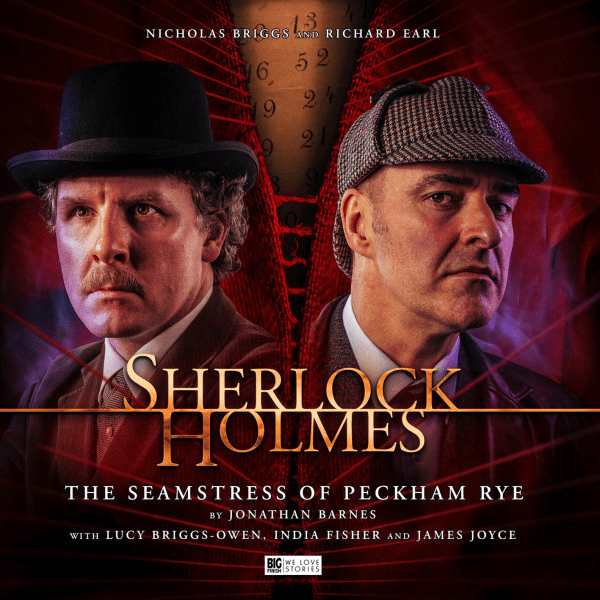
The Seamstress of Peckham Rye is a Sherlock Holmes audio play from Big Finish Productions. Jonathan Barnes is the script writer with Ken Bentley serving as director. Nicholas Briggs and Richard Earl return as Sherlock Holmes and Dr. Watson. The guest cast includes Lucy Briggs-Owens, India Fisher, James Joyce, and Glen McCready.
Watson has fallen in love with an American actress just as the twentieth century is about to commence. Holmes appears to be slipping into a state of depression. Then a murder occurs, and Holmes begins a new investigation. He encounters a most unusual stage performance. Watson may have to tell an egregious lie in order to be with the woman he loves. Holmes has a young inspector as an ally as he learns of a new potential leader of the criminal underworld in London.
I so want to like Briggs’ interpretation of Holmes more than I do, but Richard Earl’s performance as Watson is really a saving grace here. Briggs isn’t terrible, but when he has to portray Holmes in one of more manic phases, it just doesn’t flow as convincingly as I expect. The story itself dragged a bit. I do think that a crime boss known as the Seamstress just doesn’t seem as foreboding as the writer intends. The actors performed well enough for the most part. The sound effects were well constructed. The technical aspects of this episode all worked out well enough.
The story is set to continue in the next episode. The friendship between Holmes and Watson was well depicted here. Barnes didn’t get everything wrong in his script. He is a reliable enough writer for the most part. It’s just this particular script didn’t hold my attention as thoroughly as it should have. Hopefully the next episode goes better.
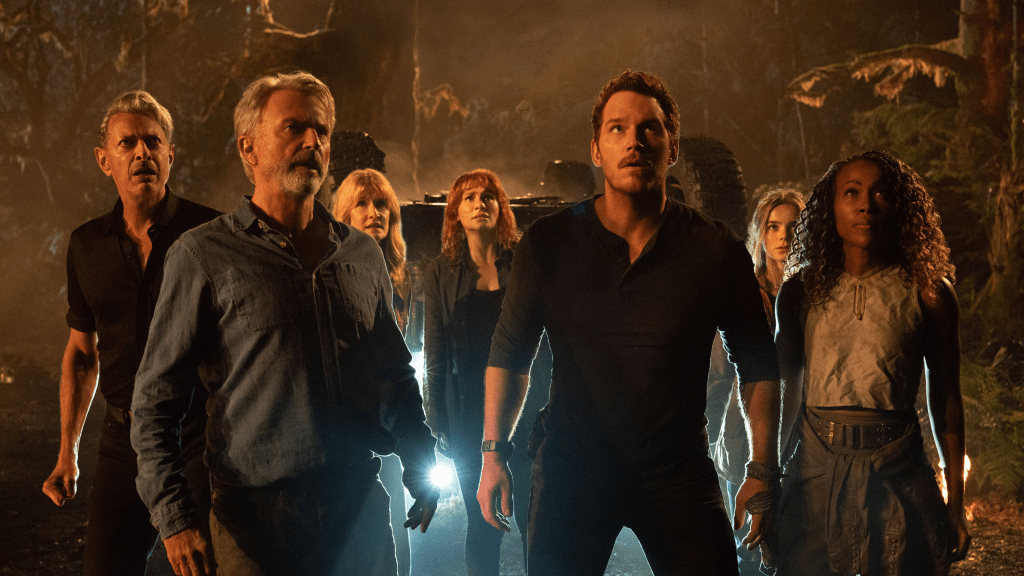
Jurassic World Dominion is a science fiction action film directed by Colin Trevorrow. He co-wrote the screenplay with Emily Carmichael after he developed the story with Derek Connolly. The concept and many of the characters were based the novel Jurassic Park by Michael Crichton. Chris Pratt and Dallas Bryce Howard are back and joined by original cast members, Sam Neill, Jeff Goldblum, and Laura Dern. Campbell Scott, DeWanda Wise, and BD Wong are also included in the party.
So, the dinosaurs are now all over the place wreaking havoc occasionally. Then. the ecology is further threatened by giant locusts. Dr. Ellie Sattler starts to investigate the locust problem and calls on Dr. Alan Grant to lend his expertise in prehistoric creatures. In the meantime, Owen Grady and Claire Dearing are trying to keep a clone teen-ager away from a corporation that wants to experiment on her. When the girl and a baby dinosaur are kidnapped anyway, the couple trace her to the company known as Biosyn. They pick up some other allies along the way and run into Ellie, Alan, and Dr. Ian Malcolm. Of course they all have to join forces after the onslaught of locusts and dinosaurs intensifies.
This is another entry in a franchise that probably should have been put to bed some time ago. However, I actually ended up enjoying this somewhat trite and unnecessary continuation more than I thought. It was fun to see the newer protagonists meet the main cast from the earlier movies. There seemed to be quite of story to go around for everyone. The action scenes were pretty compelling. There were some moments that I was on the edge of my seat. Of course, all of the main casts are pretty experienced now. There were some pretty good quips peppered throughout the movie. The visual effects were unsurprisingly convincing.
It doesn’t fall into any category of greatness, but I was reasonably satisfied when the ending credits started rolling. It was fun even if some of it seemed to drag at times. The charisma of the main cast was formidable enough for me to forgive the flaws.
Terror on the Prairie is a western film just released by The Daily Wire. It was written by Josiah Nelson and directed by Michael Polish. Gina Carano is in the lead role as Hattie McAllister, a woman besieged by outlaws who have a score to settle with her husband. The cast includes Nick Searcy, Gabriel-Kane Day Lewis, and Tyler Fischer.
Hattie’s husband has gone to town leaving her alone with her two children. In his absence, four men show up seeking some water and a bi of hospitality. Hattie soon figures out that their manners is a front for more sinister motives. A stand-off has begun, and Hattie has to use grit and ingenuity that she did not know she possessed to keep her and her children alive.
This turned out to be pretty good for something with a limited budget. Searcy steals the show here as the vengeful Captain Miller. Carano does well carrying the film. There does seem to be an unbelievable amount of poor aim at times. There are some moments where the film drags, however it still managed to keep my attention. The acting from the cast was pretty solid. Some were better than others at times, but Carano and Searcy stayed pretty strong in their respective performances. It’s a simple story in the vein of many films of this genre. I doubt it quite hits the caliber of the classic westerns, but it ended up being solidly entertaining. The production team should be proud of the final product.
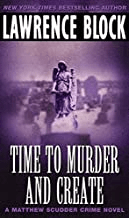
Time to Murder and Create is a crime novel written by Lawrence Block and was first published in 1976. It features one of Block’s best known protagonists, Matthew Scudder.
Scudder is a former NYPD officer who left the force after an unfortunate shooting which took the life the of a young girl. He is sort of a freelance private eye who scrapes by on doing paid favors for others. He is acquainted with an informer who turned his rather sketchy interests to blackmail. Jake Jablon is also known as the Spinner due to a singular habit of spinning a quarter on a tabletop during conversations. The Spinner is a rather shady sort with something resembling a conscience, so when his body is fished out of the river with a crushed skull, Scudder feels a sense of obligation to find out how that happened. Scudder was also given an envelope that contained details of his blackmail targets.
This was a fairly short novel, but Block packs a lot in there. All of the characters end up being complicated in some ways. Block does a great job keeping a reader hooked in this one. It really felt like the quintessential detective story with the best elements of the genre.
Next up, Stephen King will unlock the secrets of The Institute.